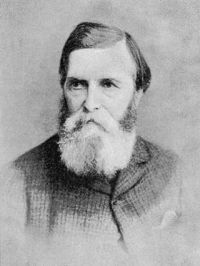
“ York Factory is the principal depôt of the Northern department, from whence all the supplies for the trade are issued, and where all the furs of the district are collected and shipped for England. As may be supposed, then, the establishment is a large one. There are always between thirty and forty men resident at the post, (The word “post,” used here and elsewhere throughout the book, signifies an establishment of any kind, small or great, and has no reference whatever to the “post” of epistolary notoriety.) summer and winter ”
York Factory
Definition and stakes
York Factory, a historic trading post and settlement on the shore of Hudson Bay, functioned as the Hudson’s Bay Company’s (HBC) northern headquarters for over two centuries, promoting the fur trade and influencing relations with Indigenous communities. As R.M. Ballantyne observed, it was a crucial center where furs were gathered and supplies dispatched, highlighting its strategic importance.
While authors such as Jonathan Thayer Lincoln and Meta Stern Lilienthal examined wider themes of industrialization and production systems, York Factory’s enduring significance stems from its distinctive blend of commercial activity and colonial governance. Its decline in the 19th century, as transport routes changed, illustrates the shifting patterns of commerce and territorial influence in North America.
Quotes about “York Factory”
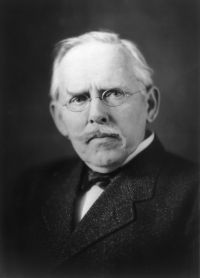
Jacob A. Riis,
A Ten Years' War: An Account of the Battle with the Slum in New York
“ Already manufacturers are returning to their own factories, and making capital of the fact among their customers. The new law, which greatly extends the factory inspector's power over sweatshops, is an expression of this enlightened sentiment. It will put New York a long stride ahead, and quite up to Massachusetts. ”
Sue Ainslie Clark, Making Both Ends Meet: The income and outlay of New York working girls
“ There are over 600 workers in the New Jersey cotton mill. Of these 188 are women. One hundred and ten of the women workers are at present engaged under the bonus and task system, though the management expects to employ eventually under this system all of its workers, and is in this establishment markedly in sympathy with Scientific Management. The mill is a large, well-lighted brick structure, with fields around it, and another factory on one side, on the outskirts of a factory town. ”
Various, The Black Cat, Vol. I, No. 6, March 1896 (1895)
“ I am going to start a factory to make counterfeits. I shall have an office in New York and a factory in New Jersey, where we can work undisturbed and everything will look straight. I have money enough to start the factory and buy all the machinery. After a year we can retire with two fortunes and become respectable. ”
“ This is due, in a large measure, to the fortunate fact that York is well outside the area of coal and iron, and has never become a manufacturing centre, the few factories it now possesses being unable to rob the city of its romance and charm. ”
Jonathan Thayer Lincoln, The factory (1912)
“ Within those walls twenty-seven thousand men and women living in a degree of comfort never known before to the spinners and weavers of the world, earn their daily bread. [Pg 28] Those towering factories are, every one, monuments to the genius of Richard Arkwright, the penny barber of Preston. If he appropriated the inventions of others, he perfected these inventions and made them of permanent value to mankind; and moreover, he arranged the machinery into series, organized the factory system, and revolutionized industry. ”
J. A. Hobson, The Evolution of Modern Capitalism…
“ So again, in the cotton industry of Lancashire, the hold which the merchants had got over the weavers by supplying them with warp and weft led in some cases, before the middle of the century, to the establishment of small factories containing a score or two of looms, in which hired men were employed to weave. A little later, though long before steam power, Arthur Young finds a factory at Darlington with over fifty looms, a factory at Boynton with 150 workers, and a silk mill at Sheffield with 152 workers. ”
A. S. Forrest, A Tour Through South America
“ Going through the various departments of these two factories, the visitor would not be surprised if told that he was in an engineering, joinery, or almost any kind of industrial establishment; for all branches of the modern workshop are carried on in different parts of the premises. Nearly everything required for upkeep and packing is made upon the spot in the foundries, machine shops, carpenters’ shops and the marvellous tin can factory with its elaborate machinery that is almost human. ”
Meta Stern Lilienthal, From Fireside to Factory (1916)
“ When the new inventions began to transform the processes of manufacture, this particular mill at once introduced power-looms, and the stockholder, Mr. Borden, remembering his daughter's skill at weaving, procured a place for Hannah in the mill. So this little pioneer wage-worker, at the age of fourteen, left her old hand-loom, that had become useless, and went to operate the first power-loom in the "manufactory," together with Mary Healy and Sallie Winters. Hannah worked hard and long. Her working day was longer than that of any modern factory worker. ”
“ In a factory, for the most part, the only way, during working hours, an employer can express himself and his humanness to his workman is through the steel machine he works with—through its being a new, good, fair machine or a poor one. He can only smile and frown at him with steel, be good to him in wheels and levers, or now and then perhaps through a foreman pacing down the aisles.The question the modern business man in a factory has to face is very largely this: "I have acres of machines all roaring my will at my men. ”
Jonathan Thayer Lincoln, The factory (1912)
“ The same principle was then carried into the different trades, and at last we find it fully developed in the cottage system of industry. Thus we find carding, spinning, and weaving carried on by separate members of the family. Carding and spinning, which required less bodily strength, was performed by the women, while the more laborious work of weaving was given over to the men. With the establishment of the factory and the introduction of machinery, means were supplied by which this system could attain its highest development. ”
J. A. Hobson, The Evolution of Modern Capitalism…
“ Grain, in the elaborate machinery of a steam flour mill, passes through a score of different stages, cleaning, winnowing, grinding, etc. The American machine-made watch is the product of 370 separate processes. The organisation of a modern textile factory provides a dozen different processes contributing to the spinning or weaving of cotton or silk. New processes of cleaning, finishing, and ornamenting are continually being added. The subsidiary process of packing, the manufacture of packing cases, the printing of labels, etc., are taken on in many factories. ”
William H. Dooley, Textiles, for Commercial, Industrial…
“ English weavers and spinners became very skilful and invented different mechanical aids for the production of yarn and cloth. These mechanical aids not only enabled one man to do twenty men’s work, but further utilization was made of water and steam power in place of manual labor. Then began the organization of the industry on a truly gigantic scale, combining capital and machinery and resulting in what is known as the factory system. ”
Jonathan Thayer Lincoln, The factory (1912)
“ The Industrial Revolution accomplished for England what the political revolution did for France, but by more peaceful means. Yet not alone in France was the event achieved in blood—for the Factory as well as the Terror had its victims. The history of the factory is no dry summary of patent rights and inventions, inventories of cotton and cotton goods, abstracts of ledgers, journals, cash-books, and pay-rolls,—it is a human story,—laissez-faire, over-production, enlightened selfishness, were no abstract terms, but vital human problems. ”
Sara Ware Bassett, The Story of Porcelain
“ A factory that turns out a completed product is like a watch. You know that unless every wheel of the watch turns; unless every minute rivet and screw is in its place and doing its part we get no perfect result. It is just as important a service to be a wee screw in that organism as to be something larger and more conspicuous. So it is with each workman in a factory. He performs his part—often, alas, a small and dull one too, I am afraid; but viewed from the standpoint of the completed product that man with his humdrum task is as worthy our respect as is any other member of the working staff. ”
Bartlett Burleigh James, Women of England
“ With the decline of guilds, there was a return on a very large scale to the system of home industry, when every farmstead and rural cottage became a manufacturing centre. The development of the factory system of the eighteenth century, upon the introduction of improved machinery for manufacture, completely removed industry from the home and created the modern factory town. ”
Arthur Hayden, Chats on Royal Copenhagen Porcelain
“ Its situation and surroundings—Facilities for the study of plant, flower, and animal life—Modern equipment in machinery and in hygienic improvements—The absence of lead poisoning—New impulses. In the word factory there is nothing suggestive of poetry. In England it represents the Frankenstein who has slain many cottage industries. In connection with our own potteries there are the Five Towns, merged into one, with a quarter of a million of inhabitants. They stand for organized science and applied manufacture. Their architecture is an architecture of chimney-shafts and kilns, black with smoke. ”
Walter Kubilius, Stirring Science Stories (1942-03)
“ Nowhere could they find a single soul. "They must all be at the factory," Johnson said. "And the children?" "In schools and nurseries." "But they can't all be in factories and schools," protested Weaver. "There's nobody home or in the streets. Nobody!" "Let's look into a factory," Millet suggested. In the center of the city they found two factories. Both were of tremendous size, stretching for many times the size of a city block. From their mighty stacks stretched black fingers of smoke. A strange feeling of age hung about the factory. ”
James Greenwood, Low-Life Deeps — Chapter 12: London Factory Girls (1881)
“ Venerable trees surround the place, there is a big old-fashioned garden at the rear of it, and here are erected spacious and well-ventilated workrooms for the young folks employed. The work done at this factory is by no means of the "slop" character, such as that in which factory hands are commonly hired to assist. It is a branch of a great City business, the heads of which are persons of immense wealth, and not at all disposed to be ungenerous in their dealings with their employées. ”
George Iles, Inventors at Work, with Chapters on Discovery
“ Under a scheme of subdivided toil the factory hand succeeded to the journeyman who, with a few mates, had split nails or drawn wire in a shop no bigger than some day he might own for himself. With the need to occupy large premises, to install engines and elaborate machinery, the capital of an employer has to be vastly more than of old, creating a new dependence on the part of the workman, and rendering it all but impossible that he should ever have a factory of his own. While the factory system of production is general in America, it is far from universal. ”
Jonathan Thayer Lincoln, The factory (1912)
“ Our first concern is with the social conditions existing in these great manufacturing cities. The factory system was first applied to the spinning of yarn; but weaving continued, for a time, as a handicraft. This period was one of great prosperity to the hand-loom weavers. Before the invention of spinning-machinery, several spinners were required to furnish one loom with yarn; and one half of the weaver’s time was spent in waiting for work. ”
Madeline Leslie, The Factory Boy
“ JOHNNY'S NEW FATHER.HE cold weather came on early this year. As he ran shivering home from school, Johnny saw, at almost every house, the preparations for winter. Here was a pile of wood, and there a large heap of coal, suggestive of warmth and comfort. Two days more and the important question [88] about the factory would be decided. If Mrs. Miles went away, it would be very desolate. God only knew how they should be able to get along. ”
John Kimberly Mumford, Outspinning the Spider: The Story of Wire and Wire Rope
“ The three big factory groups which have grown from the shabby little buildings of 1848 are the fruit of intelligence and ceaseless endeavor, but they are reared primarily on a basis of manufacturing honor, and ruled by the general thesis that forever and ever quality comes before price. This means keeping faith with the structural iron worker, swinging pigmy-small five hundred feet above the din of the city streets; with the sailor, the miner, the rigger; with the hurrying multitude that packs the elevators in tall buildings, and with the aviator, to whom a breaking wire may spell death. ”
“ I have known thousands of factories; and every factory I have known that is really strong or efficient has scales like a snake, and casts off its old self. All the people in it, and all the iron and wood in it, month by month are being renewed and shedding themselves. Any live factory can always be seen moulting year after year. A live spirit goes all through the machinery, a kind of nervous tissue of invention, of thought.We already speak of live and dead iron, of live and dead engines or half-dead and half-sick engines, and we have learned that there is such a thing as tired steel. ”
“ In twenty-seven years we never had a strike, never a serious discontent with any number of our employees, and we retain to this day the loyal good will of those who bought us out. The factory is still known as the Mills Woven Cartridge Belt Company, and my portrait is in the office with a legend telling of the foundation of the factory. ”
Jonathan Thayer Lincoln, The factory (1912)
“ The establishment of the factory altered completely the relation between employer and employee. Indeed in the modern sense these relations were then first established. Labor became a commodity which the master manufacturer, who was also the capitalist, bought and which the workingman sold. When in the year 1785 Arkwright’s patents were set aside and the use of his perfected spinning machinery became free to all manufacturers, a great extension of the cotton industry followed. ”
J. A. Hobson, The Evolution of Modern Capitalism…
“ Most of the operatives in a watch factory would find machines very similar to those with which they were familiar if they strayed into a gun-making factory or sewing-machine factory, or a factory for making textile machinery. A watch factory, with those who worked in it, could be converted without any overwhelming loss into a sewing-machine factory. ”
Duke of Saxe-Weimar-Eisenach Bernhard, Travels Through North America, During the Years 1825 and 1826…
“ Craft and Volz, accompanied me to the cotton factory of Adams, Allen & Co. Mr. Craft is one of the principal proprietors of the firm, which does an extensive business, notwithstanding its recent establishment. The building is of brick, four stories high, and has two wings standing at right angles. This factory employs two hundred people daily. All the machinery is worked by a steam-machine of seventy-five horse-power. The machinery is similar to that in Economy, II.170 and the fabrics made at Economy are copied from this factory, &c. ”
James Greenwood, Low-Life Deeps — Chapter 12: London Factory Girls (1881)
“ And it may, with some show of truth, be urged that, leaving charitable motives out of the question, the employer who uproots his manufacturing "plant" from the noise, and crowd, and dirt of town, and, transplanting it into the country, sets it down in company with hedgerows and daisies, confers a benefit on those who, by the sweat of their small brows, earn their bread of him. ”
Jonathan Thayer Lincoln, The factory (1912)
“ As the number of factories increased it became possible for operatives to rise, first to positions of trust within the factory, and later to the rank of master manufacturer—so that many a bobbin boy became a cotton lord. ”
Melchior Yvan, Inside Canton (1858)
“ The factories are built on the south-east point of the suburb nearest to the shores of Tchou-kiang, and they form several streets which are at right angles with the river. Each factory consists of a suite of houses uniformly built, the whole of which resembles a vast building isolated on all sides, and nearly resembling the barracks in which Fourier's phalansteriens wished to shut up mankind. Formerly, there were thirteen similar edifices, which was the reason that the name of Thirteen Factories Street was given to a Chinese street which runs to the north of the European residences. ”
Peter Kropotkin,
Fields, Factories and Workshops…
“ In the making of ready-made clothing and the fabrication of hats, linen, boots and shoes, and gloves, we see the averages for the factories of this description going up to 80, 100, and 150 persons per factory. But it is here also that countless small workshops come in. It must also be noticed that most of the factories of ready-made clothing have their own special character. The factory buys the cloth and makes the cutting by means of special machinery; but the sewing is done by women, who come to work in the factory. ”