“ If they are not bombed out of existence, air-attack will at least force them to disperse and take cover so frequently as to slow up their rate of advance to a snail’s pace, while days of bombing by hostile aircraft will hardly be a tonic for their moral. ”
Air attack
Definition and stakes
The theme of “air attack” has been addressed by authors such as Sun Tzu, René-Louis-Jules Radiguet, Geoffrey Keith Rose, Samuel James Manson Auld and Carl von Clausewitz. It is often associated with terms like airplane, aircraft, aviator, artillery and aviation.
Quotes about “air attack”
James Norman Hall, High Adventure: A Narrative of Air Fighting in France
“ This gave me a dangerous sense of safety, and so I tipped up on one side, then on the other, examining the roads, searching the ruins of villages, the trenches, the shell-marked ground. I saw no living thing; brute or human; nothing but endless, inconceivable desolation.The foolishness of that close scrutiny alone, without the protection of other avions, I realize now much better than I did then. Unless flying at six thousand metres or above,—when he is comparatively safe from attack,—a pilot may never relax his vigilance for thirty seconds together. ”
James Norman Hall, High Adventure: A Narrative of Air Fighting in France
“ The view, from the air, of a heavy bombardment, or of an infantry attack under cover of barrage fires, is a truly terrible spectacle, and in the air one has a feeling of detachment which is not easily overcome.Yet it must be overcome, as I have said, and cannot say too many times for the benefit [188] of any young airman who may read this journal. During an offensive the air swarms with planes. They are at all altitudes, from the lowest artillery réglage machines at a few hundreds of metres, to the highest avions de chasse at six thousand meters and above. ”
“ Moreover, though, in Europe, an air blow would be decisive, its achievement would probably depend on one side being superior in the air, either in numbers of aircraft or by the possession of some surprise device. Where air equality existed between the rival nations, and each was as industrially and politically vulnerable, it is possible that either would hesitate to employ the air attack for fear of instant retaliation. ”
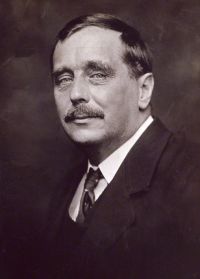 Herbert George Wells,
Heroic Airmen Are Key To Victory
(1918)
“ Is it not possible to press the air war so hard, so to concentrate on the air attack, as to bring the German air arm to breaking point? It is possible that people’s minds are sometimes overexercised by the thought of air raids and counter-raids. ”
active 1880-1932 Edwin Green, Air Monster
“ An air attack would mean war with popular sentiment of the world with the United States.”“A more likely explanation,” said Andy, “is that the agent who is to carry on the actual campaign of destruction against the Goliath arrived in the plane we sighted.”“I’m inclined to believe as you do,” Timms told Andy. “Our first step, after doubling the guards around Bellevue, will be to trace this strange craft. I’m hopeful that the radio appeal will bring results.”“I know it will,” said Bert confidently. ”
Frederick William Lanchester, Aircraft in Warfare — Chapter VII (1916)
“ It has already been remarked that attack on so swift and, in effect, on so small a moving target as an aeroplane is by no means an easy problem. We have already discussed the difficulties of attack from the ground, and it now remains to examine the problem of attack by air—i.e., attack by aeroplane on aeroplane. ”
James Norman Hall, High Adventure: A Narrative of Air Fighting in France
“ No doubt the crack battery has been given credit for disabling an enemy plane. The honor, such as it is, belongs to our aerial godfather, among whose lesser vices may be included that of practical joking.The remnants of the post were immediately confiscated for firewood by some poilus who were living in a dugout near by.IX [200] “LONELY AS A CLOUD”The French attack which has been in preparation for the past month is to begin at dawn to-morrow. It has been hard, waiting, but it must have been a great deal worse for the infantrymen who are billeted in all of the surrounding villages. ”
“ The stir spread, circle by circle, during the night, and before daybreak the orders had borne their fruit, and Flights—Artillery-Observing, reconnoitring and fighting-scout—were lined up on their grounds waiting the moment to go; the Night Bombers were circling in from their second and third trips of destruction on lines of communication, railways and roads, junctions and bridges, enemy troops and transport in rest or on the march, ammunition dumps and stores; in the front lines the infantry were "standing to" with everything ready and prepared to meet an attack ”
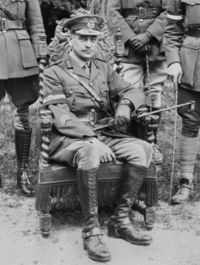 Sir John Monash,
The Australian Victories in France in 1918
“ From zero hour counter-attack planes will be constantly in the air, with the object of observing hostile concentrations or abnormal movement. (b) In the event of an enemy concentration indicating a counter-attack, the counter-attack aeroplane will signal this information to the Artillery by wireless. In the case of a counter-attack actually developing a white parachute flare will be fired by the aeroplane in the direction of the troops moving for the impending counter-attack, for the information of the Infantry. ”
Charles Amory Beach, Air Service Boys Flying for Victory (1920)
“ After delivering his fire Tom swept off to one side so as not to interfere with another bomber who might occupy a higher level, and be advancing to the attack. Presently when the turn of the air service boys came again they would be ready to send down the second "bundle of concentrated destructiveness"; and later on there might be a "clean-up call" that would exhaust the stock carried by each plane. ”
C. E. W. Bean, Letters from France
“ Single British aeroplanes have been coming and going since the bombardment started. I have not seen any German plane. The distant landscape is becoming fainter. The flashes of our guns can be seen at intervals all over the slopes immediately below us, and their blast is clearly shown by the film of smoke and dust which hurries into the air. The haze makes a complete screen between us and the battle. ”
 George Allan England,
The Air Trust
“ Blood of the mangled trainman, blood that the Carpenter shed!"For your sake! For the world's sake, this!" he cried, and hurled another thanatos. "If ever war of liberation was holy, this is that war!"Suddenly, through all the turmoil of shattering explosions, tossing air-currents and drifting, acrid smoke, he became conscious of a sudden, swift-flying pursuer.By the light of the burning Plant, down there somewhere in the vapors of the thunderous Falls, he saw a hawk-like 'plane that swooped toward him with incredible velocity, savage and lean and black. ”
Robert Henry Reece, Night Bombing with the Bedouins
“ An aeroplane can operate far back of the enemy lines, both in the day and at night; enemy troops in transport can be bombed: railway stations, sidings, etc., damaged; transports of all kinds delayed; and ammunition dumps, when [Pg 10] located, can be blown up. In fact, military targets of all sorts can be attacked from the air that cannot be reached in any other way. The very foundation of a nation's strength in war, its industry, can be attacked from the air and, if attacked on a large enough scale, can be destroyed. ”
Various, Astounding Stories, June, 1931
“ But I saw stabbing flames that struck upward from the ground to make a wall of sharp, fiery spears, and I knew that every darting flame was launching a projectile from our anti-aircraft guns.The skies were filled with the red aircraft of the enemy, but their way was an avenue of hell where thousands of shells filled the air with their crashing explosions. There were torpedoes, the unmanned airships whose cargo was death, and they were guided to their marks despite the inferno that raged about the red ships above. ”
Laurence Yard Smith, The Romance of Aircraft
“ Once those tons of explosives have been released and the noise of their dreadful havoc has aroused the anti-aircraft gunners of the enemy, those bombing planes will find the earth an uninviting sort of region and they will be glad to spring into the protecting silence and darkness of the upper air. And this they can do easily, for, rid of their load, they possess unusual climbing powers. ”
James Norman Hall, High Adventure: A Narrative of Air Fighting in France
“ A few days before I had been watching without emotion the bombardment of a German plane. I had seen it twisting and turning through the éclatements, and had heard the shells popping faintly, with a sound like the bursting of seed-pods in the sun.My feeling was not that of fear, exactly. It was more like despair. Every airman must [136] have known it at one time or another, a sudden overwhelming realization of the pitilessness of the forces which men let loose in war. In that moment one doesn't remember that men have loosed them. He is alone, and he sees the face of an utterly evil thing. ”
Geoffrey Keith Rose, The Story of the 2/4th Oxfordshire and Buckinghamshire Light Infantry
“ The passage overhead of German aeroplanes made nights uneasy. Darkness was lit by those huge flashes in the sky, which denoted explosions of our dumps of shells. The ground shook many times an hour with great concussions. Sometimes the crash of bombs and patter of machine-guns firing at our transport lasted till pale dawn appeared or its approach was heralded by the bombardment of our guns, whose voice pronounced the prologue of attack. ”
Herbert George Wells,
The Works of H. G. Wells
(1924)
“ The aeronauts, provided with large scale maps of the hostile country, will mark down to the gunners below the precise point upon which to direct their fire, and over hill and dale the shell will fly—ten miles it may be—to its billet-camp, massing night attack, or advancing gun. Great multitudes of balloons will be the Argus eyes of the entire military organism, stalked eyes with a telephonic nerve in each stalk, and at night they will sweep the country with search-lights and come soaring before the wind with hanging flares. ”
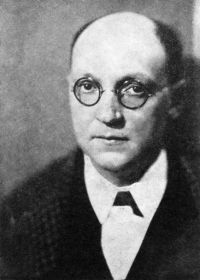 Georges Duhamel,
The New Book of Martyrs
“ When the air was pure, we heard it vibrate with the life of aeroplanes and echo to their contests. The dry throb of machine-guns, the incessant scream of shrapnel formed a kind of crackling dome over our heads. The German aeroplanes overwhelmed the environs with bombs which gave a prolonged whistle before tearing up the soil or gutting a house. One fell a few paces from the ward where I was operating on a man who had been wounded in the head. ”
F. Britten Austin, Battlewrack
“ Stifling gusts blew on to the aviator's face, carrying with them a peculiar smell of burning cloth. With these gusts the roar of the battle seemed to leap up to him. The air was oppressive despite the speed at which he clove it, highly charged with electricity, heavy with the menace of a storm. Yet no cloud broke the monotony of the blue sky. The machine raced onward, was now crossing the battle lines of the enemy's left flank.Suddenly he heard a faint rattle behind him. The hostile aeroplane, realising that it had failed to head him off, was firing furiously. ”

“ Then, out of the icy void of the upper air-space, now roaring with their engines' clamour, the British plane shot earthward, down, down, rushing to destruction like a shooting-star, and crashed in the forest of Les Errues. ”
 H. G. Wells,
The War in the Air
“ Bang! Bang! Bang! And then hard upon this little rattle of shots and bombs came, all about him, enveloping him, engulfing him, immense and overwhelming, a quivering white blaze of lightning and a thunder-clap that was like the bursting of a world. Just for the instant before that explosion the universe seemed to be standing still in a shadowless glare. It was then he saw the American aeroplane. He saw it in the light of the flash as a thing altogether motionless. Even its screw appeared still, and its men were rigid dolls. (For it was so near he could see the men upon it quite distinctly.) ”
“ Then the two Trichords, splintered and rent and gaping with explosive-bullet wounds, with their ammunition completely expended, their oil and petrol tanks running dry, turned for home, leaving their fourteen enemies scattered wide and low in the air, or piled in splintered smoking wreckage along the ground below the line of their flight. The fight with the fourteen had run without a break for three-quarters of an hour. ”
R. M. P. Preston, The Desert Mounted Corps
“ The three sisters were eventually spotted by aeroplanes, and silenced by some of our heavy artillery in the mountain sector. In the valley itself, it was almost impossible to locate the enemy guns. Owing to the very broken nature of the country, the damp atmosphere and the constant dust, our aeroplanes were unable to spot them, even when firing, and they caused us constant annoyance, while remaining almost immune from our fire. Flying over the valley was at all times most hazardous work, owing to the innumerable vortices and pockets in the air, and there were many bad accidents. ”
“ But hard fighting was going on, and the line was getting badly hammered, so that every balloon which could get up was in the air, and every observer was hunting for hostile battery positions, directing the fire of our guns on to them, and doing all they could to lessen the shell-fire that was pouring down on our infantry in their scanty trenches. At times a swirl of mist or cloud came down and shut off the view altogether from the balloons ”
The Air Patrol: A Story of the North-west Frontier
“ He was momentarily expecting to hear the hum of the returning aeroplane when, with a suddenness that took him all aback, there was a tremendous roar, followed in a second or two by a terrific crash just beyond the Pathan compound. Turning in consternation to discover the cause of it, he saw a great mass of the cliff falling amid a cloud of dust and smoke upon the wooden pathway, and plunging into the river beneath. Such destruction could only be the effect of a shell. Beyond doubt one at least of the field guns had been brought into position behind the enemy's breastwork at the bend. ”
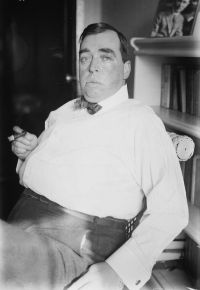 Irvin S. Cobb,
Paths of Glory: Impressions of War Written at and Near the Front
“ A yell of exultation rose from the watching Germans, who knew that an explosion close to an aeroplane is often sufficient, through the force of air concussion alone, to crumple the flimsy wings and bring it down, even though none of the flying shrapnel from the bursting bomb actually touch the operator or the machine. ”
 Morgan Robertson,
The Air Fight
(1907)
“ Things promised to be more interesting; the tedium of the long blockade might be enlivened by a battle in the air. But when a later message was wig-wagged down the line that a Russian aerostat had sallied out from Port Albert, settled within the imaginary inverted cone above the flag-ship's gun-elevation, and dropped several explosive bombs, none of which, however, had penetrated her protective deck, the incident was regarded as potential. A spectacular battle of air-ships—an innovation in modern war—was one thing, but bombs from above were another. ”
C. A. Rose, Three years in France with the Guns…
“ One thing certain was that we had almost complete control of the air and both out-numbered and out-witted the enemy to a marked extent. It was most unpleasant to hear the noise of the hostile planes drawing nearer, for one could not mistake the beat made by the German machines. The amount of bombing experienced by us was quite bad enough in all truth, but we used to smile when contemplating what our foes must be suffering at the hands of our Airmen, as truly it was ten times worse. ”
H. G. Wells,
The War in the Air
“ The world's gone mad. Our fleet beat the Americans the night we got disabled, that's clear. We lost eleven—eleven airships certain, and all their aeroplanes got smashed. God knows how much we smashed or how many we killed. But that was only the beginning. Our start's been like firing a magazine. Every country was hiding flying-machines. They're fighting in the air all over Europe—all over the world. The Japanese and Chinese have joined in. ”
Victor Appleton, Tom Swift and His Aerial Warship…
“ On the other hand, while it is comparatively easy to drop a bomb from a moving aeroplane, or dirigible balloon, it is another matter to make the bomb fall just where it will do the most damage to the enemy. It is not easy to gauge distances, high up in the air, and then, too, allowance must be made for the speed of the aircraft, the ever-increasing velocity of a falling body, and the deflection caused by air currents. ”
H. G. Wells,
The War in the Air
“ Now he had been high and now low; now almost beyond hearing, now flying close to crashings and shouts and outcries. He had seen airships flying low and swift over darkened and groaning streets; watched great buildings, suddenly red-lit amidst the shadows, crumple at the smashing impact of bombs; witnessed for the first time in his life the grotesque, swift onset of insatiable conflagrations. From it all he felt detached, disembodied. The Vaterland did not even fling a bomb; she watched and ruled. ”
Related terms
Authors who wrote about “air attack”
Sun TzuRené-Louis-Jules RadiguetGeoffrey Keith RoseSamuel James Manson Auld Carl von ClausewitzSir John MonashC. A. RoseR. M. P. PrestonC. E. W. BeanVariousH. G. WellsHerbert George WellsJames Norman HallFrederick William Lanchester
 George Manville FennBoyd Cable
 William Henry Giles Kingston
 B. H. Liddell HartKelly Miller
 George W. Bush
Carl von ClausewitzSir John MonashC. A. RoseR. M. P. PrestonC. E. W. BeanVariousH. G. WellsHerbert George WellsJames Norman HallFrederick William LanchesterGeorge Manville FennBoyd CableWilliam Henry Giles KingstonB. H. Liddell HartKelly MillerGeorge W. Bush