Animal psychology

Definition and stakes

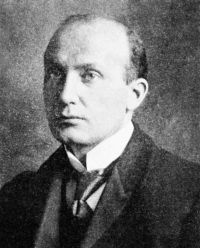
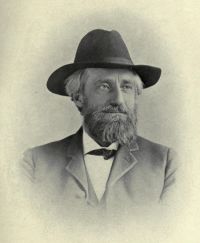
Portrait of William T. Hornaday William T. Hornaday,  The Minds and Manners of Wild Animals…

“ To men and women who really know the vertebrate animals by contact with some of them upon their own levels, the reasoning power of the latter is not a debatable question. The only real question is: how far does their intelligence carry them? It is with puzzled surprise that we have noted the curious diligence of the professors of animal psychology in always writing of "animal behavior," and never of old-fashioned, common-sense animal intelligence. Can it be possible that any one of them really refuses to concede to the wild animal the possession of a mind, and a working intelligence? ”
Source: Gutenberg

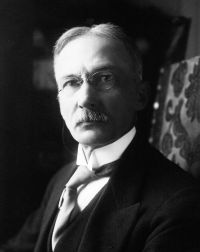
Portrait of Stephen Leacock Stephen Leacock,  The Human Mind Up to Date

“ The Psychology of the Animal Mind The sad truth is that as yet most of us do not know how to think. We think we think, but we don't.
Nor can we begin thinking until we are prepared to begin all over again and build up our thought-process from its basis up. Herein lies the peculiar importance of Animal Psychology in the new wave of mentality.
Already the ground has been broken. Careful investigations of the thought-complex of the hen, the worm, and the bee have revealed to the world something of the wonderful mentality that was formerly rudely classed as "instinct."
”
Source: Wikisource

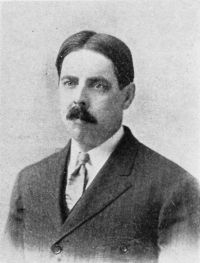
Portrait of Edward L. Thorndike Edward L. Thorndike,  Animal intelligence: Experimental studies (1911)

“ So much for the anecdote school, if it calls itself by its right name and pretends only to give an abnormal animal psychology. The sad fact has been that it has always pushed forward these exceptions as the essential phenomena of animal mind. It has built up a general psychology from abnormal data. It is like an anatomy written from observations on dime-museum freaks. ”
Source: Gutenberg

Get perspective with Kwize: daily news enlightened by great literature