Apportionment of seats

Definition and stakes

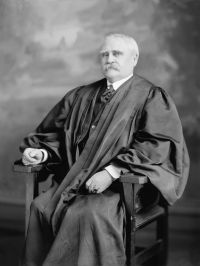
Portrait of Earl Warren Earl Warren Reynolds v. Sims — Opinion of the Court

Under the detailed requirements of the various constitutional provisions relating to the apportionment of seats in the Alabama Senate and House of Representatives, the Court found, the membership of neither house can be apportioned solely on a population basis, despite the provision in Art. XVIII, § 284, which states that " [r] epresentation in the legislature shall be based upon population."
Source: Wikisource

Portrait of Earl Warren Earl Warren Reynolds v. Sims — Opinion of the Court

While no formula for the statute's apportionment of representatives is expressly stated, one can be extrapolated. Counties with less than 45,000 people are given one seat; those with 45,000 to 90,000 receive two seats; counties with 90,000 to 150,000, three seats; those with 150,000 to 300,000, four seats; counties with 300,000 to 600,000, six seats, and counties with over 600,000 are given 12 seats.
Source: Wikisource

Portrait of Earl Warren Earl Warren Lucas v. Forty-Fourth General Assembly of Colorado…

One of the most undesirable features of the existing apportionment scheme was the requirement that, in counties given more than one seat in either or both of the houses of the General Assembly, all legislators must be elected at large from the county as a whole. Thus, under the existing plan, each Denver voter was required to vote for eight senators and 17 representatives. Ballots were long and cumbersome, and an intelligent choice among candidates for seats in the legislature was made quite difficult.
Source: Wikisource

Get perspective with Kwize: daily news enlightened by great literature