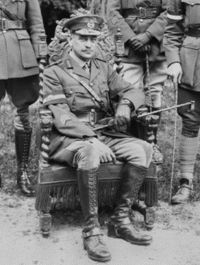
Battalion commander

Definition and stakes

Charles Jean Jacques Joseph Ardant du Picq,  Battle Studies; Ancient and Modern Battle

“ The battalion commander ought to be advanced enough to direct his skirmishers. The whole battalion, one-half engaged, one-half ready for any effort, ought to remain under his command, under his personal direction as far as possible. In the advance the officers, the soldiers, are content if they are merely directed; but, when the battle becomes hot, they must see their commander, know him to be near. It does not matter even if he is without initiative, incapable of giving an order. His presence creates a belief that direction exists, that orders exist, and that is enough. ”
Source: Gutenberg

W. Balck,  Tactics, Volume 1 (of 2). Introduction and Formal Tactics of Infantry

“ A battalion commander should only in very exceptional cases take post in the firing line; he should nearly always remain with parts of the force that are held back for the time being, but, in any case, where he can effectively supervise his battalion. The choice of a regimental commander’s position is influenced by the same considerations; when his regiment is acting as part of a brigade, he must select his position so as to facilitate the transmission of orders from brigade headquarters. ”
Source: Gutenberg

W. Balck,  Tactics, Volume 1 (of 2). Introduction and Formal Tactics of Infantry

“ It will seldom be proper for the battalion to form for attack in the regular manner. When this can be done the battalion should form in three lines in conformity with its task of initiating, carrying out, and deciding the fight. In this case the leading company is reinforced by the second company as soon as the situation has become sufficiently clear. More frequently, the battalion commander will send only a single company into action, retaining the others for the time being under cover. ”
Source: Gutenberg

Get perspective with Kwize: daily news enlightened by great literature