Block and tackle

Definition and stakes

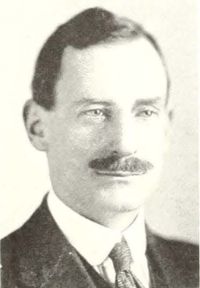
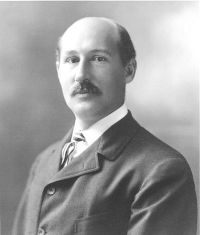
Portrait of Walter Camp Walter Camp,  American Football

“ They must be [Pg 64] taught to block securely until the ball is on its way to the runner or kicker. The blocking of a guard is much less exacting in its requirements than that of the tackle. Not that he must not block with equal certainty, but the act requires no such covering of two men as often happens in the case of a tackle. The guard forms closely towards the centre, and then follows his man out if he moves out, but only as far as he can go, and still be absolutely certain that the opponent cannot pass between him and the snap-back. ”
Source: Gutenberg

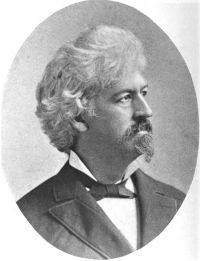
Portrait of Walter Camp Walter Camp,  American Football

“ In blocking for a run the case is very different, and depends upon the point of assault. If the run is to be made around the right end, for instance, by the left half-back, the right tackle must block very slowly and long. That is, he must not dash up to his man the instant the ball is snapped and butt him aside, for the runner will not be near [Pg 52] enough to derive any advantage from this, and the opponent will easily recover in time to tackle him. ”
Source: Gutenberg

Homer J. Dana,  The Use of Ropes and Tackle

“ Take a couple of frapping turns between each pair of spars in succession and finish with a clove hitch on the central spar above the lashing. Pass a sling over the lashing and the tripod is ready for raising. [45]
TACKLE SETS
Fig. 95.
The use of block and tackle affords at least two advantages to the user. One is the advantage of position. The user may stand on the ground and pull downward—the most easy and natural way of exerting force, while the resulting forces may be developed upward as in the case of a hoist. The other advantage is mechanical.
”
Source: Gutenberg

Get perspective with Kwize: daily news enlightened by great literature