Byssus

Definition and stakes

Portrait of G. B. Sowerby G. B. Sowerby,  Illustrated Index of British Shells

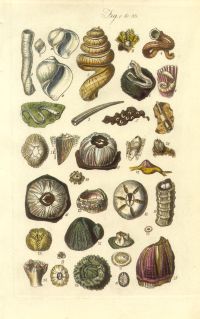
“ Shells of Arcadæ, 1-14, have the hinge characterized by a series of teeth on each side of the apex. Nucula, Arca, and Pectunculus are easily distinguished. Limopsis, 14, has a spring pit between the two rows. Our figure of Pinna, 16, is from a young specimen: it grows to great size, and spins a very silky byssus. The shell of Anomia, 18, is fixed to rocks, etc., by means of a bony button passing through a hole or sinus in the lower valve. Lima, 22-24, has a light, thin shell, and its mantle is adorned with beautiful fringes. ”
Source: Gutenberg

Peder Mariager,  Pictures of Hellas: Five Tales of Ancient Greece

“ Byssa stood motionless, pale with emotion. Lyrcus made a sign that he wished to speak; but the people cried: “No, no, let thy wife speak.”
65 Byssa blushed and lowered her eyes, but she did not lose her presence of mind.
A death-like silence reigned over the whole place and, though Byssa did not speak loudly, every word uttered by her clear, resonant voice reached the farthest ranks of soldiers.
“Cychreans!” she said, “women, it seems to me, should be silent among men; for only a man is fit to answer men.
”
Source: Gutenberg

Peder Mariager,  Pictures of Hellas: Five Tales of Ancient Greece

“ Byssa’s father, Ariston, the priest of Zeus Hypsistos, was an aged, gentle-natured man who dared not refuse the turbulent warrior; yet he only gave his consent on condition that Byssa should keep the faith of her ancestors and not offer sacrifices to Melite in the Cychreans’ sanctuary. Nevertheless, both he and his wife had tears in their eyes when Lyrcus bore their only child away and, in taking leave of Byssa, Ariston laid his hands upon her head, saying:
“Be a good wife to this stranger. But do not abandon Zeus Hypsistos, that Zeus Hypsistos may not abandon you.”
”
Source: Gutenberg

Get perspective with Kwize: daily news enlightened by great literature