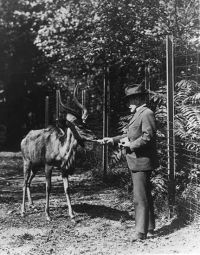
Captive breeding

Definition and stakes

Typhenn A. Brichieri-Colombi, Natasha A. Lloyd, Jana M. McPherson, Axel Moehrenschlager,  Limited contributions of released animals from zoos to North American conservation translocations… (2018)

“ The obvious alternative to wild source populations is captive breeding. Captive breeding can be difficult due to taxon-specific genetic, behavioral, or health challenges and postrelease success is often limited unless animals are specifically selected or adequately prepared for release (Todd & Lintermans 2015) . ”

Source: Wikisource

William André Elfer,  Breeding minks in Louisiana for their fur…

“ Captive animals breed more profusely than the wild, and will occasionally have three litters where they are in close captivity. They begin to breed when they are about one year [Pg 60] old, and in captivity will raise an average of fourteen a year. Normally, they live to be about nine years old, but they will live longer in captivity where they are well treated and given all the water and the different foods required by them. ”
Source: Gutenberg

Portal:Anonymous texts,  The Urantia Book (1955)

“ It was easy to tame some animals, but like the elephant, many of them would not reproduce in captivity. Still further on it was discovered that certain species of animals would submit to man's presence, and that they would reproduce in captivity. The domestication of animals was thus promoted by selective breeding, an art which has made great progress since the days of Dalamatia. ”
Source: Wikisource

Get perspective with Kwize: daily news enlightened by great literature