“ But, alas, the Sunday worshipper might be quite content with that, for then, instead of offering his poor soul humbly before the dear God, he would be constantly chopping wood, counting the felled trunks, the sticks, the piles of brushwood, which on a week-day would not otherwise trouble him. Prayer would stream from the heart like a fountain of blood, if one's thoughts did not wander, but since they cannot always be controlled, we must guard the church like a fortress, so that the Sabbath may not leave it nor the work-day enter. ”
Quotes about “churchgoing”
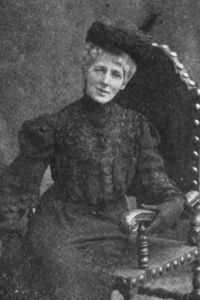 Mrs. Hugh Fraser,
Italian Yesterdays, vol. 2
“ With the first faint light of dawn the prayers cease, the supplicants arise, and the Bishop puts on his vestments, one by one [57] and with a special prayer for each, because he thus figures the Son of God putting on the garment of our humanity. And because Christ, as man, prayed to His Father and ours, the Bishop comes forth from the tent and prostrates himself before the steps of the Church in fervent prayer, with all his clergy kneeling around him. Now the natural soul is cold and blind, and closed to Grace; so the Church stands, unlighted and with fast closed doors. ”
Mary King Waddington, Chateau and Country Life in France
“ The plain, bare churches with white-washed walls, the long sermons and extempore prayers, speaking so much of the anger of God and the terrible punishments awaiting the sinner, the trials and sorrows that must come to all. I often think of a sermon I heard preached in one Protestant church, to the boys and girls who were making their first communion—all little things, the girls in their white frocks and long white veils, the boys with white waistcoats and white ribbons on their arms, making such a pretty group as they sat on the front benches listening hard to all the preacher said. ”
I. E. M., Confessions of an Etonian
“ One Sunday, then, in the depth of a rainy winter, I set off on my horse, with my canonicals strapped before me in a valise, to commence my clerical duties. On entering my parish, for want of a more respectable asylum, I put up at a public-house, where I changed my dress, and came forth, for the first time, in the character of a Divine, walking towards my church, where I met with an unusually large congregation assembled to hear "the new parson." ”
Henry M. Brooks, The Olden Time Series, Vol. 3: New-England Sunday
“ One thing which prevents many people from attending public worship on Sunday is the increasing tendency towards ritualism,—or perhaps, we should say, making the services less instructive than formerly, and more devotional or emotional. This is seen not only in the Episcopal Church, but also among many other denominations. Even Congregational Orthodox—descendants of the Pilgrim Fathers—introduce prayer-books and responsive services, and make their church buildings more ecclesiastical in appearance, to look as much as possible like Episcopal churches. ”
Various, The Catholic World, Vol. 23, April…
“ Of the least approach to a liturgical observance, were it but the repetition of the Creed, it was said: “In vain do they worship me, teaching for doctrines the commandments of men.” Now nearly all the sects make a feint of some sort of service or observance of the Christmas season; the cross is displayed within and without many church buildings; not merely organs but string and brass bands fill the choirs of Protestant fashionable churches; they may nearly all be heard falsely repeat, Sunday after Sunday, that they “believe in the holy Catholic Church” ”

“ Don't take away my human minister, whose God is no tyrant, and is better pleased to see us go smiling home from church, than bowing our heads like a bulrush, and groaning back to our dinners, till all you anti-Sabbatarians are mad to abolish Sunday,—and no wonder.Our Catholic brethren have set us, at least one good example; their churches are not silent as the tomb on week-days. Their worshippers do not do up all their religion on Sunday. It may be only for a few moments they step in through that open church-door, on a week-day, to kneel and lay down burdens too heavy else to be borne. ”
Philip Freeman, Rites and Ritual: A Plea for Apostolic Doctrine and Worship
“ Our harvest thanksgivings, and similar occasions, conducted as they have been, have taught those, to whom the lesson was perfectly new, to find in the Services of the Sanctuary, in worship, and attendance at the Holy Communion, a vent and expression for their sense of thankfulness. At such times the flower-wreath and the banner, the richly vested and decked altar, the Choral Service, the processional hymn, have been felt to be in place. And thus familiarised with them, our people come even to look for them as the natural attendants on high days of festival. ”
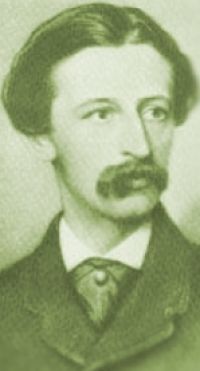 Augustus John Cuthbert Hare,
The Story of My Life — Chapter IX: Work in Southern Counties
(1890s)
“ Yesterday was Sunday, and I groped my way through the dark passages to the evening service in the Catholic chapel, which has always been attached to the house. An old priest, seated on the steps of the altar, preached a kind of catechetical sermon upon Transubstantiation—‘My flesh is meat indeed’—‘and the poor Protestants have this in their Bibles, and yet they throw away the benefit of the indeed.’ The sight was most picturesque—the dark old-fashioned roof, only seen by the light of the candles on the richly decorated altar, and the poor English peasants grouped upon the benches. ”
 Mrs. Jameson,
Visits and Sketches at Home and Abroad…
“ High mass begins about the time that the sermon is over in the other churches, and you see the Protestants hurrying from their own service, crowding in at the portals of the Catholic church, and taking their places, the men on one side and the women on the other, with looks of infinite gravity and devotion: the king being always present, it would here be a breach of etiquette to behave as I have often seen the English behave in the Catholic churches—precisely as if in a theatre. ”
Various, The Catholic World, Vol. 23, April…
“ Many there were in that privileged place on that holy day who had come from motives of curiosity, to see what it was all like—gazers who looked upon Catholics with cool contempt as but a step removed from the heathen to whom they send missionaries; the industrious sight-seeker, the tourist, whom no solemn function can hold more than a few minutes, coming even on Easter day with their red-covered ‘Bädeker,’ and sometimes with their opera-glasses levelled at the altar where the priest was saying Mass, and walking with perfect nonchalance over and among the people kneeling in devotion. ”
Various, The American Missionary — Volume 32…
“ They look upon religion less as a Sunday garment, and more as a robe of righteousness, that transforms [208] our selfish natures into earnest, self-denying lives of obedience.Let me give a week’s religious duties. Sunday, two of our young men preach in an adjoining town. Quite a number go out to neighboring Sunday-schools, and return about eleven o’clock, when our preaching service begins. Our pastor, a graduate of Yale College and Theological Seminary, came South at the close of the war, to build the first Congregational church in Atlanta. ”
Various, The Century Illustrated Monthly Magazine…
“ No worshiper goes to the Protestant church, the pretty stone church on the village street, without a glance at the spot where the justice used to stand on Sunday mornings, a symbol of large-hearted, Christian hospitality, and greet the congregation as it straggled in. ”
Anna Adolph, Arqtiq: A Study of the Marvels at the North Pole
“ Not having got over the impression of its being a church, Mae, who has not heard the explanation, turns and says:“Auntie, it is a sacrament! The little gum paste cups hold drink. I do not think it will harm me.”A sacrament! Would that all the churches would give each Sunday as substantial a one to Jesus’ sheep and lambs, which are the poor, who go poorly fed all the week.Seeing how strangely people sit down, by some contrivance or stiffness in their back drapery, I try my own, and being successful, am become quite at ease, as I eat, prayerfully, until satisfied. ”
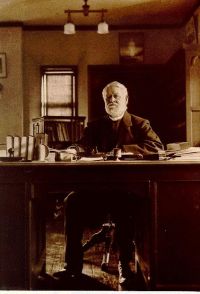 Charles Augustus Briggs,
Popular Science Monthly
(1900)
“ The pulpit is more and more being merged in the worship, and is losing its domination over the worship. With this tendency goes increased attention to the Holy Sacraments, especially the Holy Communion, more frequent celebrations and more frequent participation, increased opportunity of worship during Sunday and during the week, and also therewith the greatly increased attention to the organization of the Church for aggressive Christian work. ”
Sarah A. Myers, Watch—Work—Wait
“ None of the gross vices always to be found in large communities were practised there. On the Sabbath-day, when its only bell sent its voice distinctly over the valley, the humble dwellers met in the single church, not only bound together by the tie of human brotherhood, but by the sweeter ties of Christian charity, to hear the word of God and perform the work of prayer and praise. ”
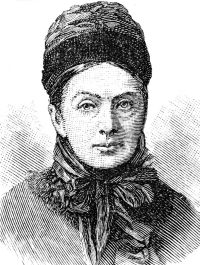 Isabella L. Bird,
Journeys in Persia and Kurdistan…
“ Few things can be more pathetic than a congregation standing in the dark and dismal nave, kissing the common wooden cross, and passing from hand to hand the kiss of peace, while the priest, in dress like their own, with girdle and stole of the poorest material, moves among the ancient Liturgies in front of the dusty sanctuary, leading the worshippers in prayers and chants which have come down from the earliest ages of Christianity ”
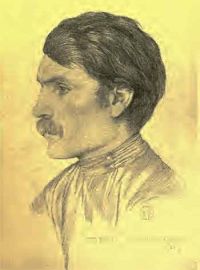 Stephen Graham,
The Way of Martha and the Way of Mary
“ A crossing of ourselves; the sermon is ended. The crowd about the altar breaks up, and we spread ourselves out in the fresher spaces of the church once more, and the pale singing of the black-robed choir recommences as the conclusion of the liturgy is sung. The sixty sisters prostrate themselves 167together in a billowy mass once more. Worshippers cross themselves before the altar and go out. The Communion bread is taken and the service is over. The waifs march out; we all come out. ”
Various, The Catholic World, Vol. 19, April 1874‐September 1874
“ Still, there they are, mindful, at least, of “Sabbath worship,” when the majority of their co-religionists see no necessity for remembering it.Crowds of Anglican clergymen were also found travelling, on their own account, in the Protestant cantons. Five-and-twenty were together one day at Mürren, of all shades and hues, too; from my Lord Bishop, with his wife and daughters, to the young Ritualist curate, in his Roman collar and otherwise Catholic dress, the highest ambition of whose heart is to be taken—or rather mistaken—for a true Catholic priest. ”
Various, The Strand Magazine, Vol. 17, No…
“ In those sequestered places, in the case of country houses very far removed from a church or chapel, it is customary for a clergyman or lay preacher to come along on Sundays and preach to the family, the servants, and station hands—often quite a large congregation, particularly at shearing-time. ”
 J. Breckenridge Ellis,
The Story of a Life
“ Sunday morning I preached at the Baptist chapel to a good audience. Then we ate the Lord's supper. I insisted on the ancient order of things—especially on meeting the first day of the week to break bread. They were delighted, and said I must preach in their chapel whenever I wanted to speak. There is a prayer meeting held every day at noon, and preaching held three or four times a week in the people's hall; but oh, they are so benighted! They don't know the Gospel in its beauty and power. I just burn to preach to them. ”
 Henry David Thoreau,
A Yankee in Canada, with Anti-slavery and reform papers
(1866)
“ Such a cave at hand, which you can enter any day, is worth a thousand of our churches which are open only Sundays,—hardly long enough for an airing,—and then filled with a bustling congregation,—a church where the priest is the least part, where you do your own preaching, where the universe preaches to you and can be heard. ”
Michael Wood, The willow weaver and seven other tales (1916)
“ They cannot walk with your feet; they must use their own. They must cross barefoot, or they will fall into the pool.’“After a while the man who ruled this little northern village determined to cross; he was hungry, and preferred the scantiest fare to fasting; besides he saw the cross on the ruined altar, and he desired to enter the chapel and pray. The preacher demurred at the depth of the cold still water; the chapel was a former place of Popish worship, the cross on the altar offended him, and he was not yet very hungry, besides he had a little food still in his wallet. ”
 William Dean Howells,
Mrs. Farrell
“ The old church has no other grace than they give it, as it stands staring white on the border of the village green, and sends out over the valleys and uplands the wild, plangent summons of its Sabbath bell. ”
J. D. Jones, The model prayer (1919)
“ In our Congregational Churches free prayer is the general, almost the invariable practice. Our forefathers were so shocked at the formalism of the liturgical worship of the Established Church, that in the interest of true spiritual worship they rejected forms altogether; some even going to the length of objecting to the use of the Lord’s Prayer in the public services of the sanctuary. Their dislike and distrust of forms we have to a large extent inherited. ”
Lady Mary Ross, "Granny's Chapters" (on scriptural subjects…
“ Our Churches are set apart for the worship of God as much as the Temple was; and if we do not worship God when we go for that purpose, we displease our heavenly Father. Everything belonging to God must be treated with reverence, and honoured by being used according to His Will. In this way, therefore, we must reverence and honour His day, His house, and His word. You will thus see that being careless and inattentive at Church is a great sin. ”
Various, Catholic World, Vol. 24, October…
“ The canons were chanting the Office when we entered, and looked like bishops in their flowing purple robes. The service ended with a procession around the church, the clergy in magnificent copes, heavy with ancient embroidery in gold. The people were all devout. No careless ways, as in many places where religion sits lightly on the people, but an earnestness and devotion that were impressive. ”
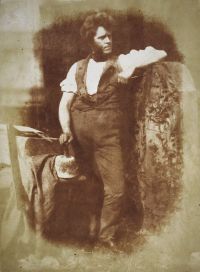 Hugh Miller,
Leading Articles on Various Subjects
“ In every family had the worship of God been set up. One could not pass an inhabited cottage in the evening, from which the voice of psalms was not to be heard. On Sabbath morning, the whole population might be seen wending their way, attired in their best, along the blind half-green paths in the heath, to the parish church. The minister was greatly beloved, and all attended his ministrations. ”
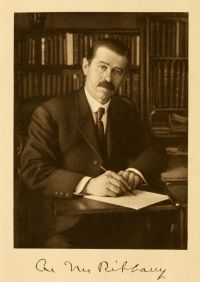 Abraham Mitrie Rihbany,
The Syrian Christ
“ Amen." Then the priest walks into the church with the child, saying, in its behalf, "I will come into thy house in the multitude of thy mercy: and in thy fear will I worship toward thy holy temple." [4] As he {39} approaches the center of the church, he says again, "Now enters the servant of God," etc. Then standing in the center of the church, and surrounded by the reverently silent congregation, the priest says again, in behalf of the child, "In the midst of the congregation will I praise thee, O Lord." ”
K. A. Heinrich Kellner, Heortology (1908)
“ Every day, in the early morning, the doors of the church were opened, and all the monks and nuns, as well as many of the laity, assembled, and until sunrise, sing hymns and psalms, in alternate choirs, along with the antiphons and prayers. About sunrise they begin to say the ‘matutinas ymnos.’ The bishop arrives with the clergy and sings the prayer within the chancel. Then he comes forth and blesses the people one by one. ”
Edward J. Quigley, The Divine Office: A Study of the Roman Breviary
“ Every priest must feel that the church benches, or the sanctuary, with their silence, their every part awakening and reminding the soul that this is the house of God, this is the gate of Heaven, are places most suitable for prayer and are great aids to fervent prayer. The thought of the presence of Christ with His adoring angels, to whose songs of praise the priest should unite himself, should help wonderfully in the devout recitation of the Hours. ”
John Gerard, The Condition of Catholics Under James I
“ I took care that all in the house should approach the Sacraments frequently, which none before, save the good widow, used to do oftener than four times a year. Now they come every week. On feast-days, and often on Sundays, I preached in the chapel; moreover, I showed those who had leisure the way to meditate by themselves, and taught all how to examine their conscience. I also brought in the custom of reading pious books, which we did even at meals, when there were no strangers there; for at that time we Priests sat with the rest, even with our gowns on. ”
