“ Some thirty feet long, this engine-room, bulkhead to bulkhead, and, save for a recess or two extending to the ship’s skin, penned in between bunkers. Twelve hundred tons of coal, distributed like a thick wall round us, make the place warm in the tropics. Forward, the stokeholds, dimly enough lit save when a furnace door opens and a fiery glow illuminates the bent back and soot-blurred face of some cosmopolitan fireman. Overhead, each lit by a single lamp, are the water-gauges—green glass tubes in which the water ebbs and flows with the motion of the ship. ”
Coal ship
Definition and stakes
The theme of “coal ship” has been addressed by authors such as Hawthorne Daniel, Joseph Conrad, Sir Cyprian Bridge, Edward A. Martin and R. Cross. It is often associated with terms like engine, fuel, port, cargo and steamship.
Quotes about “coal ship”
“ Six or seven hundred tons of coal per day is flung into her dozens of furnaces, against our twenty-five tons. Think of the twenty-odd engineers who scarcely see their bunks from the Elbe to the Hudson. And, in that cool, grey, pearly dawn, think of those passengers sleeping in their palatial state-rooms, with never a thought of the slaves who drive that monstrous ship across the Atlantic at such an appalling speed. ”
Hawthorne Daniel, Ships of the seven seas (1925)
“ She grunts and shrieks and groans as the Havana stevedores take the coal ashore, her crew more or less idle, except for odd jobs, for crews of tramps attend to neither the discharging of cargoes nor the loading. Once the coal is ashore, however, the crew has a job. The ship must be fumigated, by order of the port authorities, and once fumigated the hatches must be lifted off, and the vast caverns into which the new cargo is to go must be swept and cleaned with care, for sugar does not mix too well with coal dust. ”
Bartimeus, A tall ship on other naval occasions
“ You reached it by perpendicular steel ladders descending through a web of hissing steam pipes and machinery; once across greasy deck-plates and through a maze of dimly lit alleys, you would find Nosey shovelling coal into the furnaces under the direction of a hairy-chested individual afflicted, men said, by religious mania, who sucked pieces of coal as an antidote to chronic thirst, and spat about him indiscriminately. ”
Archibald Williams, The Romance of Modern Mechanism
“ A carrier, from which are slung the sacks of coal, is hauled backwards and forwards by steel ropes stretching between the foremast of the transport and a mast rigged on the warship.Just as a competitor in a long-distance race takes his nourishment without halting, so should a battleship be able to coal "on the wing." The task of transferring so many tons of the mineral from one ship's hold to that of another may seem easy enough to the inexperienced critic, and under favourable conditions it might not be attended by great difficulty. ”
J. W. S. Marr, Into the Frozen South
“ But though we backed and rammed and stopped, and backed and rammed again, making a furious bobbery all the time, the ship, shaking fore and aft at the impact of her bows on the thickening ice and the harsh grind and rattle of the broken stuff filling the air, we made paltry progress, advancing a bare mile during the entire morning watch. To burn coal at that rate without any commensurate progress was foreign to our best interests, so we gave up the attempt and lay to alongside a convenient floe, there to await the pleasure of the elements, and whistle for a favouring breeze. ”
R. A. Fletcher, Steam-ships (1910)
“ Should it be deemed prudent to carry a reserve stock, coal for an additional 1500 miles would still not seriously interfere with the carrying properties of a large vessel, while it would obviate the necessity of having any stoppage but the Cape between Great Britain and Port Phillip. A vessel of 2000 tons builders’ measurement will carry at least 2000 tons dead weight, over and above her own weight of ship and machinery. Presuming that she takes coal for 9000 miles, or 750 tons, we still have a balance of 1250 tons for cargo and, in a well-arranged vessel, room for 350 passengers. ”
Lewis R. Freeman, Stories of the Ships
“ A ship may coal at any hour of the day or night—especially if she is just in from the sea and there appears to be a chance of her being called upon to put out again on short notice—but the usual time is the morning. Barrows and sacks are brought out, and such other preparations as practicable are made the night before. [Pg 221] Breakfast is served at an early hour, every one—officers and men—coming down to it in their "coaling togs." The latter may be any old kind of a rig-out calculated to keep the coal-dust from penetrating to a minimum section of the hide of the wearer. ”
R. Cross, The Voyage of the Oregon from San Francisco to Santiago in 1898
“ I bought a nice pair of shoes today for 3.50 in U.S. Gold. there is no liberty to any one hear so we have to buy something that is some good to us. Expect to coal ship all night so as to pull out to morrow. April 7. Got all the coal on this morning at 4 A.M. there is about 1750 tons on now, never had so much on before. got 100 tons on deck in sacks. we are knocking some of the coal dust off the sides. She is a very dirty ship now and expect to remain so for a long time to come. There is some talk of a Spanish Gun Boat or a Torpedo Boat in the Straights waiting for us. ”
John Henry Goldfrap, The Boy Aviators' Polar Dash; or…
“ A week later the final good-byes were said and the Southern Cross was ready for sea. She was to meet a coal-ship at Monte Video in the Argentine Republic which would tow her as far as the Great Barrier. This was to conserve her own coal supply. The other vessel would then discharge her cargo of coal,—thus leaving the adventurers a plentiful supply of fuel in case the worst came to worst, and they were frozen in for a second winter. ”
Sir Cyprian Bridge, Sea-Power and Other Studies
“ Expenditure of coal and of some important articles of engineers' stores depends on the relation between the time that she is stationary and the time she is under way. It should be particularly noted that the distinction is not between time at anchor and time at sea, but between time at anchor and 'time under way.' If a ship leaves her anchorage to run an engine-trial after refit, or to fire at a target, or to adjust compasses, or to go into dock—she burns more coal than if she remained stationary. ”
William Caius Crutchley, My Life at Sea
“ The experience of a coal cargo is not a pleasant one, but there were quite a lot of fine ships in Newcastle on a similar errand to ours. We got away with fair expedition and made the eastern passage up to Manilla, where every basket of coal that came out of the main hatch was tipped over the side by me. Work of that sort in a blazing sun is a fair test of endurance; however, it was done, the holds cleaned, the ship watered and loaded for home with sugar. Then we had a day’s leave on shore. ”
Evgenii Sigizmundovich Politovskii, From Libau to Tsushima
“ Can you guess what our one topic of conversation in the fleet is about? Coal! It is our weak spot. Our comings, our goings, our voyage, and even our success depend on coal. In order to stimulate the men, they have established prizes, which are given to the crew of the ship that coals quickest. ”
 George Cary Eggleston,
Camp Venture: A Story of the Virginia Mountains
“ No ship that ever was built could stand that. It would twist her out of shape, warp her seams open and send her to Davy Jones in a very little time. So from the moment the stokers begin to shovel coal into the furnaces under a steamship's boilers the coal trimmers and coal carriers must busy themselves with the night and day work of so shifting the coal as to keep its weight properly distributed. But now to come back to what I was saying. Little by little we are learning to save some small part of the enormous waste in the burning of coal. ”
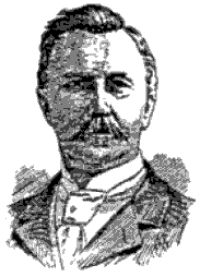 John Randolph Spears,
The Story of the American Merchant Marine
“ At the port of discharge other scoops (a sort of dredge) , made to operate through the hatches, lift the cargo out of the ship at a rate of more than a thousand tons an hour. The great coal companies of the East deliver their coal in similar pockets on the coast, but they transport a large portion of it thence to the consumer by means of tugs and barges. In proportion to the coal carried, the tug-and-barge system costs less than cargo-carrying steamers. The tugs, with their high-priced crews, are kept moving ”
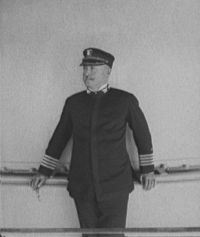 French Ensor Chadwick,
Ocean Steamships
“ Such a craft would have a displacement of about 4,800 tons, could steam 10 knots per hour with 1,000 I. H.-P., and carry 3,000 tons of cargo, fuel, stores, and equipment. Taking the distance to be steamed at 3,200 knots, and the consumption of fuel at 4 pounds per I. H.-P., it will be seen that the net consumption of coal is 571 tons; adding to this twenty-five per cent. for contingencies of weather, for raising steam, cooking, heating, etc., the ship would have to leave port with 714 tons of fuel and rather less than 2,300 tons of cargo, stores, etc., on board. ”
Sir Cyprian Bridge, Sea-Power and Other Studies
“ The charge at 2s. per ton on 50,600 tons would be £5060. I am assured by every engineer officer to whom I have spoken on the subject that the deterioration in coal due to the four different handlings which it has to undergo if landed in lighters and taken off again to ships from the coal-store cannot be put at less than 10 per cent. Note that this is over and above such deterioration as would be due to passing coal direct from the hold of a collier alongside into a ship's bunkers. If anyone doubts this deterioration it would be well for him to examine reports on coal and steam trials. ”
Hawthorne Daniel, Ships of the seven seas (1925)
“ Coal, on the other hand, is lighter than ore, and a cargo fills her hold to overflowing, raising her centre of gravity and reducing the roll. The captain, however, must know just how his ship handles whether she is carrying ore, or coal, or any of a score of different cargoes. ”
Edward Hungerford, The Modern Railroad
“ Into the empty holds of the ships they pour bituminous coal from Western Pennsylvania and West Virginia, a carload at a time. The hoist-crane reaches down to the dock siding for a gondola, snaps the car-body off from the trucks, lifts it aloft over the open hatch of the waiting vessel, and turns it upside down. In less time than it takes to tell it, the coal is in the ship, and the car-body is being slipped back again upon its trucks. ”
Howard Irving Chapelle, The Pioneer Steamship Savannah…
“ All requirements that have been given can be approximated for space necessary in the hull. It is established that the ship carried about 75 tons of coal and 25 cords of wood. The coal would take up from about 1,700 to 1,850 cubic feet of space, and because of its weight it would have to be bunkered alongside the boilers in the lower hold, where there would be ample room, in the reconstruction, for two bunkers, each in excess of 30 square feet in cross section and about 28 feet in length for a single boiler; one third more bunker space, in length, would be required for double boilers. ”
Various, Blackwood's Edinburgh Magazine - Volume 57…
“ Crowds of canoes, of various shapes and colours, moored along the shore, complete the scene.The passengers were discontented with the India. They never saw any thing like the dirt of the ship. The coal-dust penetrated into every thing. It was in vain to sigh for a clean face and hands, for they were unattainable. This must be true; yet it passes our comprehension. We cannot understand why coal-dust should make its appearance at all for the affliction of the passengers. It certainly blackens no one in our European steamers. ”
W. J. Connor, The Stoker's Catechism
“ Our engines receive a thorough overhaul, boilers are cleaned, cabins and stairways painted, and all bright metal cleaned and repolished; our coals are delivered on board by a swarm of men, women and youths, of both sexes, carrying them in small wicker baskets on their heads, and stepping on a scale or counter on their way to the ship, the process occupying about three days for about 800 tons of Welsh coal. ”
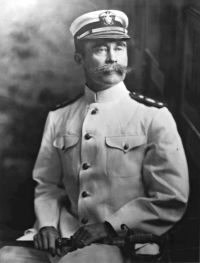 Robert E. Peary,
The North Pole: Its Discovery in 1909 under the auspices of the Peary Arctic Club
“ When the ice is not so heavy as to be utterly impenetrable, the ship under full steam moves back and forth continually, butting and charging the floes. Sometimes a charge will send the ship forward half her length, sometimes her whole length—sometimes not an inch. When, with all the steam of the boilers, we can make no headway whatever, we wait for the ice to loosen up, and economize our coal. We do not mind using the ship as a battering ram—that is what she was made for; but beyond Etah coal is precious, and every ounce of it must yield its full return of northward steaming. ”
Samuel Murray, Seven Legs Across the Seas: A Printer's Impressions of Many Lands
“ A stream of these is constantly being tossed from one to the other, and small girls are engaged at returning the empty ones to the scow. Two, and even three, streams of coal run into the bunkers from one scow by means of the handleless baskets, and, as from three to five scows will be unloading at the same time from both sides of the vessel, it will be understood what a large quantity of fuel can be emptied into a ship from ten to fifteen of these coal lines. ”
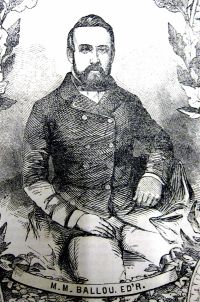 Maturin M. Ballou,
Equatorial America
“ A hundred women and girls, wearing one scanty garment reaching to the knees, are in line, and commence at once to trot on board in single file, each one bearing a bushel basket of coal upon her head, weighing, say sixty pounds. Another gang fill empty baskets where the coal is stored, so that there is a continuous line of negresses trotting into the ship at one port and, after dumping their loads into the coal bunkers, out at the other, hastening back to the source of supply for more. ”
S. A. Reilly, Our Legal Heritage: King AEthelbert - King George III, 600 A.D. - 1776
“ No coal trader or dealer may use his own lighters, barges, or other vessels to carry coals on the Thames River to and from any ship and to and from any wharf, dock, or creek because this has impaired the business of the watermen and wherrymen, whose vessels must now be registered and display such mark on their hulls. ”
 Hendrik Willem Van Loon,
The Golden Book of the Dutch Navigators
“ There was some coal on board the ship, but it had been saved for use upon the homeward trip in the spring, when the men would be obliged to travel in open boats. The coal was brought to the house. The worst cracks in the walls were carefully filled with tar and rope, and somebody climbed to the roof and closed the chimney; not an ounce of the valuable heat must be lost. As a result the men felt comfortable for the first time in many months ”
Clive Day, A history of commerce (1922)
“ Gains resulting from increase in size.—Another most important factor in the development of efficient steamers has been mere growth in size. A ship’s carrying power varies as the cube of her dimensions, while the resistance offered by the water increases only a little faster than the square of her dimensions. Large ships, therefore, consume less coal per ton of cargo, and as large boilers and engines consume coal more efficiently than small ones, there is a double gain. ”
 Sydney Marow Eardley-Wilmot,
The Development of Navies During the Last Half-Century
(1892)
“ When the ship is at sea it is clear that these engines, many of which are constantly at work, and all of which must be ready to work on an emergency, will consume an appreciable proportion of the coal assumed in the official tables to be available for the purpose of continuous steaming at 10-knot speed, as the consumption for auxiliary purposes varies from about 5 to 8 tons a day. ”
Samuel Murray, Seven Legs Across the Seas: A Printer's Impressions of Many Lands
“ The time required to furnish a vessel with bunker coal in this manner is from four to five hours. The wages of the coal passers are based on the amount of coal a ship takes on, as an equal sum is paid the coalers. This amounts to from 15 to 25 cents each. As many as 500 Japanese—mostly women—keep life in their bodies by this means of employment. ”
Various, Encyclopaedia Britannica, 11th Edition…
“ Conversely, the radius of effective action of the ship will be doubled as regards consumable stores if the crew be halved, and will be increased by 50% if the same weight of fuel be carried in the form of liquid instead of coal. In space the gain by using oil fuel is still greater, and 36 cubic feet of oil as stored are equal in practical calorific value to 67 cubic feet of coal according to the allowance usual for ship’s bunkering. ”
 Mary Henrietta Kingsley,
West African studies
“ The worst of it is that no amount of experience will drive it into the head of the First officer that the engineer will want coal—particularly and exactly when the ship has just been thoroughly scrubbed and painted to go into port. ”
Related terms
Authors who wrote about “coal ship”
Hawthorne Daniel Joseph ConradSir Cyprian BridgeEdward A. MartinR. CrossW. S. Lindsay
 William FalconerJ. W. S. MarrEvgenii Sigizmundovich PolitovskiiR. A. Fletcher
 William McFeeWilliam Caius CrutchleyRobert Caldwell ReidSydney Marow Eardley-WilmotJames Croil
 William Bligh
 Edwin M. Bacon
 Olaudah Equiano
 Ralph Delahaye Paine14th earl of James Sinclair Caithness
Joseph ConradSir Cyprian BridgeEdward A. MartinR. CrossW. S. LindsayWilliam FalconerJ. W. S. MarrEvgenii Sigizmundovich PolitovskiiR. A. FletcherWilliam McFeeWilliam Caius CrutchleyRobert Caldwell ReidSydney Marow Eardley-WilmotJames CroilWilliam BlighEdwin M. BaconOlaudah EquianoRalph Delahaye Paine14th earl of James Sinclair Caithness