Colonial government

Definition and stakes

Various,  Blackwood's Edinburgh Magazine - Volume 61…

“ Our obvious policy would be, to conciliate the leading men by titles of honour, to conciliate the rising generation by giving them the offices of their own country, and make it a principle of colonial government, that while the command of the forces, or the governor-generalship should be supplied from home, every office below those ranks should be given to those brave and intelligent individuals of the colony who had best earned them. ”
Source: Gutenberg

Earl of James Bruce Elgin,  Letters and Journals of James, Eighth Earl of Elgin

“ One thing is, however, indispensable to the success of this or any other system of Colonial Government. You must renounce the habit of telling the Colonies that the Colonial is a provisional existence. You must allow them to believe that, without severing the bonds which unite them to Great Britain, they may attain the degree of perfection, and of social and political development, to which organised communities of free men have a right to aspire. ”
Source: Gutenberg

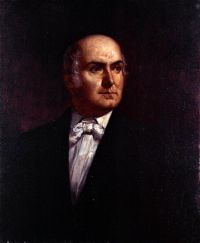
Portrait of Abel P. Upshur Abel P. Upshur,  A Brief Enquiry into the Nature and Character of our Federal Government (1863 (org. 1840))

“ They owed, indeed, allegiance to the British king, as the head of each colonial government, and as forming a part thereof; but this allegiance was exclusive, in each colony, to its own government, and, consequently, to the king as the head thereof, and was not a common allegiance of the people of all the colonies, to a common head. [1] These colonial governments were clothed with the sovereign power of making laws, and of enforcing obedience to them, from their own people. The people of one colony owed no allegiance to the government of any other colony, and were not bound by its laws. ”
Source: Wikisource

Get perspective with Kwize: daily news enlightened by great literature