Criminal psychology

Definition and stakes

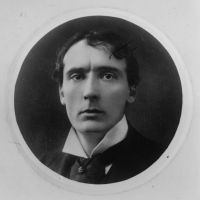
Portrait of Enrico Ferri Enrico Ferri,  Criminal Sociology

“ To cite a few details of criminal psychology, it may be stated that of the two physiological conditions of crime, moral insensibility and improvidence, occasional crime is especially due to the latter, and inborn and habitual crime to the former. With the born criminal it is, above all, the lack or the weakness of moral sense which fails to withstand crime, whereas with the occasional criminal the moral sense is almost normal, but inability to realise beforehand the consequences of his act causes him to yield to external influences. ”

Source: Gutenberg

Portrait of Enrico Ferri Enrico Ferri,  Criminal Sociology

“ This is why the test of premeditation has no absolute value in criminal psychology, as a distinction between the born criminal and the criminal of passion; for premeditation depends especially on the temperament of the individual, and is exemplified in crimes committed by both anthropological types.
Amongst other symptoms of the criminal of passion, there is also the precise motive which leads to a crime complete in itself, and never as a means of attaining another criminal purpose.
”
Source: Gutenberg

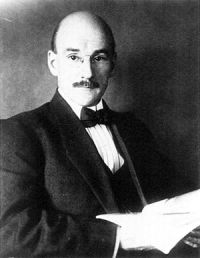
Hans Gross,  Criminal Psychology: A Manual for Judges…

“ If we know that a real need was behind the crime, we need no longer wonder at the magnitude of the power. The relation between the crime and the criminal is defined because we have discovered his needs. To these needs a man’s pleasures belong also; every man, until the practically complete loss of vigor, has as a rule a very obvious need for some kind of pleasure. It is human nature not to be continuously a machine, to require relief and pleasure. ”
Source: Gutenberg

Get perspective with Kwize: daily news enlightened by great literature