“ Knowledge of all such and sundry, with equipment with which to assure emphasis on essential values, must the criminologist possess, and be able to apply. He cannot have acquired specific means to that end a’circling in a swivel chair, and he won’t get anywhere with any kind of preparation while listening to other than the voice of reason, established in harmony with the cumulative study, observation and experience of mankind. ”
Quotes about “criminologist”
“ First, because the average criminal is pronouncedly ego-centric; and secondly, for the reason that the false throws of his supposed mentors and moulders, parallel in his mind his own oblique thinking and doing, and leave him no more to blame for what he did to society, than they for what they do to him. And there is more than a dash of equity in the criminal’s specific conclusion. It is up to the criminologist to work skillfully and consistently with skilled tools. ”
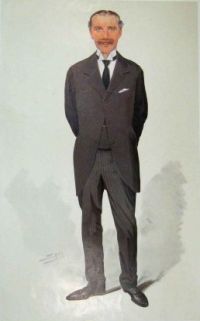 Sir Evelyn Ruggles-Brise,
The English Prison System
(1921)
Sir Evelyn Ruggles-Brise,
The English Prison System
(1921)
“ A reaction against this abstract conception of crime came in the early 'eighties from a school of Criminologists known as the Italian School, of which the chief was Lombroso. Theories of the criminel-né—i.e., a human being fore-doomed to crime by atavistic propensity, and distinguishable physical stigmata, or 'tares physiologiques'—created considerable sensation at the time, and it cannot be denied that, though refuted by later enquiry, they exercised a profound influence in Europe, and gave a direct impulse to the scientific study of the causes predisposing to criminal acts. ”
James Leslie Allan Kayll, A Plea for the Criminal
“ The author hopes that the criminal, a subject of patient study for the last ten years, will be seen in a somewhat new light. Criminologists declare the criminal to be seven-eighths of an average man. May society find in itself the ability and good-will to contribute the other eighth! ”
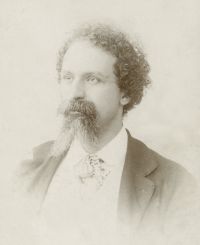 Enrico Ferri,
The Positive School of Criminology
Enrico Ferri,
The Positive School of Criminology
“ The classic school of criminology, being unable to locate in the course of its scientific and historical mission the natural causes of crime, as I have shown in the preceding lectures, was not in a position to deal in a comprehensive and far-seeing manner with this problem of the remedy against criminality. Some of the classic criminologists, such as Bentham, Romagnosi, or Ellero, with a more positive bent of mind than others, may have given a little of their scientific activity to the analysis of this problem, namely the prevention of crime. ”
James Leslie Allan Kayll, A Plea for the Criminal
“ Crime is assisted more than it is crippled. The protection of society is secured only during the period of incarceration. At the end of [Pg 80] that period the criminal must be discharged and he goes forth often a more skilful criminal than before and with a vow to take vengeance upon society.Regarding these objects as secondary the reformation of the offender has been acknowledged as primary by criminologists, and they turned their attention to study the criminal pathologically, to enquire into the causes of crime and also to make trial of the best methods for securing reformation. ”
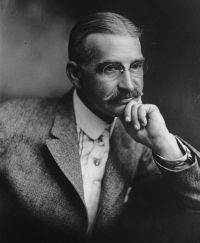 L. Frank Baum,
The Flying Girl — 25. The Real Heroine
(1911)
L. Frank Baum,
The Flying Girl — 25. The Real Heroine
(1911)
“ Without knowing it the girl was arguing on the side of the world’s most expert criminologists, who hold that to destroy an offender cannot benefit society so much as to redeem him. ”
Ida Belle White, Spirits Do Return
“ To the prisoner he said: “You may be seated, sir. I want to talk to you.”Then to the guard: “I will excuse you, guard. I wish to question the prisoner alone.”Turning to the prisoner: “Now, sir, I should like to hear something about yourself. Why were you sentenced, and have you registered under your real name?”“I have, sir. I am not a criminal. I have been sentenced because of strong circumstantial evidence. I am innocent. I did not commit the crime for which I am here.”“Well, my opinion of you is good. I do not believe that you are a murderer—at least, I hope not. ”
 E. Phillips Oppenheim,
The Kiss of Judas
(1922)
E. Phillips Oppenheim,
The Kiss of Judas
(1922)
“ The criminal lawyer, who was our host, heard scraps of our conversation and leaned forward. “You did well to leave Scotland Yard when your reputation stood high, Sir Norman,” he said. “A new era of crime has dawned, and the struggle no longer equal. It isn't the riffraff of the world today who take to murder and burglary. The skilled and conscienceless scientist has taken their place. The criminal of today, in nine cases out of ten, is of higher mental caliber than the detective who is opposed to him.” ”
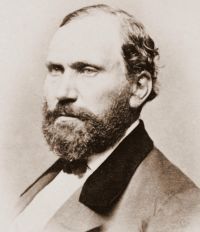 Allan Pinkerton,
The Burglar's Fate, and The Detectives
Allan Pinkerton,
The Burglar's Fate, and The Detectives
“ With the capture of the criminal the detective's duty ceases, and all the sympathetic promptings of his nature have full play. He has performed his duty to the state, to the law and to society, and that done, his knowledge of the sufferings which crime have caused leads him to acts of kindness and of practical assistance. To-day, I have some of the warmest and most grateful friends among the families of the men whom I was compelled to bring to justice, and in many cases the criminals themselves have acknowledged my actions, and have been better men in consequence. ”
William Feilden Craies, 1911 Encyclopædia Britannica (1911)
“ Next comes the “délit,” which includes all offences punished by imprisonment over a week and under five years. Then, finally, we arrive at the “crime,” the highest form of offence in French criminal law. It includes all offences subject to a more severe sentence than the punishment assigned to a délit. All cases are held to be crimes where death, life-imprisonment with or without hard labour, deportation out of the kingdom, detention or seclusion in a fortress or other expressly assigned place, are the punishments mentioned by the law. ”
Edwin H. Porter, The Fall River Tragedy: A History of the Borden Murders
“ Now, when a police officer undertakes to investigate a crime, he is possessed and saturated with the thoughts and experiences he has with bad people. He is drifting and turning in the way of finding a criminal, magnifying this, minimizing that, throwing himself on this side in order to catch somebody, standing before a community that demands the detection and punishment of the criminal, blamed if he does not get somebody into the lockup before morning. “What are the police doing?” says the newspaper, and the newspapers, you know, are not always right, mostly. ”
John Dickson Carr, The Haverfordian (1929)
“ And your psychological detective wants to pick out the kind of man who committed a crime; after which he hunts around till he finds one and says, ‘Behold the murderer,’ whether the evidence supports him or not. I hope you'll permit me to say damned nonsense. There is no man who is incapable of a crime under any circumstances; to say that a daring crime was necessarily committed by a daring person is to argue that a drunken author can write on the subject of nothing but liquor, or that an atheistical artist could not paint the Crucifixion. ”
Arthur Train, By Advice of Counsel (Arthur Train… (1921)
“ All the previous cases in which he had sat had been for murder or arson, robbery or theft, burglary, blackmail or some other outrageous offense against common morals or decency. But here was a man who had never done anything but good in his life, and was at the bar of justice charged with crime merely because some cold-blooded mercenaries thought he was interfering with their business! Bently was in a recalcitrant and indignant frame of mind against the prosecution long before the defense began. ”
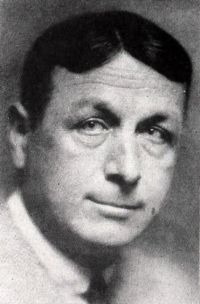 Arthur Cheney Train,
Courts and Criminals
Arthur Cheney Train,
Courts and Criminals
“ Few complainants have ever before appeared in a police court, and are filled with repugnance at the rough treatment of prisoners and the suffering which they observe upon every side. After they have seen the prisoner emerge from the cells, pale, hollow-eyed, bedraggled, and have beheld the tears of his wife and children as they crowd around the husband and father, they begin to realize the horrible consequences of a criminal prosecution and to regret that they ever took the steps which have brought the wrong-doer where he is. ”
Rodrigues Ottolengui, Final Proof; Or, The Value of Evidence
“ The removal of your brother's body from his coffin was a criminal act in itself, even if we do not take into account the object of the person who did this.""And what, pray, was the object, since you are so wise?""Perhaps the substitution of the body of a victim of murder, in order that the person killed might be incinerated.""That proposition is worthy of a detective. You first invent a crime, and then seek to gain employment in ferreting out what never occurred." ”
Frank Thorpe Porter, Twenty Years' Recollections of an Irish Police Magistrate
“ Activity of body, corporeal strength, general mental intelligence, and moderate educational acquirements, are considered sufficient qualifications for the discharge of detective duties, and further teaching is left to be acquired by future experience. In several continental states, reports of important criminal trials are arranged for the use of the police by an archiviste, and instruction is thereby afforded as to the means by which guilt was established, or, perhaps, to the mistakes or rash precipitancy by which justice was defeated, or innocence accused. ”
Enrico Ferri,
Criminal Sociology
“ The born criminals and the occasional criminals constitute the majority of the characteristic and diverse types of homicide and thief. Prison governors call them ``gaol-birds.'' They pass on from the police to the judge and to the prison, and from the prison to the police and to the judge, with a regularity which has not yet impaired the faith of law-makers in the efficacy of punishment as a cure for crime. ”
Clifton R. Wooldridge, Twenty Years a Detective in the Wickedest City in the World
“ It is not the drunkard only whose red nose, flabby cheeks and rheumy eyes betray him; it is the senualist whose vice is read in his lips, the knave whose propensity is revealed in the shape of his mouth; the man of violence is surrendered by his eyes. An experienced detective policeman, or a trained jailer seldom needs to ask the crime of which the prisoner was guilty. He can tell it by his face.It is quite evident that in the future the study of physiognomy is going to be pursued more vigorously than it has been. As a means of preventing crime it may prove invaluable. ”
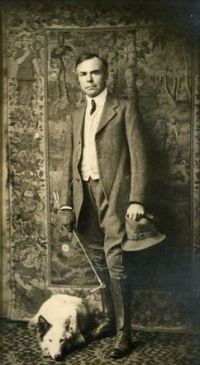 Melville Davisson Post,
The Strange Schemes of Randolph Mason
Melville Davisson Post,
The Strange Schemes of Randolph Mason
“ The prisoner here stands charged with the highest crime. The law demands, first, that the crime, as a fact, be established. The fact that the victim is indeed dead must first be made certain before any one can be convicted for her killing, because, so long as there remains the remotest doubt as to the death, there can be no certainty as to the criminal agent, although the circumstantial evidence indicating the guilt of the accused may be positive, complete, and utterly irresistible. ”
James Devon, The Criminal & the Community
“ The Pleas of the Crown are murder, robbery, rape, and wilful fire-raising. Those who have been convicted of crime as defined by the section quoted would properly be called criminals, but it is obvious that the name is applied and is applicable to many who do not fall under the definition. In practice the treatment of prisoners who have been convicted of offences is the same as that of those who have been convicted of crimes, when the sentence is one of imprisonment. ”
 J. M. Barrie,
My Lady Nicotine
(1896)
J. M. Barrie,
My Lady Nicotine
(1896)
“ Three detectives, including witness, were told off to arrest him, and they succeeded in doing so. (Loud and prolonged applause.) The judge interposes here. He fails, he says, to see that this evidence is relevant. So far as he can see, the question is not whether a murder has been committed, but whether, under the circumstances, it is a criminal offense. The prisoner should never have been tried here at all. It was a case for the petty sessions. If the counsel cannot give some weighty reason for proceeding with further evidence, he will now put it to the jury. ”
James M'Govan, Traced and Tracked; Or, Memoirs of a City Detective
“ I drove rapidly back to one of those wayside stations of the county police, and there left my prisoner safely locked up, every question he answered confirming my impression that he had been speaking the truth. The only difficulty I had with him was in getting him to describe the clothes which he had exchanged for the old blacks he wore. These he either could not or would not name—in colour, shape, or material—a difficulty which I only understood when the rags were before me—and then it would have puzzled me to do what I wondered at him not doing. Even a detective can be unreasonable at times. ”
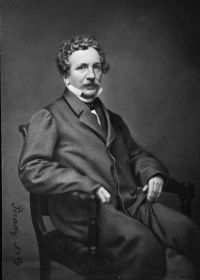 G. P. R. James,
Morley Ernstein; or, the Tenants of the Heart
G. P. R. James,
Morley Ernstein; or, the Tenants of the Heart
“ The barrister who would conduct a trial for horse-stealing, with a light and flippant speech of five minutes, although by the sanguinary laws of old, the life of the prisoner was in as great danger as if he had committed murder, would become impressed by the deepest sense of his situation, and speak by the hour together, if some great man were slain by the hand of an inferior; and the slightest touch of romance will hold a court for hours over a trial for murder, which would hang a dozen men for simple forgery in an hour and a half ”
Arthur Cheney Train,
The Prisoner at the Bar: Sidelights on the Administration of Criminal Justice
“ Often enough he is a model husband and father. So, too, may be your forger, gambler, swindler, burglar, highwayman, or thief,—any in fact except the real moral pervert; and of course murder is entirely compatible on occasion with a noble, dignified and generous character. "There is nothing essentially incongruous between crime and culture." The prosecutor who begins by loathing and despising the man sitting at the bar may end by having a sincere admiration for his intellect, character or capabilities. This by way of defence to crime in general. ”
Bernard Glueck, Studies in Forensic Psychiatry
“ Whatever light has been thrown in recent years upon this most important social problem, criminality, did not issue from a contemplation of the abstract and more or less sterile theses on crime and punishment as reflected in current works on criminal law and procedure, but was the result of research carried on at the hands of the physician, especially the psychopathologist, sociologist, and economist. ”
R. Austin Freeman, The Mystery of Angelina Frood… (1925)
“ If the evidence points clearly to a particular person as the murderer, we shall name that person in the verdict. But we are not primarily investigating a crime; we are investigating a death. The criminal investigation is for the police. ”
Allan Pinkerton,
The Spiritualists and the Detectives
“ There could be nothing more absolutely unjust. Under that system, through a combination of circumstances, an innocent party is often deemed guilty [78] of crime, and the detective, anxious to secure professional honor and large remuneration for small work, begins with the presumption of guilt, and industriously piles up a mountain of presumptive and circumstantial evidence that times without number has sent innocent persons to the felon's cell or the hangman's noose. ”
William Douglas Morrison, Crime and Its Causes
“ Summing up our inquiries respecting the criminal type we arrive, in the first place, at the general conclusion, that so far as it has a real existence it is not born with a man, but originates either in the prison, and is then merely a prison type, or in criminal habits of life, and is then a truly criminal type. As a matter of fact, the two types are in most cases blended together, the prison type with its hard, impassive rigidity of feature being superadded to the gait, gesture and demeanour of the habitual criminal. ”
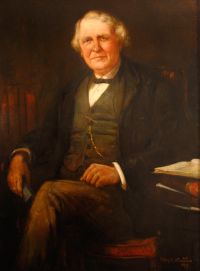 Robert Ellis Dudgeon,
Colymbia
(1873)
Robert Ellis Dudgeon,
Colymbia
(1873)
“ Criminal cases, such as robberies, assaults, forgeries, murders, and the like, are conducted in a different manner. The head of the police in the district where the crime was committed, is entrusted with the collection of the evidence. ”
William Douglas Morrison, Crime and Its Causes
“ He must also possess an understanding of the economic and social causes of crime as well as of its individual causes. An understanding of its economic and social causes supposes that he should be acquainted with the principles of sociology and political economy; an understanding of its individual causes supposes that he should know something of psychology. The historical, philosophic, and legal aspects of criminal jurisprudence as well as its formal contents ought not to be unknown ground. In the domain of prison science he should be thoroughly at home. ”
