Cuckoo flower

Definition and stakes

C. E. Smith,  Flowers, Shown to the Children

“ The Cuckoo Flower is very common and grows all springtime in every meadow.
The flowers are a pale purple or lilac. Sometimes you find them almost white. They have four petals, each of which has a slight nick in the outer edge. There are six stamens with yellow heads, which you can just see in the centre of the flower where the petals meet; and you will notice that two of these stamens are much shorter than the others.
”

Source: Gutenberg

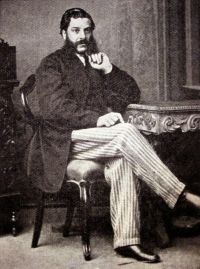
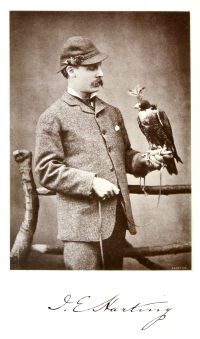
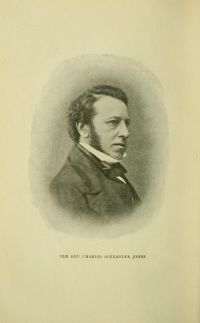
Portrait of Sir Francis Darwin Sir Francis Darwin,  Springtime and Other Essays

“ Wood-sorrel (Oxalis acetosella) was known as cuckoo-sorrel by the Saxons. In Stillingfleet’s Calendar of Flora (1755) , it is said to flower on 16th April, and the cuckoo to begin his song on 17th April. It is pleasant to find, in a Swedish calendar of flora, that the cuckoo sings on 12th May, and the wood-sorrel flowers on 13th May. Lychnis flos-cuculi, the ragged robin, flowers on 19th May, and seems to have no kind of right to the name of a cuckoo-flower, though Gerarde remarks that it “flowers in April and May, when the cuckoo doth begin to sing her pleasant notes without stammering.” ”
Source: Gutenberg

C. E. Smith,  Flowers, Shown to the Children

“ The flowers grow in a cluster near the end of a stout stalk. After the petals and the small green sepals fall off, the seed-vessel, which is in the middle of the stamens, shoots up into a long thin pod. This pod is slightly curved, and is pale brown.
The leaves of the Cuckoo Flower are of two kinds. Those that spring from the root, close to the ground, grow opposite each other in pairs of leaflets, on a stalk which has an odd leaflet at the end.
”
Source: Gutenberg

Get perspective with Kwize: daily news enlightened by great literature