Decoy (animal)

Definition and stakes

Various,  Chambers's Journal of Popular Literature…

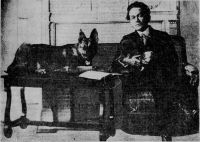
“ The decoy-ducks are trained to come for food whenever they see the dog or hear a whistle from the decoy-man. The dog now showed himself obedient to a sign from his master, and in an instant every head among the teal was up, and every bright shy eye twinkling with pleased curiosity. Impelled by curiosity, they slowly swim towards the dog, which, slowly retiring, leads them towards the mouth of the decoy-pipe, showing himself at intervals till they were well within it. ”
Source: Gutenberg

William Bingley,  Useful Knowledge: Animals (1825)

“ The wild birds are attracted into nets placed in the ditches of the decoy, by ducks trained for the purpose, and called decoy-birds. The latter fly abroad, but regularly return, for food, to the pond of the decoy, where they mix with tame ducks, which never quit the place. When it is required to catch the wild birds a quantity of hemp-seed is thrown into the ditches. The decoy and tame ducks lead them in search of this, along the ditches, which generally have reed-skreens at certain intervals on each side, to prevent the decoy-man from being seen. ”
Source: Wikisource

Montagu Browne,  Practical Taxidermy

“ Decoys are of two classes, fixed and mechanical, or those easily removable and natural. Of the former the most important is what is called a decoy for wild fowl, viz., a large tract of land and water specially fitted up with nets of the sorts most suitable for taking ducks and similar birds, and near which it is unlawful to fire a gun. For a thoroughly exhaustive and interesting article on decoy ponds, see Folkard's "Wild Fowler," pp. 44-94.
Some singular and highly original methods of catching birds are described by ancient and modern authors.
”
Source: Gutenberg

Get perspective with Kwize: daily news enlightened by great literature