Flight feather

Definition and stakes

United States. Army. Signal Corps,  The Homing Pigeon

“ The main tail feathers act as a rudder in flight, controlling the bird’s direction. Flying is possible because every flight feather overlaps, presenting a solid surface on the downbeat of the wing. Besides, flight feathers provide lift and pull for the bird’s propulsion. On the upbeat of the wing, the large flight feathers rotate in such a manner as to cut through the air with little resistance, and at the same time to permit escape of air. ”
Source: Gutenberg

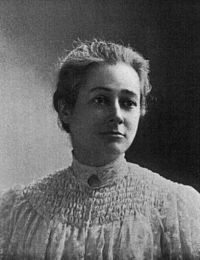
Portrait of Olive Thorne Miller Olive Thorne Miller,  In Nesting Time

“ His alighting after any flight is most singular: he comes to the floor in a crouching position, legs sprawled, body horizontal and nearly touching the matting, looking like a bird gone mad; then instantly springs up six or eight inches, half turns, and stands upright, crest erect, and looking excited, almost frightened. If much disturbed he comes down with wings half open, tail held up, and every feather awry, as if he were out in a gale, uttering at the same time a loud squawk. ”
Source: Gutenberg

William Pycraft and James Paton,  1911 Encyclopædia Britannica, Volume 10… (1911)

“ Only in the cassowary and emu among adult birds is the aftershaft as large as the main shaft.
There are several different kinds of feathers—contour feathers, semiplumes, down-feathers, filoplumes and powder-down. Contour feathers, as their name implies, are those which form the contour or outline of the body, and are all that can generally be seen. Those which form the “flight feathers” of the wing, and the tail feathers, are the most perfectly developed. Semiplumes are degenerate contour feathers.
”
Source: Wikisource

Get perspective with Kwize: daily news enlightened by great literature