“ We enact and try to enforce laws against all forms of gambling; we claim the right to invade the privacy of homes, even, where card playing for money is an occasional evening's pastime, and the law says that a gambling debt is no debt at all. We even assist the loser in gambling by allowing him to sue and recover his loss, when, as a matter of morals, he is just as guilty as the one who wins; and yet we allow these stock-gambling offices to open on all sides. ”
Gambling debt
Definition and stakes
Quotes about “gambling debt”
Jr. Horatio Alger, Chester Rand; or, The New Path to Fortune
“ But it is just for money lost at the gaming table—a gambling debt.”“Such debts, among men of honor,” said Dick, loftily, “are the most binding. Everywhere they are debts of honor.”“I don’t see why,” grumbled Mullins.“Come,” said Ralston, soothingly, “you are out of sorts, and can’t see things in their right light. I’ll lend you fifty dollars more, making the debt two hundred dollars.”“I don’t see how that will help me.”“I’ll tell you. You must win the money to pay your debt at the gaming table. Why, two hundred dollars is a trifle. You might win it in one evening.” ”
Clifton R. Wooldridge, Twenty Years a Detective in the Wickedest City in the World
“ That the gentleman gambler is justified in his attitude toward the gentleman player, too, has been shown in the New York revelations. There one gentleman player, loser to the extent of $300,000. compromised with the "bank" for 130 bills of $1,000 denomination. There a gentleman player who had lost $69,000 to the bank tried to compromise on $20,000, but was in a position where the bank could hold him. How much the gambler king may loan and lose in the course of a year scarcely can be approximated. The gambling debt is "a debt of honor," and even in business not all such debts are paid. ”
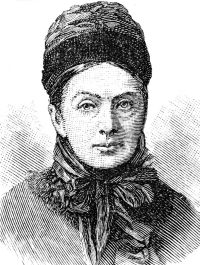
Isabella L. Bird,
The Golden Chersonese and the Way Thither
“ Thus he tries to get men into his service in this way, and is rather inclined to refuse payment should the debtor be so fortunate as to raise the requisite amount of his debt.Almost the only chance the debtor has of raising this amount is by successful gambling. Of course it hardly ever happens that he is successful; but, like all gamblers, he always thinks he will be, and thus gambling becomes a mania with him, which he will gratify at all costs, caring little by what means he gets money for play so long as he does obtain it. ”
Andrew Steinmetz, The Gaming Table: Its Votaries and Victims…
“ By this Act it was ordered that, if any one shall play at any pastime or game, by gaming or betting with those who game, and shall lose more than one hundred pounds on credit, he shall not be bound to pay, and any contract to do so shall be void. In consequence of this Act losers of a less amount—whether less wealthy or less profligate—and the whole of the poorer classes, remained unprotected from the cheating of sharpers, for it must be presumed that nobody has a right to refuse to pay a fair gambling debt, since he would evidently be glad to receive his winnings. ”
Hubert Howe Bancroft,
California Inter Pocula
(1888)
“ All the?e distinctions are without a difference; and men and women miserably fail in thus trying to befool themselves into making certain phases of gambling respectable while holding other phases of it, equally honest and fair, as illegal and disreputable. On a par with the rest are the English ethics which makes it right to swindle your tailor, but very wrong not to pay a gambling debt. Debts of honor, these last are called. ”
“ When a man requests this privilege it means that he will call the amount of his wager without producing the visible stakes, and the dealer may accept or refuse according to his judgment of the bettor's responsibility. It is safe, for no man shirks a gambling debt in the North, and thousands may go with a nod of the head though never a cent be on the board.There were still a few cards in the box, and the dealer turned them, paying the three men who played. Glenister took no part, but sat bulked over his end of the table glowering from beneath his shock of hair. ”
Ralph Nevill, Light Come, Light Go: Gambling…
“ As a matter of fact such large sums were often lost at hazard that it was no infrequent thing for losers to compromise their debt by paying an annuity to fortunate opponents. The impression that in old days all gambling liabilities were scrupulously discharged on the spot is not based upon any very solid foundation, and winners sometimes had the greatest difficulty in getting their money. ”
of the Bank of England John Francis, Chronicles and characters of the stock exchange (1850)
“ Every class, from the maiden who jobbed her lottery-ticket, to the minister who jobbed his intelligence, was involved in the pursuit. All these bargains were for time, and continued to prove that the act by which Sir John Barnard hoped to abolish gambling was useless; and it is an anomaly in the history of our great debt, that bargains in the very funds which were raised to support the national credit are disallowed by the national legislature. It is a law which has been tried and found wanting. It does not prevent, in the smallest or slightest degree, the system it was meant to crush ”
Arthur H. Smith, Village Life in China: A Study in Sociology
“ In all such cases it is necessary to spend a certain sum upon the underlings of the nearest yamên, in order to secure immunity from arrest, but the profits to the keeper of the establishment (who generally does not gamble himself) are so great, that he can well afford all it costs. It is probably a safe estimate that as much money changes hands at some of the large fairs in the payment of gambling debts, as in the course of all the ordinary business arising from the trade with the tens of thousands of customers. ”
Henry Ward Beecher,
Gamblers and Gambling
“ When the double fires of dice and brandy blaze under a man, he will soon be consumed. If men are found who do not drink, they are the more noticeable because exceptions.V. It is, even in its fairest form, the almost inevitable cause of dishonesty. Robbers have robbers' honor; thieves have thieves' law; and pirates conform to pirates' regulations. But where is there a gambler's code? One law there is, and this is not universal, pay your gambling debts. But on the wide question, how is it fair to win—what law is there? What will shut a man out from a gambler's club? ”
Karl Marx,
Das Kapital
(1906)
“ But further, apart from the class of lazy annuitants thus created, and from the improvised wealth of the financiers, middlemen between the government and the nation—as also apart from the tax-farmers, merchants, private manufacturers, to whom a good part of every national loan renders the service of a capital fallen from heaven—the national debt has given rise to joint-stock companies, to dealings in negotiable effects of all kinds, and to agiotage, in a word to stock-exchange gambling and the modern bankocracy. ”
Stephen H. Branch's Alligator, Vol…
“ I left Andover for Boston, and caught the itch from a filthy bed at a hotel in Washington street. I went to Cambridge, and entered the law school of Judge Story and Professor Greenleaf. A law student from Providence asked me to gamble, and I won about $20 in cash, and he denounced me, because I would not gamble with him after he had lost all he had, and owed me $50. I told him that persons seldom paid gambling debts, and I could not stake cash against credit in a game of cards. ”
Ruth Lamb, Too close fisted, and other stories (1886)
“ Burton; and he kept his word. Only he drew a line at gambling debts, and Mr. James found that nothing could move him from his determination not to pay one penny of what his brother called his "debts of honour.""They are the most dishonourable debts any person can have," he said; "for if men win when they gamble, they most likely help to ruin their neighbours, and if they lose, to ruin themselves. ”
James Dabney McCabe, The Secrets of the Great City
“ My companion also informed me that no one can recover money lost in gambling, because gambling itself is illegal. But debts of that nature are as secure as any other, especially among professional gamblers, and they are seldom repudiated. ”
William Hone,
The Every-day Book and Table Book…
“ Another magistrate, giving evidence before the same committee, said, “it is a scandal to the government thus to excite people to practice the vice of gaming, for the purpose of drawing a revenue from their ruin: it is an anomalous proceeding by law to declare gambling infamous, to hunt out petty gamblers in their recesses, and cast them into prison, and by law also to set up the giant gambling of the State Lottery, and encourage persons to resort to it by the most captivating devices which ingenuity, uncontrolled by moral rectitude, can invent.” ”
John Ashton, The History of Gambling in England
“ Nowadays, everything insurable can be insured; you can be compensated for accidents; if your plate glass windows are broken, if hail spoils your crops, or if your cattle die; the fidelity of your servants can be guaranteed: in fact, this field of permissible gambling is fully covered—whilst betting on horse racing rears its head unchecked, stock jobbers thrive, bucket shops multiply, and so do their victims. ”
Edward Dicey,
Once a Week
(1863)
“ There is no playing upon credit, no winning (at least directly) the money of men you know cannot afford to lose it. If you do win, your stake is paid down on the moment; and the mere fact of having drawn money from the proprietors of a gaming-table appears, by a mental sophistry, to be rather a meritorious act than otherwise. Moreover, the fact of your gambling in this fashion does not bring you into contact with all the blackguardism and rascality that you must perforce come into companionship with, if you wish to make money by gambling on the Turf or the Stock Exchange. ”
Andrew Steinmetz, The Gaming Table: Its Votaries and Victims…
“ Gaming debts are not the subjects of action; but moneys paid cannot be sued for by losers. Wagers give a right of action when the stakes consist of cash in the hands of a third person; they are void if the winner had a knowledge of the event, and concealed it. Moneys lent for gambling or betting purposes, or to pay gambling or betting debts, cannot be sued for. Gaming house keepers and gamblers are punishable with fine; professed gamblers with imprisonment. Occasional cheating at play obliges to compensation; professed swindlers at play are punishable as for theft, and banished afterwards. ”
Honoré de Balzac,
A Bachelor's Establishment
(1842)
“ The whole science of gambling-houses and their gains rests upon three things: the impassibility of the bank; the even results called "drawn games," when half the money goes to the bank; and the notorious bad faith authorized by the government, in refusing to hold or pay the player's stakes except optionally. In a word, the gambling-house, which refuses the game of a rich and cool player, devours the fortune of the foolish and obstinate one, who is carried away by the rapid movement of the machinery of the game. ”
John Philip Quinn, Fools of Fortune; or, Gambling and Gamblers
“ Do not begin gaming as a relaxation, for it will soon become a business. Avoid pool-rooms, race-courses, faro banks, cockfights, policy shops, lotteries, raffles, betting 624of every form. All such things are perilous. Where one grows rich, one hundred grow poor, and the one who wins is poorest of all. No man is as pitiably poor as the man who has money won by gambling. This form of evil doing will tempt you everywhere, on rail train and steamboat, in hotels, clubs and barber shops ”
John Philip Quinn, Fools of Fortune; or, Gambling and Gamblers
“ When its operations are diverted into illegitimate channels it becomes a source of incalculable injury to society. As a great market place, it plays an important part in modern civilization; as a gigantic agency for the promotion of gambling in the commodities of the world, it is a snare, a delusion and a curse.Not all the gaming hells of the country combined afford facilities for gambling equal to those furnished by these organizations. The faro dealer places a limit upon the stakes wagered; upon the floor of ’Change one may bet without limit. ”
Sir Edward Abbott Parry, What the Judge Saw: Being Twenty-Five Years in Manchester by One Who Has Done It
“ When the Chancellor of the Exchequer promotes a great scheme of health insurance he invites his customers, in the phrase of the ring, “to buy money,” and calls out the odds as nine to four on the field. He knows the gambling instinct in mankind, and very properly appeals to it. And, indeed, the gamble is everywhere. Even in the County Court when you pay your hearing fee there is the uncertainty of the law, and the betting is generally against the defendant’s solvency, and you may never get even your original stake out of the pool. ”
T. De Witt Talmage, The Abominations of Modern Society
“ Whatever you expect to get from your neighbor without offering an equivalent in money or time or skill, is either the product of theft or gaming. Lottery tickets and lottery policies come into the same category. Fairs for the founding of hospitals, schools and churches, conducted on the raffling system, come under the same denomination. Do not, therefore, associate gambling necessarily with any instrument, or game, or time, or place, or think the principle depends upon whether you play for a glass of wine, or one hundred shares in Camden and Amboy. ”
Frank A. Fetter,
Economics Volume II: Modern Economic Problems
“ As a result the loser is often depressed and seriously injured by the loss of his income, the winner makes reckless and extravagant use of his winnings. Easy come, easy go, is the rule of gamblers.Moreover, gambling reduces the amount of wealth by relaxing the motives of economic activity, diverting energy from productive enterprise, tempting men into dishonesty to offset their losses, and leading them into speculation and embezzlement. ”
Betting & Gambling: A National Evil
“ So, even where skill and fraud are absent, economic force is a large factor in success.Since professional gambling in a stockbroker, a croupier, a bookmaker, or any other species, involves some use of superior knowledge, trickery, or force, which in its effect on the “chances” amounts to “loading” the dice, the non-professional gambler necessarily finds himself a loser on any long series of events. These losses are found in fact to be a fruitful cause of crime, especially among men employed [17] in businesses where sums of money belonging to the firm are passing through their hands. ”
John Ashton, The History of Gambling in England
“ It may be thought that a gentleman who has lost above a thousand pounds in a gaming-house may have the right of entrée by prescription. Nothing is more unlike the fact. From the height of his prosperity to its declension, every occultation in his course is noted with the nicest observation; for instance, playing for lower stakes, a more febrile excitement when losing, occasionally borrowing of a friend, a cheque not punctually paid; and, finally, a small sum borrowed of the bank, to enable him to take up a bill under a very pressing emergency. ”
Various, The Strand Magazine, Vol. 27, February 1904…
“ If the player dropped any sum, from five cents to twenty-five cents, into the slot, he stood a chance to win about ten times as much as he put in, and the prospect of such a huge percentage upon a small investment fascinated poor people and boys and girls alike. One boy was known to have lost as much as three hundred and fifty dollars in a week through this form of gambling, having resorted to theft in order to obtain the wherewithal to gamble. ”
John Philip Quinn, Fools of Fortune; or, Gambling and Gamblers
“ A trusted employe ruined a prominent book firm, misusing perhaps $20,000; but business mismanagement and possibly other weaknesses combined with his fondness for poker to bring about his downfall.There have undoubtedly been cases of embezzlement due to cards, however, that never became public. The laws against gambling have also made the proprietors cautious, and they are careful in permitting visitors to stake large sums. The gamblers, aside from a lot of “hangers on,” known as “shoestring” or “tin horn” gamblers, do not figure in the criminal records. ”
Carl Schurz,
U. S. Senate Speeches and Remarks of Carl Schurz
“ Hence it is that loans on call are preferred, and a higher rate of interest is demanded by lenders to cover the gambling risk, under the influence exercised by an irredeemable currency, which, by its fluctuations, renders the value of the money invested in a loan insecure. ”