Hiccough

Definition and stakes

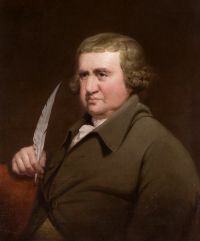
Portrait of George M. Gould George M. Gould,  Anomalies and Curiosities of Medicine

“ Cowan speaks of a shoemaker of twenty-two who experienced an attack of constant singultus for a week, and then intermittent attacks for six years. Cowan also mentions instances of prolonged hiccough related by Heberden, Good, Hoffman, and Wartmouth. Barrett is accredited with reporting a case of persistent hiccough in a man of thirty-five. Rowland speaks of a man of thirty-five who hiccoughed for twelve years. The paroxysms were almost constant, and occurred once or twice a minute during the hours when the man was not sleeping. ”
Source: Gutenberg

Chambers's Twentieth Century Dictionary…

“ Hiccup, hik′up, n. the involuntary contraction of the diaphragm, while the glottis is spasmodically closed: the sound caused by this—also, but erroneously, Hic′cough.—v.i. to be affected with hiccup.—v.t. to say with a hiccup:—pr.p. hicc′upping; pa.p. hicc′upped.—adj. Hicc′upy, marked by hiccups. [Imit.; cf. Dut. hik, Dan. hikke, Bret. hik. The spelling hiccough is due to a confusion with cough.]
Hickory, hik′or-i, n. a genus (Carva) of North American nut-bearing trees, with heavy strong tenacious wood, used for shafts of carriages, handles of axes, &c. [Pohickery; of Indian origin.]
”
Source: Gutenberg

Various,  Popular Science Monthly (1884)

“ Frequently, however, the hiccough appears as a sign of the general over-irritation of the nervous system in hysteria, and, probably from the same reason, it may not uncommonly be observed in otherwise healthy young persons, particularly children. The above explanation of hiccough as a convulsive contraction of the diaphragm is further confirmed by the manner in which it may be stopped. ”
Source: Wikisource

Get perspective with Kwize: daily news enlightened by great literature