 William Shakespeare,
The Two Gentlemen of Verona
(1623)
William Shakespeare,
The Two Gentlemen of Verona
(1623)
“ But constant, he were perfect. That one error Fills him with faults; makes him run through all the sins: Inconstancy falls off ere it begins. ”
William Shakespeare,
The Two Gentlemen of Verona
(1623)
“ But constant, he were perfect. That one error Fills him with faults; makes him run through all the sins: Inconstancy falls off ere it begins. ”
 H. B. Marriott Watson,
Diogenes of London (collection…
(1893)
H. B. Marriott Watson,
Diogenes of London (collection…
(1893)
“ A PLEA FOR INCONSTANCY CONSTANCY has always received an improper meed of praise at the hands of the moralists. At the best it is a dull virtue, of no special allurements for the young and beautiful, fitter for dusty age, and no doubt a comfort in the grave. ”
 Blaise Pascal,
Pensées
(1670)
Blaise Pascal,
Pensées
(1670)
“ The consciousness of the falsity of present pleasures, and the ignorance of the vanity of absent pleasures, cause inconstancy. ”
H. B. Marriott Watson,
Diogenes of London (collection…
(1893)
“ But the inconstant may endure many such trials without discomfiture; having paid their respects to the past they have still the future. They take off their hats to trouble, but are on more intimate terms with happiness. ”
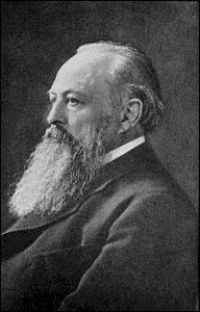 John Acton,
Historical Essays and Studies
(1907)
John Acton,
Historical Essays and Studies
(1907)
“ The infallible conscience, the universal and unwritten law, the principles of eternal justice, are precisely those eighteenth-century phantoms against which the romantic and historical school rose in defiance. ”
M. Valentine, Theoretical Ethics
“ First, that the conscience, being a complex faculty or power, its particular judgments of duty in particular cases, being judgments of application of the principle of rightness, are reached often through very complex processes, in which the obscuration of imperfect information, or misconception of the relations involved, or the misleading effect of prejudice created by wrong training, or some falsely imagined divine authority, may leave not only a state of doubt as to duty, but throw the decision into error. ”
Isaac Barrow, Sermons on Evil-Speaking
“ He that will contest things apparently decided by sense and experience, or who disavows clear principles of reason, approved by general consent and the common sense of men, what other hopeful way is there of proceeding with him, than pleasantly to explode his conceits? ”
A Select Collection of Old English Plays…
“ And to deny with outward lips thy Lord and God most dear, The same to 'stablish with consent of conscience stand in fear. Thou art yet free, Philologus; all torments thou may'st 'scape, Only the pleasures of the world thou shalt awhile forbear. Renounce thy crime, and sue for grace, and do not captivate Thy conscience unto mortal sin: the yoke of Christ do bear. Shut up these words within thy breast, which sound so in thine ear: The outward man hath caused thee this enterprise to take; Beware lest wickedness of spirit the same do perfect make. ”
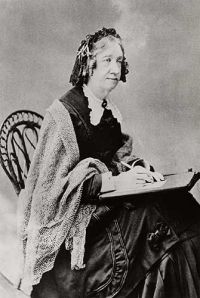 Catharine Esther Beecher,
Common Sense Applied to Religion…
Catharine Esther Beecher,
Common Sense Applied to Religion…
“ The first class includes those which are wrong in their nature and in all supposable cases, such, for example, as the wanton infliction of needless pain, or the breach of plighted faith, or the returning of love and kindness with ungrateful treatment. In all possible suppositions, the mind revolts from such actions as wrong and deserving of penalties. It is this class of actions which, without any reasoning, the mind never fails to disapprove, and to desire should be visited with retributive penalties. ”
Joseph Butler, Whole Works of Joseph Butler — Preface (1850)
“ But it may be observed also, that a virtuous temper of mind, consciousness of innocence, and good meaning towards everybody, and a strong feeling of injustice and injury, may, itself, such is the imperfection of our virtue, lead a person to violate this obligation, if he be not upon his guard. ”
 Percy Bysshe Shelley,
The Prose Works of Percy Bysshe Shelley…
Percy Bysshe Shelley,
The Prose Works of Percy Bysshe Shelley…
“ However ridiculous and pernicious we must admit the vulgar accessories of this creed to be, there is a certain analogy, not wholly absurd, between the consequences resulting to an individual during life from the virtuous or vicious, prudent or imprudent, conduct of his external actions, to those consequences which are conjectured to ensue from the discipline and order of his internal thoughts, as affecting his condition in a future state. ”
Matthew Henry, Commentary on the Whole Bible… (1700s)
“ And does not the charge of a partiality condemned by the law lie fully against you? Does not your own conscience tell you that you are guilty?" Appeals to conscience are of great advantage, when we have to do with such as make a profession, even though they may have fallen into a very corrupt state. 2. This respect of persons is owing to the evil and injustice of the thoughts. As the temper, conduct, and proceedings, are partial, so the heart and thoughts, from which all flows, are evil: " You have become judges of evil thoughts ”
Charlotte M. Mason, Home education (1906)
“ But a real Power.—Then, if conscience be not an infallible guide—if it pass blindfold by heinous offences, and come down heavily upon some mere quibble, tithing mint, rue, and all manner of herbs, and neglecting the weightier matters of the law—if conscience be liable to be bamboozled, persuaded into calling evil good and good evil, when Desire is the special pleader before the bar, where is its use, this broken reed? ”
Ethan Allen, Reason, the Only Oracle of Man…
“ Could blind chance constitute order and decorum, and consequently a providence? That wisdom, order, and design should be the production of nonentity, or of chaos, confusion, and old night, is too absurd to deserve a serious confutation, for it supposeth that there may be effects without a cause, viz.: produced by nonentity, or that chaos and confusion could produce the effects of power, wisdom, and goodness. Such absurdities as these we must assent to, or subscribe to the doctrine of a self-existent and providential being. ”
 Marie Louise de la Ramée,
Idalia
(1867)
Marie Louise de la Ramée,
Idalia
(1867)
“ Be my law, my conscience—I have been steeped so long in evil, I have lost all fitness to judge honour or dishonour aríght. To tell you all, to lay my Ufe before you as it should be laid, I must break my oath, I must belie my word, I must be false to the chief thing that has ever redeemed my past. ”
 Laurence Sterne,
The Life and Opinions of Tristram Shandy…
Laurence Sterne,
The Life and Opinions of Tristram Shandy…
“ Shall not conscience rise up and sting him on such occasions?——No; thank God there is no occasion, I pay every man his own;—I have no fornication to answer to my conscience;—no faithless vows or promises to make up;—I have debauched no man’s wife or child ”
 Charles Bradlaugh,
A Few Words About the Devil, and Other Biographical Sketches and Essays
Charles Bradlaugh,
A Few Words About the Devil, and Other Biographical Sketches and Essays
“ Circumstances are compulsory, from the absence of a power to resist or control them: and if the absence likewise be the effect of circumstances.... the evil derives from the circumstances.... and such evil is not sin."* Do you say that you are independent of all circumstances, that you can control them, that you have a free will? ”
 Friedrich Nietzsche,
Beyond Good and Evil
(1886)
Friedrich Nietzsche,
Beyond Good and Evil
(1886)
“ Imagine to yourselves a being like Nature, boundlessly extravagant, boundlessly indifferent, without purpose or consideration, without pity or justice, at once fruitful and barren and uncertain: imagine to yourselves INDIFFERENCE as a power—how COULD you live in accordance with such indifference? ”
Saint Aquinas Thomas, Summa Theologica, Part I-II (Pars Prima Secundae…
“ Therefore a habit either of virtue or of vice, may be corrupted by a judgment of reason, whenever its motion is contrary to such vice or virtue, whether through ignorance, passion or deliberate choice. ”
Aleph Bey, That Eurasian (1895)
“ When I obey the laws of nature, and of my being, there is a satisfaction. When I violate the laws there is a sense of wrong, a knowledge that I have sinned, and remorse follows, warning me not to do the like again. ”
The World's Great Sermons, Volume 02…
“ Wherefore, doubtless the will of man in the state of innocence had an entire freedom, a perfect equipendency and indifference to either part of the contradiction, to stand, or not to stand; to accept, or not to accept the temptation. ”
Lives of Distinguished North Carolinians…
“ But in matters of right and wrong, whatever be the lures, the taunts, or the usages of the world, or whatever the supposed inconveniences of singularity, let judgment and conscience always rule with absolute sway. ”
Lady Anne Hamilton, Secret History of the Court of England…
“ Such is the condition of our nature, that we cannot mortgage either our moral or our physical energies so as always to repel the accusations of our own hearts, which are sure, eventually, to reprove us for evils committed. ”
Andrew Lee, Sermons on Various Important Subjects
“ To denominate either temper or conduct morally good or evil, consent is necessary, to suppose consent, in the creature, to be the effect of almighty power operating upon it, nullifies it to the creature, in a moral view. The work of God cannot be the sin, or holiness, of the creature. ”
Bernard Henry Becker, Disturbed Ireland
“ Difference of manner may go for a great deal, but beyond and below the resentment caused by a prompt, decisive, and perhaps imperious tone, lies a deeply-rooted sense of wrong—logically or illogically arrived at. ”
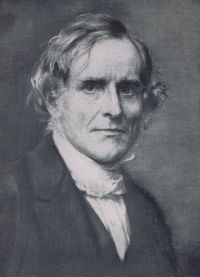 Frederick Denison Maurice,
The Gospel of St. John: A Series of Discourses
Frederick Denison Maurice,
The Gospel of St. John: A Series of Discourses
“ But our consciences tell us, also, that there is rebellion in us against that which holds us so fast, which executes its decrees so certainly. This is the contradiction, it exists—it is a fact, the fact, of our lives. ”
 Plutarch,
Complete Works of Plutarch — Volume 3…
Plutarch,
Complete Works of Plutarch — Volume 3…
“ What, then, is the only thing that they shun? That in which is bred falsehood and deceit,—that is, opining, and haste in giving consent,—which is a yielding through weakness to that which appears, and has not any true utility. ”
Percy Bysshe Shelley,
Hellas
(1822)
“ The received hypothesis of a Being resembling men in the moral attributes of his nature, having called us out of non-existence, and after inflicting on us the misery of the commission of error, should superadd that of the punishment and the privations consequent upon it, still would remain inexplicable and incredible. ”
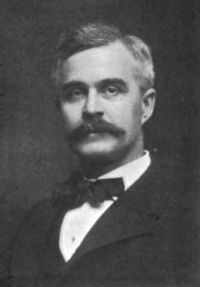 Charles Frederic Goss,
The Redemption of David Corson
Charles Frederic Goss,
The Redemption of David Corson
“ But if we must judge, let us judge like God! We read of Him—that he 'lays righteousness to the line and judgment to the plummet.' Let us do the same. That a great wrong hath been done is evident to every mind. It is not meet that such wrongs should go unpunished! ”
 Eugène Sue,
A Romance of the West Indies
Eugène Sue,
A Romance of the West Indies
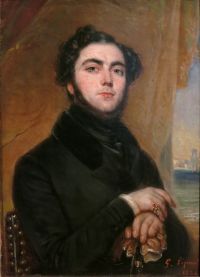
“ Pardon me, sir, to some consciences, at once scrupulous and timid, certain confidences, or rather certain confessions, have the same effect as the poisoned shoulder-knot in the play of that name; the aforesaid consciences think only of getting rid of the secret to a neighboring conscience in order to protect themselves from all responsibility. ”
 Ellen Anderson Gholson Glasgow,
Barren Ground
Ellen Anderson Gholson Glasgow,
Barren Ground
“ Though he might occasionally seek a compromise in simple matters of conduct, realizing the fall of man and the infirmity of human nature, where matters of doctrine were concerned his conscience was inflexible. ”
 Francis Xavier Lasance,
Prayer-book for Religious
(1904)
Francis Xavier Lasance,
Prayer-book for Religious
(1904)
“ R. And according to the multitude of Thy tender mercies, blot out my iniquity. V. Wash me yet more from my iniquity, and cleanse me from my sin. R. For I know my iniquity, and my sin is always before me. ”
 David Hume,
An Enquiry Concerning the Principles of Morals
(1751)
David Hume,
An Enquiry Concerning the Principles of Morals
(1751)
“ In moral Decisions, the whole Circumstances and Relations must be antecedently known; and the Mind, from the Contemplation of the Whole, feels some new Impression of Affection of Disgust, Esteem or Contempt, Approbation or Blame. ”
 John Wesley,
The works of the Rev. John Wesley…
(1771)
John Wesley,
The works of the Rev. John Wesley…
(1771)
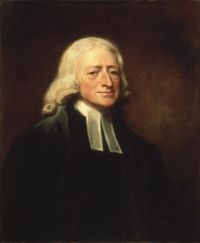
“ You surely will not say, that any man’s conscience can preclude mine. You, at least, will not plead for robbing us, of what you strongly claim for yourselves. I mean, the right of private judgment, which is indeed unalienable from reasonable creatures. You well know, that unless we faithfully follow the dictates of our own mind, we cannot have a conscience void of offence toward God and towards man. ”
Edwin Gordon Lawrence, How to Master the Spoken Word
“ For not once alone has a clear conscience raised up and supported a failing body in the hour of trial and tribulation. A guilty conscience, on the other hand, is a source of weakness to the strongest body. ”
 Joseph Conrad,
Victory: An Island Tale
(1915)
Joseph Conrad,
Victory: An Island Tale
(1915)
“ He had entered by then the broad, human path of inconsistencies. ”
Thomas Slater, A manual of moral theology for English-speaking countries (1925)
“ Therefore I must obey him is the conclusion and the dictate of conscience. 2. Conscience is said to be certain, dubious, or probable, as the motive on which it is grounded is morally certain, doubtful, or only probable. A right conscience is in accordance with the eternal law of morality; an erroneous conscience gives a false instead of a true judgement. If the mistake could and ought to have been avoided by the agent who has a false conscience, the conclusion is vincibly erroneous ”
 Helen Sherman Griffith,
Letty and the Twins
Helen Sherman Griffith,
Letty and the Twins
“ If a wee sin is committed here and another there, and pardoned or overlooked with the thought, ‘oh, that did no harm—it was not really wrong,’ why in time the conscience will become hardened and the first thing one knows, one is in a condition to commit any wicked deed. ”
 C.-F. Volney,
The Ruins; Or, Meditation on the Revolutions of Empires and the Law of Nature
C.-F. Volney,
The Ruins; Or, Meditation on the Revolutions of Empires and the Law of Nature
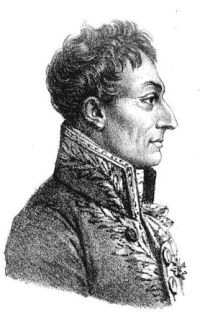
“ No doubt it is reasonable, and even honest, to act according to our present feelings and conviction: but if these feelings and their causes do vary by the very nature of things, how dare we impose upon ourselves or others an invariable conviction? ”
 John Stuart Mill,
Autobiography (Mill) — Chapter II. 1813-1821
(1874)
John Stuart Mill,
Autobiography (Mill) — Chapter II. 1813-1821
(1874)
“ Right and wrong, good and bad, he regarded as qualities solely of conduct—of acts and omissions; there being no feeling which may not lead, and does not frequently lead, either to good or to bad actions: conscience itself, the very desire to act right, often leading people to act wrong. ”
Laurence Sterne,
The Life and Opinions of Tristram Shandy…
(1765)
“ When old age comes on, and repentance calls him to look back upon this black account, and state it over again with his conscience,—Conscience looks into the Statutes at Large;—finds no express law broken by what he has done;—perceives no penalty or forfeiture of goods and chattels incurred;—sees no scourge waving over his head, or prison opening his gates upon him:—What is there to affright his conscience?—Conscience has got safely entrenched behind the Letter of the Law ”
John Wesley,
The works of the Rev. John Wesley…
“ But abstracting from these cases, wandering thoughts, in the latter sense of the word, that is, thoughts wherein our understanding wanders, from the point it has in view, are no more sinful than the motion of the blood in our veins, or of the spirits in our brain. If they arise from an infirm constitution, or from some accidental weakness or distemper, they are as innocent as it is to have a weak constitution, or a distempered body. ”
Richard Hurd, The works of Richard Hurd, volume 6…
“ To perceive the force of this argument, it must be remembered, That, by conscience, is only meant a man’s judgement concerning the quality of his own actions; which judgement, however come at, whether by use, or institution, by reason, or instinct, equally supposes some Law, or Rule of conduct, by which the nature of each action is tried, and by which its worth is estimated. ”
Florence Hull Winterburn, Southern Hearts
“ People often experience this momentary apprehension when some peculiarly definite and emphatic stand has been taken by anyone; as if definiteness, in this changing world, was a crime to bring down punishment. ”
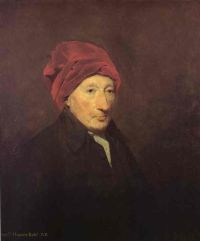 Thomas Reid,
Two Voyages to New South Wales and Van Diemen's Land
Thomas Reid,
Two Voyages to New South Wales and Van Diemen's Land
“ How ought the following declarations to appall the heart of an unrepenting sinner, whose conscience terribly assures him that he is included in the awful denunciation, Acts, 17th chapter 31st verse, “Because He hath appointed a day in the which he will judge the world in righteousness by that man whom he hath ordained; whereof he hath given assurance unto all men, in that he hath raised him from the dead!” ”
Charles J. Callan, Moral Theology
“ Obstacles to Consent.—The obstacles to consent are all those factors that take away or lessen the voluntariness of an act. (a) Thus, the actual obstacles that affect the intellect are reduced to ignorance, spoken of above; those that affect the will are passion and fear, and that which affects the external powers is coercion. ”
 Friedrich Schiller,
Aesthetical and philosophical essays
(1899)
Friedrich Schiller,
Aesthetical and philosophical essays
(1899)
“ But the evil which this contradiction does us is a propriety with regard to our reasonable nature in general, insomuch as this evil solicits us to act: it is a propriety also with regard to human society; consequently, even displeasure, which excites in us this contradiction, ought necessarily to make us experience a sentiment of pleasure, because this displeasure is a propriety. ”
 David Graham Phillips,
The Master Rogue: The Confessions of a Croesus
(1903)
David Graham Phillips,
The Master Rogue: The Confessions of a Croesus
(1903)
“ But while prudence was a factor in my general settlement, the main factor was, as I have said, conscience. Not the narrow conscientiousness of ordinary men, which is three parts ignorance, two parts cowardice, and five parts envy—for is it not usually roused only when the acts of others are to be judged? ”
