Inheritance of acquired characteristics

Definition and stakes

Roswell H. Johnson Applied Eugenics

Even those who still believed in what is conventionally called "the inheritance of acquired characteristics" would be quick to repudiate any such application of the doctrine as is commonly made by most of the philanthropists and social workers who are proceeding without seeking the light of biology. But the idea that these modifications are inherited is so widespread among all who have not studied biology, and is so much a part of the tradition of society, that the question must be here examined, before we can proceed confidently with our program of eugenics.
Source: Gutenberg

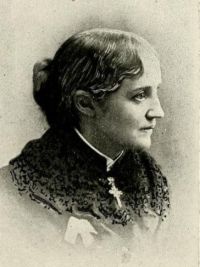
Portrait of Mary Wood-Allen Mary Wood-Allen What a Young Woman Ought to Know

The fact that we are human beings instead of animals, that we have our due proportion of organs and faculties, that we are not monstrosities or imbeciles, are all hereditary conditions. We see, then, that the law of heredity insures to us our full complement of organs and capabilities, as well as the more pronounced characteristics which we the more readily recognize as inheritances. The fact is that inheritance of good is so universal that we fail to think of it.
Source: Gutenberg

Austin O'Malley Essays In Pastoral Medicine

We are utterly unable as yet to understand how such family traits are originally developed, since, in ordinary experience, at least, acquired characteristics are not the subject of inheritance or transmission, and consequently it becomes difficult to understand how they ever became impressed upon the family constitution.
Source: Gutenberg

Get perspective with Kwize: daily news enlightened by great literature