Lunar calendar

Definition and stakes

Herbert Joseph Spinden,  Ancient Civilizations of Mexico and Central America

“ The apparent revolution of the moon around the earth was taken by the Mayas as the basis of a lunar calendar distinct from the civil calendar, but used in combination with it for various ceremonial purposes. Now the average duration of a lunar revolution is 29 days, 12 hours, 44 minutes, 2.87 seconds. Twelve lunations amount to a little more than 354 days and are therefore far short of a true year. Primitive peoples whose principal interest is to keep the moon in adjustment with the seasons have an occasional thirteenth month in their luni-solar calendars. ”
Source: Gutenberg

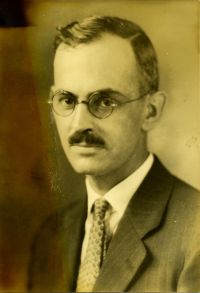
Portrait of Carl E. Guthe Carl E. Guthe,  A Possible Solution of the Number Series on Pages 51 to 58 of the Dresden Codex

“ Each third of the lunar calendar consists of 30-and 29-day months arranged in alternating sequence, with intercalary days added by the substitution of a 30-day for a 29-day month when the error arising from the nonconformity of the moon’s revolution reaches more than one day. In order that the lunar calendar might agree with the eclipse calendar more closely, these months were recorded in groups of five and six. ”
Source: Gutenberg

Thomas Hoover,  The Moghul

“ As Hawksworth listened, he felt his heart begin to race.
The calculations at the observatory had a lot to say about your Panjika's lunar calendar. And they showed how unwieldy it is compared to the solar calendar the Arabs and Europeans use. A cycle of the moon doesn't divide evenly into the days in a year. So your astrologers have to keep adding and subtracting days and months to keep years the same length. It's almost impossible to relate a lunar calendar accurately to a solar year. Jamshid Beg, the astronomer from Samarkand, loved to check out the predictions in the Hindu Panjika.
”
Source: Gutenberg

Get perspective with Kwize: daily news enlightened by great literature