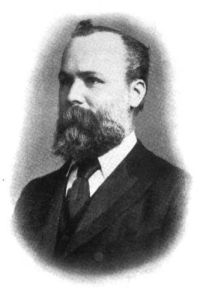
Martin P. Nilsson

Biographical details

Portrait of Martin P. Nilsson Martin P. Nilsson Primitive Time-reckoning

It is impossible to combine the months with the year without doing violence to the one or the other. The time-reckoning of the modern civilised peoples has chosen this latter expedient. The month has become a conventional sub-division of the year; it is quite independent of the moon, and keeps as reminders of its origin only its name and a length approximating to that of the moon’s revolution. This has come about because the moon, unlike the sun and the seasons depending thereon, has no immediate influence upon the events and occupations of our lives.
Source: Gutenberg

Portrait of Martin P. Nilsson Martin P. Nilsson Primitive Time-reckoning

The Eskimos of Greenland have a good knowledge of the stars. The Great Bear is a reindeer, or the little stool on which they fasten their ropes and harpoons, Aldebaran is the eye of the bull, the twins are the breast-bone of the heavens, the belt of Orion is composed of three ‘scattered ones’—Greenlanders who were taken up into the sky and could not find their way back—Sirius has a man’s name, the Pleiades are to be regarded as baying hounds with a bear among them, Cygnus as three kayaks which have been out seal-hunting.
Source: Gutenberg

Portrait of Martin P. Nilsson Martin P. Nilsson Primitive Time-reckoning

As soon as the new moon is seen, the Banyankole of Uganda come out of their huts and clap their hands. Everyone lights a fire in front of his hut and lets it burn for four days continuously. A number of royal drums are brought out and beaten without cessation for four days [652] . The Wadschagga climb a hill in order to see the crescent properly, and pray at its appearance:—“One, two, three, four (the day of the new moon is reckoned as the fourth day of the month) , give me peace, give me food, send me blessing, and drive want far away. O my moon, break him (my enemy) neck and throat!”
Source: Gutenberg

Get perspective with Kwize: daily news enlightened by great literature