E. K. Means, Further E. K. Means
“ The marksman never seemed to take aim, and yet never missed. Just as a man can reach up and put his finger on his nose, so this man could put a bullet through the neck of a running hog and think nothing of it. ”
The concept of a marksman refers to an individual skilled in hitting a target with accuracy, often in the context of firearms or archery. Authors have examined this theme from various perspectives: E. K. Means admires the innate precision of a marksman, while Albert Payson Terhune questions the feasibility of shooting on the move.
In literature, the term frequently represents ability or determination, as illustrated in Gustave Aimard’s story, where a marksman’s proficiency serves as a turning point in the narrative. Technical works, such as those by John Marshall, focus on the role of marksmanship in military science, and Kenneth E. Hamburger connects it to American military heritage. These viewpoints together underscore the theme’s dual nature—both a practical ability and a metaphor for exactness in human achievement.
E. K. Means, Further E. K. Means
“ The marksman never seemed to take aim, and yet never missed. Just as a man can reach up and put his finger on his nose, so this man could put a bullet through the neck of a running hog and think nothing of it. ”
 Albert Payson Terhune,
Lad: A Dog
Albert Payson Terhune,
Lad: A Dog
“ No marksman—no one who has the remotest knowledge of marksmanship—will do such a thing. The very best pistol-expert cannot hope to hit his target if he is joggling his own arm and his whole body by the motion of running. ”
 Gustave Aimard,
The Indian Scout: A Story of the Aztec City
Gustave Aimard,
The Indian Scout: A Story of the Aztec City
“ I intend, aided by Brighteye, to tear the mask from this Don Stefano—a mask which, in my opinion, hides a very ugly countenance—to know who this man is, and why he is such an obstinate enemy to you.""Thanks, Marksman; now I am easy in my mind. Go; do all that seems proper to you. I am convinced that you will accomplish everything that can be humanly accomplished. ”
by John Marshall, Royal Naval Biography — Tayler… (1823)
“ The marksman has complete controul over the elevating and pointing of the gun, and can guide it to the object during the operation of running out, a most important acquisition to the science of gunnery ”
The Imperial Magazine (1824)
“ The Fatal Marksman—is of a very gloomy cast, but still well told; it turns upon a superstition not uncommon in England, that a gun which has killed a man, or balls which have killed game, if recast, will do the same again. ”
Thomas Wilhelm, A Military Dictionary and Gazetteer
“ Are certain marks cut on cannon to show the number of the gun, the name of the founder, name of inspector, weight of the piece, etc. Condemned shot are also marked. See Inspection of Projectiles.Marksman. One who is skillful to hit a mark; one who shoots well. ”
Kenneth E. Hamburger, CMH Publication #24-1Learning Lessons in the American Expeditionary Forces
“ Army leaders believed that marksmanship was a singularly American tradition that they could exploit. As General Harbord put it, “The authentic story of an Allied soldier with a rifle strapped on his back, chasing an enemy to get close enough to throw a hand grenade would never have been true of any American.” [31] In August 1917 Pershing cabled the War Department that all soldiers shipped to France needed to be fully trained in marksmanship. The pace of training and hurrying divisions to France, however, never allowed adequate marksmanship training in the United States. ”
John P. Marquand, The Unspeakable Gentleman (1922)
“ I had thought we were through with pistols for the evening, and Mademoiselle must be fatigued. So put down the pistol, Henry, and let us continue the interview. "Certainly," I replied, "as soon as you have fulfilled your part of the contract. As soon as you call off your servant, I shall wish you a very good evening. Stand where you are, Brutus." "Come, come," said my father patiently, "we have had enough of the grotesque this evening. It is growing late, my son. Put down the pistol." ”
John P. Marquand, The Unspeakable Gentleman (1922)
“ I asked. "Excellent!" said my father. "You impress me. Yes, I have underrated your possibilities, Henry. However, the play is over—" He leaned towards the table abruptly and extinguished both the candles. The glow of embers in the fireplace could not relieve the darkness of the shuttered room. "Now," he continued, "Mademoiselle is standing beside me, and Brutus is between you and me and approaching you. I think it would be safer if you put the pistol down. One's aim is uncertain in the dark, and, after all, it is not Mademoiselle's quarrel. Tell him to put down the pistol, Mademoiselle." ”
 O. Henry,
Roads of Destiny
(1909)
O. Henry,
Roads of Destiny
(1909)
“ The poet thrust the letter into his breast, and bounded down the stairway. The lady, when he was gone, returned to the room below. The eloquent eyebrows of the marquis interrogated her. “He is gone,” she said, “as fleet and stupid as one of his own sheep, to deliver it.” The table shook again from the batter of Captain Desrolles’s fist. “Sacred name!” he cried; “I have left my pistols behind! I can trust no others.” “Take this,” said the marquis, drawing from beneath his cloak a shining, great weapon, ornamented with carven silver. “There are none truer. ”
John P. Marquand, The Unspeakable Gentleman (1922)
“ I cried. "Ride on, sir!" "And leave you here with the paper in your pocket?" said my father. "The fall has quite got the better of you. The other pistol, Mademoiselle, if you have finished loading it. Here they come, to be sure. Would you not think the fools would realize I can hit them?" He fired into the darkness and a riderless horse ran almost on top of us. With a snort of fright, he reared and wheeled, and a second shot answered my father's. "Ah," said my father, "they always will shoot before they can see. The pistol from the holster, if you please, Mademoiselle." ”
 Jean-Eugène Robert-Houdin,
Memoirs of Robert-Houdin, ambassador…
Jean-Eugène Robert-Houdin,
Memoirs of Robert-Houdin, ambassador…
“ The marquis begged me in vain to join in the general gaiety. Suddenly I rose, glass in hand, and assuming the free-and-easy manner of a soldier—“Per Bacco!” I shouted, in a baritone voice, giving the marquis a hearty slap on the shoulder. “Drink, my friends, to the lovely eyes of these ladies!” Then I drained my glass at a draught, and trolled out a lively ditty.I cannot describe the marquis’s feelings; all I know is, he turned to stone under my hand. His friends regarded me in stupor, taking me, doubtlessly, for a maniac, while the women laughed convulsively at my strange outbreak. ”
 George Sand,
Les beaux messieurs de Bois-Doré Vol…
(1901)
George Sand,
Les beaux messieurs de Bois-Doré Vol…
(1901)
“ This amazon, who, after conversing confidentially with the captain and lieutenant at the door of the inn, now strode slowly across the kitchen, resplendent in her warlike costume, and tossing beneath the multicolored plumes of her headgear her abundant bright red mane, this Madame Proserpine, the more or less lawful spouse of Captain Macabre, was the marquis's former housekeeper, Mario's personal enemy, Guillette Carcat of La Châtre, Bellinde of Briantes. "We are lost," thought the marquis; "she will surely recognize us!" ”
Robert Chambers, Illustrations of the Author of Waverley (1884)
“ At this moment the Marquis arrived, and beheld his army dispersed, for the first time, in irretrievable rout. He had thrown himself upon a horse the instant he heard the firing, and, followed by such of his disordered cavalry as had gathered upon the alarm, he galloped from Selkirk, crossed the Ettrick, and made a bold and desperate attempt to retrieve the fortune of the day. But all was in vain; and after cutting his way, almost singly, through a body of Lesly’s troopers, the gallant Montrose graced by his example the retreat of the fugitives. ”
“ A duel on the dean's grass, now! Who would have thought of that but a Frenchman? Have you seen the marquis lately, and that very agreeable financier, the American? I was much grieved not to be able to ask him to dinner, owing to his sudden departure. He showed considerable skill in grasping the essentials of the situation, for, when the marquis, who was literally foaming at the mouth, offered him the choice of swords in a violent but perfectly gentlemanly way, he chose both of them, and put them under his arm. It is not every one who could have displayed such readiness in preventing violence. ”
George Sand,
Mauprat
(1837)
“ The man and dog climbing up ladders and running along beams with marvellous assurance and agility, the dog sniffing every hole in the wall, playing the cat, crouching down and lying in wait until the game comes out for his master's rapier; the man thrusting through bundles of straw and putting the enemy to the sword—all this, when arranged and carried out with gravity and dignity by Don Marcasse, was, I assure you, a most singular and interesting performance. ”
John P. Marquand, The Unspeakable Gentleman (1922)
“ I said, and tossed aside my coat and drew my small sword. He stood rigid and motionless, and his face became more set and expressionless than I had ever seen it; but before he could speak, Mademoiselle had sprung between us. "You fool!" she cried. "Put up your sword. Will you not be quiet as I told you?" "Be seated, Mademoiselle," said my father gently. "Where are your senses, Henry? Can you not manage without creating a scene? Put up your sword. I cannot draw against you." ”
George Sand,
Mauprat
(1904)
“ M. de la Marche, therefore, was very much surprised when, on the eve of his departure, Marcasse presented himself, and proposed to accompany him to America as his valet. In vain did M. de la Marche remind him that he was very old to abandon his calling and run the risks of a new kind of life. Marcasse displayed so much firmness that in the end he gained his point. Various reasons led M. de la Marche to consent to the strange request. He had resolved to take with him a servant older still than the weasel-hunter, a man who was accompanying him only with great reluctance. ”
Various, Blackwood's Edinburgh Magazine…
“ And the marquis, whose magnificent proportions, in the full vigour of man's strongest, if not his most combative, age, would have made him a formidable antagonist, even to a couple of prize-fighters, supposing he had retained a little of Eton skill in such encounters—laughed with the glee of a schoolboy, whether at the thought of his prowess, or his sense of the contrast between so rude a recourse to primitive warfare, and his own indolent habits, and almost feminine good temper. ”
George Sand,
Les beaux messieurs de Bois-Doré Vol…
(1901)
“ The marquis, with all his cosmetics washed off, was a handsome old man, and the tranquillity of his conscience imparted a venerable air to his face as he lay asleep. While his wig reposed on the table, and his garments, stuffed to conceal the hollows that age had made in his shoulders and his legs, lay scattered about on chairs, the angular outlines of his great body, shrunken to half its size, could be traced under a lodier or coverlet of white satin, with coats-of-arms in silver purl in relief at the four corners. ”
 Bret Harte,
Luck of Roaring Camp
(1870)
Bret Harte,
Luck of Roaring Camp
(1870)
“ Was there any driver? Had I any reason to suppose that he was not lying, gagged and bound on the roadside, and the highwayman, with blackened face who did the thing so quietly, driving me—whither? The thing is perfectly feasible. And what is this fancy now being jolted out of me. A story? It's of no use to keep it back,—particularly in this abysmal vehicle, and here it comes: I am a Marquis,—a French Marquis; French, because the peerage is not so well known, and the country is better adapted to romantic incident,—a Marquis, because the democratic reader delights in the nobility. ”
John P. Marquand, The Unspeakable Gentleman
“ Mademoiselle bit her lip."There is only one thing stranger," she said coldly."And that is—?" said my father, bending toward her attentively."That you should betray the last request of the man who once sheltered you and trusted you, and showed you every kindness. Tell me, captain, is it another display of artistic temperament, or simply a lack of breeding?"Her words seemed to fall lightly on my father. He took a pinch of snuff, and waved his hand in an airy gesture of denial."Bah," he said. "If the Marquis were alive, he would understand. He was always an opportunist, the Marquis. ”
John P. Marquand, The Unspeakable Gentleman
“ He had turned unsteadily in his chair, and was facing the dying embers of the fire, his left hand limp on the table before him. Again the spasm of pain crossed his face. Mademoiselle still watched him, but without a trace of triumph. Indeed, she seemed more kindly and more gentle than I had ever known her."Five hundred bales of shavings," she softly. "Ah, captain, there are not many men who would do it. Not any that I know, save you and the Marquis.""Brutus," said my father, "a glass of rum." ”
 Robert Louis Stevenson,
The Works of Robert Louis Stevenson - Swanston Edition…
Robert Louis Stevenson,
The Works of Robert Louis Stevenson - Swanston Edition…
“ Marquis. Sir, you are silenced.Macaire. Silenced by honour. I had rather lose my boy than compromise his sainted mother.Marquis. A thought; twins might explain it: had you not two foundlings?Dumont. Nay, sir, one only; and, judging by the miseries of this evening, I should say, thank God!Macaire. My friends, leave me alone with the Marquis. It is only a father that can understand a father’s heart. Bertrand, follow the members of my family. (They troop out, L.U.E. and R.U.E., the fiddlers playing. Air: “O dear, what can the matter be?”) SCENE IV Macaire, MarquisMarquis. Well, sir? ”
 G. P. R. James,
The Desultory Man
G. P. R. James,
The Desultory Man
“ The vassals and retainers marched out of the castle in gallant array, and the Marquis's page told him that his charger was prepared, whereupon the Marchioness fainted--dead as a stone. The Marquis waited till she had recovered, and then snatched himself away and departed, while the Marchioness, with flowing tears and streaming hair, stood in the highest tower watching the horsemen till the top of the last spear was hid behind the mountain, and then she came down and said to the servant, "At home to nobody but the Baron." ”
John P. Marquand, The Unspeakable Gentleman (1922)
“ Her glance followed me inquiringly, but I forestalled her question. "Mademoiselle," I observed, "was pointing out that she found something droll in the situation." "And is it not droll you should have changed him?" she inquired, and yet I thought she looked around uneasily. "You have, Monsieur. He was cautious before this. He foresaw everything. He was willing to risk nothing. He even warned the Marquis against attacking the coach." I began to perceive why the Marquis honored my father with his friendship. "Was attacking coaches a frequent habit of the Marquis?" I asked. ”
Arthur W. Marchmont, A Courier of Fortune (1904)
“ I have been a soldier since the time I was big enough to shoulder a musket.”“And have fought? Tell me, tell me. Where and with whom? I love to hear of brave deeds. I am a soldier’s daughter, you know.”“I have been a courier of fortune, as all younger sons must be, and have carried arms under the Bourbons.”“We Malincourts, too, claim to be of the Bourbon blood; but—how do you mean—a younger son? I had not heard you had ever a brother, Gerard.”“All soldiers have brothers-in-arms,” he replied, [87] hastily, and with some confusion. ”
Unknown, The Ballads of Marko Kraljević (1922)
“ And drave them round the vineyard. And behold there was the Perilous Knight, Driving tofore him Relja and Miloš, And the hands of both he had bound. And when Marko saw it, He was afeared as never before, And he began to look whither he should flee. But on a sudden him remembered, How each had sworn to other, That if one should be in straits,80 The others should come to his aid and comfort. ”
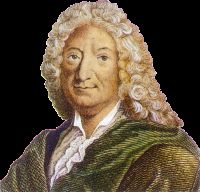 Alain René Le Sage,
The Adventures of Gil Blas of Santillane…
Alain René Le Sage,
The Adventures of Gil Blas of Santillane…
“ We are sympathetic animals, just on a level with the people of quality. We have our equipages in the same style; we give our little suppers on the same scale; and, on the broad ground, we are just of as much use in civil society. In fact, to draw a parallel between a marquis and a player through the space of four and twenty hours, they are just on a par. The marquis, for three fourths of the time, ranks above the player by political courtesy and sufferance; the player, during his hour on the stage, overtops the marquis in the part of an emperor or a king, which he better knows how to enact. ”
 Alexandre Dumas,
Tales of Strange Adventure
(1907)
Alexandre Dumas,
Tales of Strange Adventure
(1907)
“ Meantime the Marquis, arrived in his private room, said feverishly, " Now, my good Bonbonne, now, to work, to work!"—and he shook the papers littering the desk with an eager, trembling hand, as if to classify and master them all on the spot. "Come, come," interposed the old man; "we are on the right road, so do not let us hurry too fast; ' more haste, less speed,' you know." ”
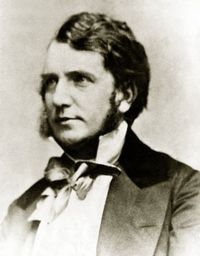 Joseph Sheridan Le Fanu,
In a Glass Darkly
(1872)
Joseph Sheridan Le Fanu,
In a Glass Darkly
(1872)
“ The Marquis had, as we say, taken a fancy to me. Such likings at first sight often ripen into lasting friendships. To be sure it was just possible that the Marquis might think it prudent to keep the involuntary depository of a political secret, even so vague a one, in good humour. ”
 Mary Elizabeth Braddon,
The Trail of the Serpent
(1890)
Mary Elizabeth Braddon,
The Trail of the Serpent
(1890)
“ You'd like him to have been a fine gentleman—a baronet, or an earl, or a marquis, eh, my blessed boy? A marquis is about the ticket for you, eh? What do you say to a marquis?" It was not very polite, certainly, what he did say; not quite the tone of conversation to be pleasing to any marquis, or to any noble or potentate whatever, except one, and him, by the laws of polite literature, I am not allowed to mention. ”
