“ Nothing of course could be more reprehensible, more dastardly, in fact, than to breathe a breath of criticism upon the marksmanship of a host, as it were, who has risen so high in the profession in which marksmanship is so essential ”
Marksmanship
Definition and stakes
Marksmanship, the art of accurate shooting, has been examined in literature as both a technical ability and a metaphor for concentrated purpose. Authors like E. K. Means emphasize its almost instinctive proficiency, while Joseph Donaldson places it within the romanticized heroism of military service.
George Agar Hansard praises competitive archery as a national endeavor, and John Henry Newman compares the marksman’s aim to the preacher’s clarity of message. These differing viewpoints highlight marksmanship’s dual function as a tangible skill and a symbolic embodiment of commitment, accuracy, and honor across various fields.
Quotes about “marksmanship”
Joseph Donaldson, Recollections of the eventful life of a soldier (1859)
“ To fight in defence of one’s country, thought I—to follow the example of a Bruce or a Wallace—must be a glorious thing. Military fame seemed the only object worth living for. I already anticipated my acts of valour, charging the enemy, driving all before me, and coming back loaded with honour and a stand of French colours; receiving the praise of my commanding officer, and a commission. On I went in my career of arms, and it was impossible to stop short of being a general. ”
E. K. Means, Further E. K. Means
“ The marksman never seemed to take aim, and yet never missed. Just as a man can reach up and put his finger on his nose, so this man could put a bullet through the neck of a running hog and think nothing of it. ”
George Agar Hansard, Once a Week (1864)
“ An enthusiastic determination also to excel in the practice of this perfectly national sport animates the score or so of professors in both sexes who have hitherto borne away the palm of merit and struggled for the champion-medal, the first flight, the crême de la crême, of England’s modern bowmen and bowwomen. To win and wear for more than a very brief period this prized distinction of archery merit, is a stroke of good fortune not likely to fall to any single competitor. ”
 Eugène Sue,
The Wandering Jew — Volume 04
Eugène Sue,
The Wandering Jew — Volume 04
“ Would it not be a noble and encouraging example to see the master propose for public recompense and distinction the workman, deputed by his peers, as amongst the most honest, laborious, and intelligent of his profession? ”
Various, The Continental Monthly, Vol. 2…
“ If a stranger is in the shop, he will hold it out admiringly, and ask:'Do you know what I call that? I call that 'Hopeful Tackett—his mark.''And it is a mark—a mark of distinction—a badge of honor, worn by many a brave fellow who has gone forth, borne and upheld by a love for the dear old flag, to fight, to suffer, to die if need be, for it; won in the fierce contest, amid the clashing strokes of the steel and the wild whistling of bullets; won by unflinching nerve and unyielding muscle; worn as a badge of the proudest distinction an American can reach. ”
William Pitt Scargill, Rank and Talent; A Novel, Vol. 1…
“ For what is the use or benefit of knowing any thing, if we cannot let that knowledge be known. If a secret be confided to us, an honour is thereby conferred; but if that secret be not by us again talked about, directly or indirectly, how can the world know how much we are honoured? Who would give a fig to receive the honour of knighthood, if he were under an obligation to let no one know it? ”
Captain F. Brinkley, Japan: Its History, Arts, and Literature (1902)
“ Adopting that principle in compiling this work, I have divided the carvers of sword-furniture into three ranks. Natural talent combined with the skill acquired by long practice constitutes the "master," who stands at the highest point of his art. Next comes the "expert," concerning whom, however, a triple subdivision must be made: namely, the expert who ranks next to and immediately after the master; then the expert who, though originally of "inferior" ability, has nevertheless by zealous and patient effort developed the skill which ought to be the aim of every student ”
Reuben Percy and Sholto Percy, The Percy Anecdotes (1820)
“ The mark is sometimes a fixed target, and sometimes an object \\liich is made to move quickly past a small opening. Should the marksman hit the mark, he has a due share of honour; and he who is so skilful as to drive his ball through the centre, receives the wooden image itself as the reward of his skill. ”
 John Henry Newman,
The Idea of a University Defined and Illustrated
John Henry Newman,
The Idea of a University Defined and Illustrated
“ As a marksman aims at the target and its bull's-eye, and at nothing else, so the preacher must have a definite point before him, which he has to hit. So much is contained for his direction in this simple maxim, that duly to enter into it and use it is half the battle ”
 George Birkbeck Norman Hill,
The Life of Sir Rowland Hill and the History of Penny Postage…
George Birkbeck Norman Hill,
The Life of Sir Rowland Hill and the History of Penny Postage…
“ An error, occasionally met with in novels, is as follows. A wonderful marksman has to exhibit his powers, which he does thus:—He throws into the air two birds—or perhaps inanimate objects—as two apples ”
William Beloe, The Sexagenarian; or, the recollections of a literary life… (1817)
“ The profession of arms is perhaps that alone, in which success and exaltation, even to the loftiest height of rank, excites no surprize, and provokes no envy. The qualities of personal valour combined with military talent, is that which obtains, extends, and secures the glory of a nation, in which every individual participates, and is more or less anxious to reward. ”
 Sir Richard Steele,
Richard Steele
Sir Richard Steele,
Richard Steele
“ Y. Book. 'Tis true, madam, I owe it all to fortune; neither your kindness nor my industry had any share in't. Thus am I still as wretched as I was, for this happiness I so much prize had doubtless been refused my want of merit.Pen. It has very soon, you see, lost what you valued in it; but I find you and I, sir, have a different sense; for, in my opinion, we enjoy with most pleasure what we attain with least merit. Merit is a claim, and may pretend justly to favour; when without it what's conferred is more unexpected, and therefore more pleasing. ”
 Montesquieu,
Persian Letters — Letter 91
(1721)
Montesquieu,
Persian Letters — Letter 91
(1721)
“ FROM the general passion which the French have for glory, there has been developed in the minds of individuals a certain something which they call “the point of honour;” it is properly the characteristic of every profession, but most marked in military men—theirs, indeed, is the point of honour par excellence. ”
Sir Joshua Reynolds, Fifteen Discourses
“ I have taken another course, one more suited to my abilities, and to the taste of the times in which I live. Yet however unequal I feel myself to that attempt, were I now to begin the world again, I would tread in the steps of that great master: to kiss the hem of his garment, to catch the slightest of his perfections, would be glory and distinction enough for an ambitious man. ”
Sixty Folk-Tales from Exclusively Slavonic Sources
“ I am a hero, but I have not what a hero requires.’ Then he went to a smith, at whose smithy were five-and-twenty smiths. ‘God help you, smith!’ ‘God help you, Kraljevitch Marko! why have you come to me?’ ‘I have come to you that you may forge me a sword weighing twelve hundredweight; then you shall also forge me a mace, if you make the sword well; but you must know that it must be stronger than your anvil. ”
Samuel Smiles, The Life of Thomas Telford, Civil Engineer
“ It has happened to me more than once, when taking opportunities of being useful to a young man of merit, that I have experienced opposition in taking him from his books and drawings, and placing a mallet, chisel, or trowel in his hand, till, rendered confident by the solid knowledge which experience only can bestow, he was qualified to insist on the due performance of workmanship, and to judge of merit in the lower as well as the higher departments of a profession in which no kind or degree of practical knowledge is superfluous. ”
 Edward Bellamy,
Looking Backward From 2000 to 1887…
(1888)
Edward Bellamy,
Looking Backward From 2000 to 1887…
(1888)
“ It is not even necessary that a worker should win promotion to a higher grade to have at least a taste of glory. While promotion requires a general excellence of record as a worker, honorable mention and various sorts of prizes are awarded for excellence less than sufficient for promotion, and also for special feats and single performances in the various industries. There are many minor distinctions of standing, not only within the grades but within the classes, each of which acts as a spur to the efforts of a group. ”
 William Wordsworth,
The Prose Works of William Wordsworth
William Wordsworth,
The Prose Works of William Wordsworth
“ In other words, to what degree do I value my faculties and my attainments for their own sakes? or are they chiefly prized by me on account of the distinction which they confer, or the superiority which they give me over others? Am I aware that immediate influence and a general acknowledgment of merit are no necessary adjuncts of a successful adherence to study and meditation in those departments of knowledge which are of most value to mankind;—that a recompense of honours and emoluments is far less to be expected ”
Horace N. Pym, Chats in the Book-Room
“ The great master has most wonderfully rendered the hero's long, gaunt, sallow face lit up by fine sad eyes full of coming sorrow and present ill-health. His cocked hat and red coat slashed with silver braid are brilliantly painted, whilst his red hair is discreetly subdued by a touch of powder. ”
 Charles Sumner,
Charles Sumner: his complete works…
Charles Sumner,
Charles Sumner: his complete works…
“ Here we encounter the question, What measure of praise shall be accorded to war, or to the profession of arms? Thus far, great generals and conquerors have attracted the largest share of admiration. They swell the page of history. For them is inspiring music, the minute-gun, the flag at half-mast, the trophy, the monument. Fame is a plant whose most luxuriant shoots have grown on fields of blood. ”
 James Lane Allen,
Out from the heart
(1900)
James Lane Allen,
Out from the heart
(1900)
“ And does he not day by day carefully and faithfully carry out every detail of his master's instructions, looking forward to the time when, perfected through obedience and practice, he shall be himself a master? Where is the man who sincerely aims at excellence in music, painting, literature, in any trade, business, or profession who is not willing to give his whole life to the acquirement of his particular perfection? Shall labor, then, be considered where the very highest excellence is concerned—the excellence of Truth? ”
Charles John Ffoulkes, Armour & Weapons
“ With modern methods of arrangement and with the expert care of those most learned in this subject these examples will be an ever-present record which may be examined with more interest than might be bestowed upon many branches of the applied arts; because, in addition to the interest centred in the personality of the wearers, we have the sure signs of the master-craftsman which are always evident in good craftsmanship, and, not infrequently, the sign-manual of the worker himself. ”
Samuel Smiles, Self Help; with Illustrations of Conduct and Perseverance
“ Many barons of proud names and titles have perished, like the sloth, upon their family tree, after eating up all the leaves; while others have been overtaken by adversities which they have been unable to retrieve, and sunk at last into poverty and obscurity. Such are the mutabilities of rank and fortune.The great bulk of our peerage is comparatively modern, so far as the titles go; but it is not the less noble that it has been recruited to so large an extent from the ranks of honourable industry. ”
 William Godwin,
St. Leon: A Tale of the Sixteenth Century
William Godwin,
St. Leon: A Tale of the Sixteenth Century
“ You have been taught to know your rank in society, and to respect yourself. You have been instructed in every thing that might most effectually forward you in the career of glory. There is not a young cavalier among all the nobility of France more accomplished, or that promises to do greater honour to his name and his country. ”
 Henry Fielding,
The Works of Henry Fielding, vol…
Henry Fielding,
The Works of Henry Fielding, vol…
“ Thirdly, this opinion of our superiority is commonly very erroneous. Who hath not seen a general behave in this supercilious manner to an officer of lower rank, who hath been greatly his superior in that very art to his excellence in which the general ascribes all his merit? Parallel instances occur in every other art, science, or profession.Fourthly, men who excel others in trifling instances frequently cast a supercilious eye on their superiors in the highest. ”
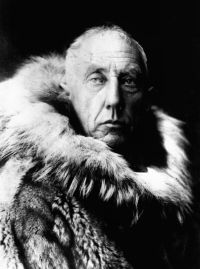 Roald Amundsen,
The South Pole; an account of the Norwegian Antarctic expedition in the "Fram…
Roald Amundsen,
The South Pole; an account of the Norwegian Antarctic expedition in the "Fram…
“ There are marksmen of all kinds, good, bad, and indifferent. Here comes the champion — one can see that by the determined way in which he raises the dart and sends it flying; his will, no doubt, be the top score. ”
 Jean-Jacques Rousseau,
Emile, or On Education
(1762)
Jean-Jacques Rousseau,
Emile, or On Education
(1762)
“ I want to give him a rank which he cannot lose, a rank which will always do him honour; I want to raise him to the status of a man, and, whatever you may say, he will have fewer equals in that rank than in your own. ”
J. H. Green, Secret Band of Brothers
“ The qualities are made for the special purpose of designating each individual, and at the same time be entirely safe from the least suspicion. When a Grand Master has had the honour of promotion conferred, he is supplied with the table of qualities; likewise the secret of correspondence is submitted to his confidence, under an oath, the penalty of which is death, if he, by word, deed, or action develop, or by any means expose, the principles of his special charge. ”

“ A master, whose sole business it is to express himself, founds it incidentally, just as incidentally he enriches the tradition from which he borrows; successors exploit it; pious great-grand-nephews mummify and adore it. ”
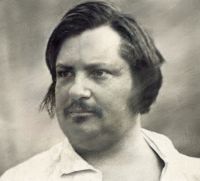 Honoré de Balzac,
Beatrix
(1839)
Honoré de Balzac,
Beatrix
(1839)
“ The marquise felt herself mastered by a superior force,—by a young man on whom her rank and quality did not impose, who, as noble as herself, regarded her with an eye both powerful and calm, and from whom her greatest feminine arts and efforts could with difficulty obtain even a smile of approval. ”
 John Stuart Mill,
On Liberty
(1869)
John Stuart Mill,
On Liberty
(1869)
“ Persons require to possess a title, or some other badge of rank, or of the consideration of people of rank, to be able to indulge somewhat in the luxury of doing as they like without detriment to their estimation. ”
Sir Archibald Alison, Travels in France during the years 1814-15
“ They have now an equally infatuated admiration for ability and success, without integrity or virtue. Their minds have been delivered from the dominion of rank without talents, and have fallen under that of talents without principle. ”
Samuel Smiles, Industrial Biography: Iron Workers and Tool Makers
“ I do not begrudge destructive heroes their fame, but the constructive ones ought not to be forgotten; and there IS a heroism of skill and toil belonging to the latter class, worthy of as grateful record,—less perilous and romantic, it may be, than that of the other, but not less full of the results of human energy, bravery, and character. ”
 Harriet Martineau,
Once a Week
(1859)
Harriet Martineau,
Once a Week
(1859)
“ The pleasant part is chiefly to come, — that of becoming marksmen; and the preparatory drill is gone through cheerfully, in the conviction which every sensible man entertains, that there can be no true soldiering without discipline, whatever men may be as marksmen. ”
Samuel Finley Breese Morse, Samuel F. B. Morse, His Letters and Journals
“ I had hoped to return from honors abroad to enjoy a little rest from litigation at home, but, if I must take up arms, I hope to be able to use them efficiently in self-defense, and in a chivalrous manner as becometh a 'Knight.' I have no reason to complain of my position abroad, but I suppose, as I am not yet under the ground, honors to a living inventor must have their offset in the attacks of envy and avarice. ”
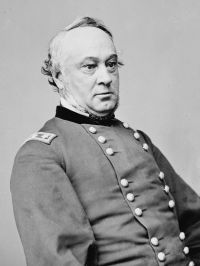 H. W. Halleck,
Elements of Military Art and Science
H. W. Halleck,
Elements of Military Art and Science
“ It is this: let merit be the main test for all appointments and promotions in the army. Let one or more of the subordinate grades be thrown open to the youth of the whole country, without distinction as to birth, or wealth, or politics; let them be kept on probation in this subordinate grade, and be thoroughly instructed in all that relates to the military profession ”
Various, The Atlantic Monthly, Volume 06…
“ Once embarked in the profession of arms, he had nothing to rely upon but his own address to secure patronage and promotion,--nothing but his own merits to justify the countenance that his ingenuity should win. ”
 Sidney Colvin,
1911 Encyclopedia Britannica
(1911)
Sidney Colvin,
1911 Encyclopedia Britannica
(1911)
“ But among peaceful arts, industries or trades, some have always been held to be of higher and others of lower rank; the higher rank being assigned to those that required larger operations, higher training, or more thoughtful conduct, and yielded ampler returns—the lower rank to those which called for simple manual exercise, especially if such exercise was of a disagreeable or degrading kind. ”
 Anthony Trollope,
Mary Gresley, and An Editor's Tales
Anthony Trollope,
Mary Gresley, and An Editor's Tales
“ Out came the roll of paper of which we had already seen the end projecting from his breast pocket, and we were assured that we should find the contents of it exactly the thing for our magazine. There is no longer any diffidence in such matters,—no reticence in preferring claims and singing one’s own praises. All that has gone by since competitive examination has become the order of the day. No man, no woman, no girl, no boy, hesitates now to declare his or her own excellence and capability. ”
Various, Robert Merry's Museum, Volumes I and II… (1842)
“ Don’t be quite so sure about the master, either; he never says much till he is ready. But I have seen him looking pretty sharply at you, over his spectacles, in the midst of some of your clever tricks. He will fetch you up one of these days, when you little think of it. I wish you much joy of your medal, Mr. Peter Sly. You got to the head of the class, last week, unfairly; and if your medal weighed as much as your conscience, I guess it would break your neck. (Peter sits whittling, and humming a tune.) ”
