Mean (ethics)

Definition and stakes

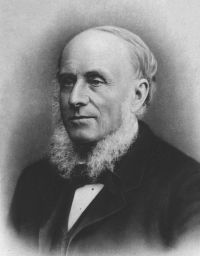
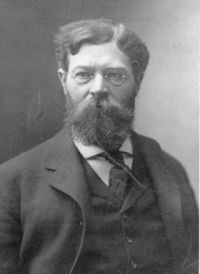
Portrait of Bertrand Russell Bertrand Russell,  What I believe (1925)

“ If I say that the legislative authority has bad desires, I mean merely that its desires conflict with those of some section of the community to which I belong. Outside human desires there is no moral standard.
Thus, what distinguishes ethics from science is not any special kind of knowledge, but merely desire. The knowledge required in ethics is exactly like the knowledge elsewhere; what is peculiar is that certain ends are desired, and that right conduct is what conduces to them.
”
Source: Gutenberg

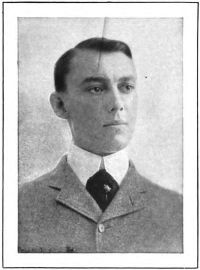
Portrait of Ralph Barton Perry Ralph Barton Perry,  The Moral Economy

“ For the principles of conduct, like the principles of nature, must be derived from a study of the field to which they are applied. They require nothing more for their establishment than the analysis and generalization of the moral situation. If two or more persons conduct themselves with reference to one another and to an external object, their action either possesses or lacks, in some degree, that specific value which we call moral goodness. And by the principles of ethics we mean the principles which truly define and explicate this value. ”
Source: Gutenberg

Joseph Rickaby,  Moral Philosophy: Ethics, Deontology and Natural Law

“ A free act is an act which so proceeds from the will that under the same antecedent conditions it might have not proceeded.
An act may be more or less voluntary, and more or less free.
5. Moral Philosophy is divided into Ethics, Deontology, and Natural Law. Ethics consider human acts in their bearing on human happiness; or, what is the same thing, in their agreement or disagreement with man's rational nature, and their making for or against his last end. Deontology is the study of moral obligation, or the fixing of what logicians call the comprehension of the idea I ought.
”
Source: Gutenberg

Get perspective with Kwize: daily news enlightened by great literature