Meiosis

Definition and stakes

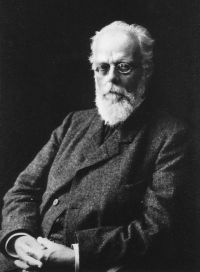
J. T. Cunningham,  Hormones and Heredity

“ Under unfavourable conditions reduction or meiosis occurs, and two kinds of eggs larger and smaller are formed, both with N chromosomes. The larger only develops when fertilised and give rise to females with 2N chromosomes. The smaller eggs develop without fertilisation, by parthenogenesis, and become males. Here then we have three kinds of gametes, large eggs, small eggs, and sperms, each with the same number of chromosomes. It is not the mere number then which makes the difference, but we find a segregation in the ova into what may for convenience be called female ova and male ova. ”
Source: Gutenberg

Peter Chalmers Mitchell and Sydney Howard Vines,  1911 Encyclopædia Britannica (1911)

“ The normal sexual act has been described as consisting in the fusion, first, of two cells, then of their nuclei, and finally, often after a long interval, of their chromosomes and of their chromomeres in meiosis. What causes determined these fusions is a question that is only partly answered. It is known in certain cases (e.g. ferns and mosses) that the male cell is attracted to the female by chemical substances secreted for the purpose by the female organ ”
Source: Wikisource

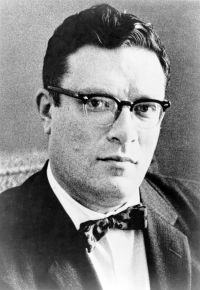
Portrait of Isaac Asimov Isaac Asimov,  The Genetic Effects of Radiation

“ The gene for brown eyes is dominant in this case while the gene for blue eyes is recessive.
8 Parents and Offspring
How does the fertilized ovum obtain its particular set of chromosomes in the first place?
Each adult possesses gonads in which sex cells are formed. In the male, sperm cells are formed in the testes; in the female, egg cells are formed in the ovaries.
In the formation of the sperm cells and egg cells there is a key step—meiosis—a cell division in which the chromosomes group into pairs and are then apportioned between the daughter cells, one of each pair to each cell.
”
Source: Gutenberg

Get perspective with Kwize: daily news enlightened by great literature