“ To some physicians a patient will present only conventional symptoms, while a follow practitioner will discover the elements of an interesting case. Above all, the painstaking physician, interested in psychology, will find mental and other personal manifestations in his patient that distinctly modify the course of the disease. We must know all that is possible about the patient's attitude of mind toward his malady, and all the ideas that he has acquired with regard to it, either from previous relations with physicians or from what he may have read or heard from others. ”
Mental patient
Definition and stakes
The theme of “mental patient” has been addressed by authors such as James J. Walsh, Carl Gustav Jung, Richard C. Cabot, Boris Sidis and Thomson Jay Hudson. It is often associated with terms like physician, disorder, disease, mind and psychotherapy.
Quotes about “mental patient”
A Psychiatric Milestone: Bloomingdale Hospital Centenary… (1921)
“ So often they appear to be mere rationalizations, mere false judgments on the part of the patient; they thus form subjects for investigation rather than fundamental constituents of the illness.We, therefore, must not accept the outward and visible signs at their face value but attempt to discover what past experiences in the life of the patient have led to such disturbance of function, to such a change in his mental activity. ”
Bernard Glueck, Studies in Forensic Psychiatry
“ By calling attention to certain symptom-complexes, which are especially characteristic of certain mental disorders, he gave us the means by which we are able at the present time to predict with a fair degree of certainty what the future life of a given patient will be. We can now tell without great fear of contradiction which of our patients are going to spend the rest of their lives in institutions. ”
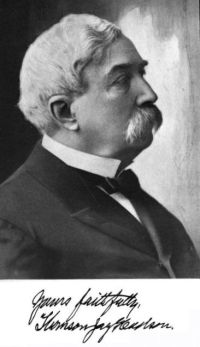 Thomson Jay Hudson,
The Law of Psychic Phenomena
“ The lines of its field are not clearly defined, however, for the reason that so much depends on the idiosyncrasies of each individual patient. A disease which can be cured in one case refuses to yield in another, the mental attitudes of the patients not being the same. Besides, the mental environment of the patient has much to do with his amenability to control by mental processes. In an atmosphere of incredulity, doubt, and prejudice, a patient stands little chance of being benefited, however strong may be his own faith in mental therapeutics. ”
“ In many patients, however, there is no such history, though there is usually the story of symptomatic mental conditions of one or other of the types mentioned, earlier in life. When in good health physically the patient has very little bother from them. ”
A Psychiatric Milestone: Bloomingdale Hospital Centenary… (1921)
“ After studying in each patient all the non-mental disorders such as infections, intoxications, and the like, we can now also attack the problems of life which can be understood only in terms of plain and intelligible human relations and activities, and thus we have learned to meet on concrete ground the real essence of mind and soul—the plain and intelligible human activities and relations to self and others. ”
Various, The Arena, Volume 4, No. 23, October…
“ The patient’s mental background is like a sensitive plate, upon which will gradually appear outlines of health as they are positively presented. Improved views of his own condition spring up from within, and seem to him to be original. As 540they grow into expression in the outer man, his cure is complete. ”
Eugene Christian, Encyclopedia of Diet: A Treatise on the Food Question…
“ The practitioner should make it a special point to ascertain any adverse or depressed mental conditions of his patient and remove them, if possible, by encouragement, sympathetic counsel and optimistic views, all of which have a splendid psychological effect, and which, in nearly all cases of mental depression, are very important. ”
James Vance May, Mental diseases: a public health problem
“ It carries the reader away from the technical dissertations, and brings him face to face with the feelings and reactions of a distorted mind, showing him the patient as a human being with a sentient soul and not as a case. ”
 Sigmund Freud,
Selected Papers on Hysteria and Other Psychoneuroses
(1912)
“ Likewise I am informed that this or that colleague has made appointments with a patient for psychic treatment, whereas I am certain that he does not know the technique of such a treatment. He must, therefore, expect that the patient will bring him her secrets, or he seeks salvation in some kind of a confession or confidence. I should not wonder if the patient thus treated would rather be harmed than benefited. The mental instrument is really not at all easy to play. ”
 Boris Sidis,
Nervous Ills, Their Cause and Cure
“ It is, therefore, the physician’s object to lift the patient out of this low form of mental activity to the higher types of rational, personal life in which the patient can rise above the perturbations of life, above the pettiness of existence with its worries and fears. ”
A Psychiatric Milestone: Bloomingdale Hospital Centenary… (1921)
“ Exclusive attention to the physical condition and factors, or to the mental condition and factors, or concentration on one theory or one form of treatment to the exclusion of all others is sure to lead to neglect of that careful general inquiry into the whole personality of the patient, into the conditions out of which his disorder arose, and into all the manageable factors in the situation which is so essential to intelligent and effective treatment. ”
A system of practical medicine… (1886)
“ The modern management of mental disease by rest, diet, baths, fresh air, occupation, diversion, change of scene, no more medicine than is absolutely necessary, and the least restraint possible—in a word, improving the patient's general condition, meeting the indications of his disease, diverting his mind from its morbid thoughts, or putting the brain in a splint, so to speak, as each case demands—gives much better results, the value of which is much diminished by the enormous increase in the size of our asylums and the great aggregation in them of diseased persons in all stages of insanity. ”
Thomson Jay Hudson,
The Law of Psychic Phenomena
“ Success in mental healing depends upon proper mental conditions, just as success in healing by physical agencies depends upon proper physical conditions. This is a self-evident proposition, which the average mental healer is slow to understand and appreciate.The success of the physician depends as largely upon his knowledge of the idiosyncrasies of his patient, his personal habits, his mode of living, his susceptibility to the influence of medicines, etc., as upon a correct diagnosis and medicinal treatment of the disease. ”
“ The reason of man, then, may be well able to convey clear instructions to his own residual consciousness, and send it to associate with, and work upon, some other residual consciousness. And if the instructions conveyed, and the work done, concern the curing of some ailment, a case of mental healing will be the result.Let A be the healer and B the patient; let a and b represent the residual consciousness of each of them; further, let A1 be the rational intellect of A, and B2 the seat of B’s disease. ”
Josephine A. Jackson, Outwitting Our Nerves: A Primer of Psychotherapy
“ Along with correct ideas about such matters as digestion, sleep, and fatigue, I give, so far as the patient is able to understand, a comprehension of the rights of the denied instincts, the ways of the subconscious, the fettering hold of unfortunate childish habits, the various mental mechanisms by which we fool ourselves, and the ways by which we may make better adaptations. ”
Thomson Jay Hudson,
The Law of Psychic Phenomena
“ The success of mental methods of treatment depending, as it does, upon the mental condition of the patient and upon the mental impressions made upon him, it follows that if the mental impressions are not permanent, the cure may not be permanent. ”
“ Nearly always the patient can be benefited by advice and suggestion, and very often some {600} unfavorable factor at work, using up his mental energy to no purpose, will be discovered. In order to do good, however, careful study of the individual patient is the most important element. The most frequent functional disturbance of the nervous system, leading to exhaustion of mental energy, is over-attention to one's self and to one's occupations. ”
John B. Tuke, John Macpherson, Lewis C. Bruce, Alexander W. Renton and Frederick Peterson, 1911 Encyclopædia Britannica (1911)
“ The patient remains in a state of constant restlessness, both of body and mind, untidy or absurd in dress, noisy, amorous, vindictive, boisterously happy or virulently abusive. As time passes a change sets in. The patient sleeps better, begins to lay on flesh, the sudden mental fluctuations become less marked and finally disappear. ”
T. Troward, The Edinburgh Lectures on Mental Science
“ This mutual removal of the external mental barrier between healer and patient is what is termed establishing a rapport between them, and here we find one most valuable practical application of the principle laid down earlier in this book, that pure spirit is present in its entirety at every point simultaneously. ”
Sidney Licht, Music in Medicine (1946)
“ The patient becomes increasingly forgetful and disinterested in his surroundings and social relations. There is a gradual loss of judgment and other mental faculties. The facial expression becomes empty and the speech slurred. ”
Josephine G. Paterson, Humanistic Nursing
“ Labeled mental patients in therapeutic situation, in the sun beyond the shadows, express how they set themselves apart from the rest of the community {56} of man. They express how they experience themselves. They view themselves as the worst, the noblest, the unhappiest, the most maligned, and the most afraid. ”
William James, Talks To Teachers On Psychology…
“ No doctor, this writer says, can get into really profitable relations with a nervous patient until he gets some sense of what the patient's Binnenleben is, of the sort of unuttered inner atmosphere in which his consciousness dwells alone with the secrets of its prison-house. ”
A Psychiatric Milestone: Bloomingdale Hospital Centenary… (1921)
“ Whatever be the disorders you may consider, aboulias, hysterical accidents, psychasthenic obsessions, periodical depressions, melancholics, systematized deliriums, asthenic insanity, you will always find a number of facts resulting from this general perturbation.In plenty of cases, the acts, far from being diminished, appear exaggerated; the patient moves about a great deal, he accomplishes acts of defense, of escape, of attack, he speaks enormously, he seems to evoke many remembrances and combine all sorts of stories during interminable reveries. ”
“ The physician can start these patients off anew after improving their physical condition, if he can only bring them to see how much their concentration of mind upon themselves is the cause of their symptoms. It has been well said, though to some it will doubtless seem an exaggeration, that we human beings are a regular boiler factory of sensations which, fortunately for our sanity, mental and physical, we have learned to neglect to a great extent. Wherever our clothing touches us, wherever the air touches us, wherever shoes or belts constrict us, there are definite sensations. ”
Horace B. Day, The Opium Habit
“ At length some terrible dawn rouses him out of a bad sleep into a worse consciousness. Though the most untechnical man, he must already know the disorder which has taken place in his moral nature and his will. For a knowledge of his physical condition he must resort to his medical man, and what, when the case is ten years old, must a practitioner tell the patient in any average case? ”
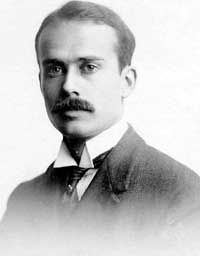 Clifford Whittingham Beers,
A Mind That Found Itself: An Autobiography
“ The sane part of me, which fortunately was dominant, subjected its temporarily unruly part to a sort of scientific scrutiny and surveillance. From morning till night I dogged the steps of my restless body and my more restless imagination. I observed the physical and mental symptoms which I knew were characteristic of elation. An exquisite light-heartedness, an exalted sense of wellbeing, my pulse, my weight, my appetite—all these I observed and recorded with a care that would have put to the blush a majority of the doctors in charge of mental cases in institutions. ”
“ The physician finds them under the most unexpected circumstances at times and in patients apparently above all suspicion of their self-infliction. They can only be prevented by changing the patient's state of mind, though this is scarcely what is ordinarily thought of in psychotherapy. ”
A Psychiatric Milestone: Bloomingdale Hospital Centenary… (1921)
“ But some patients who enter the asylum with a certificate of insanity are very frequently cured in a few months and some neuropathic disorders may last years. I could name you patients who since thirty years keep the same obsessions, and who at the age of fifty still ask themselves questions upon their pact with heaven, as they did at the age of twenty. Shall we speak of the consciousness the patient has of his state? But this consciousness may be complete in certain melancholies and very incomplete in certain impulsions. ”
A Psychiatric Milestone: Bloomingdale Hospital Centenary… (1921)
“ Through the rise of specialism, it is true, psychiatry itself has arisen and the psychiatrist, like the skilled integrating internist, is interested in the synthesis of the findings in all domains, for only through such synthetic studies, such integration of the functional activities of the whole organism, is it possible to gain a global view of the patient as a person, to make a complete somatic, psychic, and social diagnosis, and to plan a regimen for him that will ensure the best adjustment possible of his internal and external relationships. ”
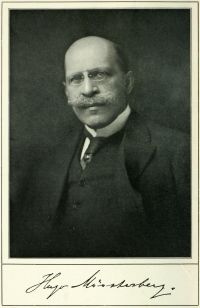 Hugo Münsterberg,
Psychotherapy
“ We know that the one, the causal aspect, belongs to psychology, while the non-psychological, the purposive aspect, belongs to our immediate mutual understanding in the walks of life. If the physician is to make use of inner experience in the interests of overcoming sickness, he must first decide whether to take the causal or the purposive point of view in dealing with the patient's mind. ”
“ For ordinary therapeutic purposes, the physician may be content to know only the physical signs and symptoms of his patient's affection. For psychotherapeutics, he must, if he would be successful, know every possible source of worry and annoyance and, as nearly as may be ascertained, every slight phase of physical fatigue that may be a disturbing factor in his patient's life. It is surprising how many things the physician will find to correct when he carefully goes over all the actions of the day and ascertains all the possible sources of worry and anxiety his patient may have. ”
Thomas Jefferson Ritter, Mother's Remedies
“ Remember their troubles are real to them, and are due to exhaustion or prostration of the nervous system and this condition, as before described, produces horrid feelings and sensations of almost every part of the body. The patient must be made to believe that he may expect to get well; and he must be told that much depends upon himself, and that he must make a vigorous effort to overcome certain of his tendencies, and that all his power of will will be needed to further the progress of the cure. ”
A Psychiatric Milestone: Bloomingdale Hospital Centenary… (1921)
“ Great advances have also been made in the methods of examining the minds of the patients and of determining the mental factors in their disorders and the means of restoring their capacity for adjustment to healthy thinking and acting. Psychiatry has been furnished with a body of well-arranged facts, and with a technic which is not inferior in system and precision to that of many other branches of medicine. In the study and management of the minds of the patients the physician is thus enabled to apply himself to the task as he does to any other medical problem. ”
“ If a hint of this distinction by which the physician differentiates one form of pain from another is given a neurotic patient, the suggestion will serve the purpose of producing complaints whenever the opportunity presents itself. Such patients take such suggestions, as a rule, without wishing to deceive, but they become persuaded that their sufferings are of the character asked for. ”
A Psychiatric Milestone: Bloomingdale Hospital Centenary… (1921)
“ No better illustration could be given, perhaps, of the change in the status of psychiatry in this country and in the world than the contents of the programme of our meeting to-day at which a distinguished investigator from London tells us of the biological significance of mental disorders, an eminent authority from Paris explains the relationship between certain diseases of the nervous system and these disorders, and a leading psychiatrist of this country speaks upon the contributions of psychiatry to the understanding of the problems of life. ”
Related terms
Authors who wrote about “mental patient”
James J. WalshCarl Gustav JungRichard C. CabotBoris SidisThomson Jay HudsonJames Vance May Florence NightingaleAustin O'MalleyJohn B. Tuke, John Macpherson, Lewis C. Bruce…Sidney LichtBernard GlueckSigmund FreudJosephine A. JacksonClifford Whittingham BeersC. G. JungThomas Jefferson RitterJosephine G. Paterson
 HippocratesHorace B. DayOliver Wendell Holmes
Boris SidisThomson Jay HudsonJames Vance MayFlorence NightingaleAustin O'MalleyJohn B. Tuke, John Macpherson, Lewis C. Bruce…Sidney LichtBernard GlueckSigmund FreudJosephine A. JacksonClifford Whittingham BeersC. G. JungThomas Jefferson RitterJosephine G. PatersonHippocratesHorace B. DayOliver Wendell Holmes