“ The overthrow of the enemy is the aim in war; destruction of the hostile military forces, the means both in attack and defence. By the destruction of the enemy’s military force, the defensive is led on to the offensive, the offensive is led by it to the conquest of territory. ”
Military offensive
Definition and stakes
The theme of “military offensive” has been addressed by authors such as Carl von Clausewitz, baron de Antoine Henri Jomini, Portal:United States Army Special Operations Command, H. W. Halleck and Various. It is often associated with terms like trench, enemy, artillery, gun and war.
Quotes about “military offensive”
baron de Antoine Henri Jomini, The Art of War
“ In a military point of view, the offensive has its good and its bad side. Strategically, an invasion leads to deep lines of operations, which are always dangerous in a hostile country. All the obstacles in the enemy's country, the mountains, rivers, defiles, and forts, are favorable for defense, while the inhabitants and authorities of the country, so far from being the instruments of the invading army, are generally hostile. However, if success be obtained, the enemy is struck in a vital point: he is deprived of his resources and compelled to seek a speedy termination of the contest. ”
Portal:United States Army Special Operations Command, Unconventional Warfare Pocket Guide (2016)
“ During employment, the resistance force initiates an expanded scope of offensive operations to achieve the desired effects. The desired effects can range from causing the enemy to commit limited resources away from a pending invasion area, support to a pending invasion area (as in general war) , or in the case of a separate insurgency (limited war) , the achievement of specific strategic politico-military objectives. ”
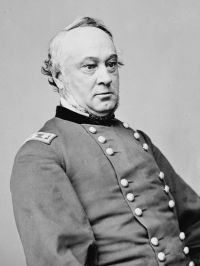 H. W. Halleck,
Elements of Military Art and Science
“ But if a political diversion be made in favor of the invading force, and its operations be attended with success, it strikes the enemy at the heart, paralyzes all his military energies, and deprives him of his military resources, thus promptly terminating the contest. Regarded simply as the initiative of movements, the offensive is almost always the preferable one, as it enables the general to choose his lines for moving and concentrating his masses on the decisive point. ”
Various, The World Court (Vol. I, No. 1… (1915)
“ If the defects of our present national defence speak to foreign countries of our weakness, an increase of militia would indicate military design. A reputation for bellicoseness, fully as much as for impotence, invites complications. Martial rivalry, suspicions, and jealousies are the recipe for disaster. ”
James W. Gerard, Face to Face with Kaiserism
“ In the future war every body of troops holding itself on the defensive or found taking the offensive, when it is not the question of sudden assault, will have to fortify itself in a chosen position and the war will be confined principally to the form of a series of combats in which the possession of fortified positions will be disputed, and in which the assailant will have to meet the accessory defensives in the neighbourhood of the fortifications such as barricades, barbed wire, etc., the destruction of these objects costing many victims.... ”
The Story of the Great War, Volume 6
“ To prevent the building of defenses, or smash them when built, to concentrate gunfire on communication trenches so as to render them impassable, to destroy reliefs coming in or going out, to carry death to the foe in ditches and dugouts—in short, to injure him in any way that human ingenuity and military science could devise—such were the tactics employed by belligerents during the days and nights when in official language there was "nothing to report." ”
Naval War College, Sound Military Decision
“ The collection of information, the destruction of important enemy equipment or supplies, the neutralization of enemy positions, the severing of physical means of communication and transport, and the like, are suitable objectives. The attritional effect of repeated raids may be very great. Skillfully executed raids frequently produce panic among the populace and thus, by political pressure, cause a change in the existing apportionment of fighting strength to the extent of upsetting military plans in other theaters. ”
Baron Max Aitken Beaverbrook, Canada in Flanders, Volume II
“ Then began the race between the contending armies to produce guns and shells of such size and in such quantities as would blast a whole area with death, bury the machine-guns and the garrisons, destroy the superiority of the infantry in defence, and give the game once more into the hands of the offensive. ”
Charles O'Neil, The Military Adventures of Charles O'Neil
“ Every inch of ground was disputed on both sides, and neither gave way until every means of resistance was exhausted. The field of battle was heaped with the dead; and yet the attack grew more impetuous, and the resistance more obstinate. The continued reverberations of more than six hundred pieces of artillery, the fire of the light troops, the frequent explosions of caissons blown up by shells, the hissing of balls, the clash of arms, the roar of the charges, and the shouts of the soldiery, produced a commingling of sounds whose effect it would be impossible to describe. ”
Arthur Joseph Hungerford Pollen, The British Navy in Battle
“ Where either side is weaker, it is compelled locally to adopt the same tactics that a defeated force adopts. It must, that is to say, go upon the defensive. It entrenches and fortifies itself. Thus, as military operations, the attack and defence of fortifications may become general, and this without either side being necessarily able to inflict the pressure of siege upon its opponent, siege being understood to mean severing of communications with the outside world. ”
John Alexander Logan, The Great Conspiracy, Complete
“ In regard to the other point of the proclamation to which you refer, I desire to say that I do not think the Enemy can either misconstrue or urge anything against it, or undertake to make unusual retaliation. The shooting of men who shall rise in arms against an Army in the Military occupation of a Country, is merely a necessary measure of defense, and entirely according to the usages of civilized warfare. ”
Glenna Lindsley Bigelow, Liége on the Line of March
“ What the public already knows of armies, guns, trenches, etc., has little to do with the suffering that the people of an invaded country endures, when the white-hot flame of the enemy invasion sweeps over the land scorching every flower and leaving in its wake only desolation and pain and despair. ”
Graf Ottokar Theobald Otto Maria Czernin von und zu Chudenitz, In the World War
“ Since the exposé was drawn up, the French and English on the Western front have carried out the predicted great offensive on a wide front, ruthlessly sacrificing masses of men and an enormous quantity of war material. The German army checked the advance of the numerically superior enemy; further attacks, as we have every reason to believe, will also be shattered by the heroism of the men and the iron will of their leaders. ”
Florence Finch Kelly, What America did (1919)
“ Day after day the American troops moved slowly forward, over rugged, difficult ground, broken by ravines and steep hills, through dense underbrush, in the face of deadly fire from artillery and nests of machine guns hidden in every vantage point, through incessant rain and mud and fog and penetrating cold, pushing the enemy steadily back, until they reached Sedan, cut the German Army’s most important line of communication, and so brought the end of the war in sight. ”
L. Oppenheim, International Law. A Treatise. Volume 2…
“ Assault is the rush of an armed force upon enemy forces in the battlefield, or upon intrenchments, fortifications, habitations, villages, or towns, such rushing force committing every violence against opposing persons and destroying all impediments. Siege is the surrounding and investing of an enemy locality by an armed force, cutting off those inside from all communication for the purpose of starving them into surrender or for the purpose of attacking the invested locality and taking it by assault. Bombardment is the throwing by artillery of shot and shell upon persons and things. ”
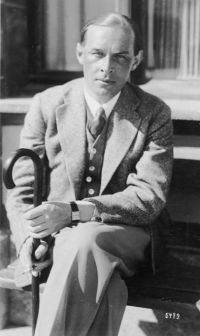 Erich Maria Remarque,
All quiet on the Western Front
(1929)
“ Once more he is the smart Himmelstoss of the parade-ground, he has even outstripped the lieutenant and is far ahead. Bombardment, barrage, curtain-fire, mines, gas, tanks, machine-guns, hand-grenades—words, words, but they hold the horror of the world. Our faces are encrusted, our thoughts are devastated, we are weary to death; when the attack comes we shall have to strike many of the men with our fists to waken them and make them come with us—our eyes are burnt, our hands are torn, our knees bleed, our elbows are raw. ”
“ The resources of the enemy in men seemed endless, their persistence remarkable, their recklessness in the face of sure death almost unbelievable. The noise was terrific; the constant rattle of the machine guns, the spitting of rifles, the booming of the artillery, the whining and crashing of shells, the yells of the charging troops, the shrieks of the wounded. In the British trenches the men were assembled, ready to pour out at the whistle and repel the assault on open ground ”
baron de Antoine Henri Jomini, The Art of War
“ War once determined upon, the first point to be decided is, whether it shall be offensive or defensive; and we will first explain what is meant by these terms. There are several phases of the offensive: if against a great state, the whole or a large portion of whose territory is attacked, it is an invasion; if a province only, or a line of defense of moderate extent, be assailed, it is the ordinary offensive; finally, if the offensive is but an attack upon the enemy's position, and is confined to a single operation, it is called the taking the initiative. ”
H. G. Proctor, The Iron Division, National Guard of Pennsylvania…
“ Deluged by high explosives, shrapnel and gas shells, seeing their comrades mowed down by machine gun fire, bombed from the sky, alternately in pouring rain and burning sun, hungry half the time, their eyes burning from want of sleep, half suffocated from long intervals in gas masks, undergoing all the hardships of a bitter campaign against a determined, vigorous and unscrupulous enemy, yet their only thought was to push on—and on—and on. ”
True Stories of the Great War, Volume 5…
“ It seemed impossible that any living creature should survive such a hellish turmoil. When the firing ceased abruptly, or when its direction was changed to give the French infantry a chance to attack us, then our brave fusiliers, musketeers, grenadiers crawled out of the funnels and pockets into which the enemy's grenades had ploughed the earth, made their way from among broken foundations, crumbling cement, trickling sand bags, and, grabbing their guns and wiping the dirt from their eyes, they repulsed the French attack. ”
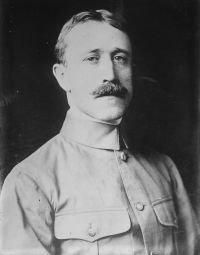 Frederick Palmer,
Our Greatest Battle (The Meuse-Argonne…
“ In the face of counter-attacks, supported by a rain of shells and bullets of artillery and machine-gun barrages, they held their ground in the midst of fountains of earth and flying débris and frightful casualties, with that resolution in which every man, no matter how many of his comrades are killed, determines that he will not yield alive. ”
Kelly Miller, Kelly Miller's History of the World War for Human Rights
“ Yes, hundreds of brave young Americans died fighting, but not in vain. American artillery swept the woods; little companies of men charged the enemy machine-gun nests, silencing the guns and killing the operators or taking them prisoners. There was no going forward in mass formation under barrage or protecting curtain of fire, but out in the open the Marines and infantrymen rushed on facing terrific fire. ”
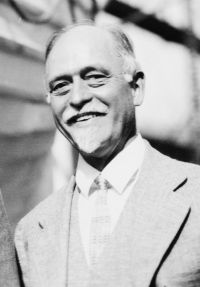 Irving Fisher,
Harper's Pictorial Library of the World War…
“ Damage in respect of all property, wherever situated, belonging to any of the Allied or Associated States or their nationals, with the exception of naval and military works or materials, which have been carried off, seized, injured, or destroyed by the acts of Germany or her allies on land, on sea, or from the air, or damage directly in consequence of hostilities or of any operations of war. ”
 John S. C. Abbott,
The Empire of Austria; Its Rise and Present Power
“ Two hundred thousand men, lighted only by the flash of guns which mowed their ranks, with thousands of panic-stricken cavalry trampling over them, while the crash of musketry, the explosions of artillery, the shouts of the assailants and the fugitives, and the shrieks of the dying, blended in a roar more appalling than heaven's heaviest thunders, presented a scene which has few parallels even in the horrid annals of war. ”
baron de Antoine Henri Jomini, The Art of War
“ The defensive army, on the contrary, should endeavor, by all means, to neutralize the first forward movement of its adversary, protracting operations as long as possible while not compromising the fate of the war, and deferring a decisive battle until the time when a portion of the enemy's forces are either exhausted by labors, or scattered for the purpose of occupying invaded provinces, masking fortified places, covering sieges, protecting the line of operations, depots, &c. ”
True Stories of the Great War, Volume 2…
“ They did not know, many of them, whether they were attacking French, British or Turk, but unquestioning, unthinking, they came on with a fearlessness of life deserving of a better cause, leaping into our trenches and falling back dead with a bullet in the throat or a bayonet wound in the breast or with head blown off by one of our shells.But it was, "for all our grim resistance," a hopeless kind of struggle. Sooner or later that unceasing stream of men issuing out of the narrow defile must sweep us back. ”
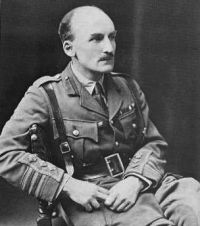 J. F. C. Fuller,
Tanks in the Great War, 1914-1918
“ All these attacks will be made, at first, not against the enemy’s army, which will be mobilising underground, but against the civil population in order to compel it to accept the will of the attacker. ”
 Ann S. Stephens,
Pictorial history of the war for the Union…
(1862)
“ Sometimes a wounded man would be picked up by two passing companions, and carried tenderly forward—for the sweet impulses of humanity were not all lost in that wild retreat.Then came the artillery—for much was saved—thundering through the panic-stricken crowd, crushing everything as it went, dragged recklessly along by horses wild as the men that urged them on. Rifles, bayonets, pistols, blankets, haversacks and knapsacks were flung singly or in heaps along the way. ”
Kelly Miller, Kelly Miller's History of the World War for Human Rights
“ In the general attack all along the line, the operation assigned the American army as the hinge of this Allied offensive was directed toward the important railroad communications of the German armies through Mezieres and Sedan. The enemy must hold fast to this part of his lines or the withdrawal of his forces with four years' accumulation of plants and material would be dangerously imperiled. ”
Thomas Herbert Russell, America's War for Humanity
“ The brunt of the resistance naturally has fallen on the infantry. In spite of the fact that they have been drenched to the skin for some days and their trenches have been deep in mud and water, and in spite of the incessant night alarms and the almost continuous bombardment to which they have been subjected, they have on every occasion been ready for the enemy's infantry when the latter attempted to assault. Indeed, the sight of the troops coming up has been a positive relief after long, trying hours of inaction under shell fire. ”
William E. Sellers, With Our Fighting Men
“ Instantly there breaks out the rattle of machine guns and musketry. There is some hesitation as the stormers reach the entanglements, and then, if the assault succeeds, they disappear into the enemy's trenches, leaving a few or many scattered [81] bodies lying in the track of their advance. Save at such moments as these there is often no movement whatever in the battle zone, for not a man, horse, or gun is to be seen, and there are periods of absolute stillness when, except for the sight of the deserted and ruined hamlets, the scene is one of peace and agricultural prosperity. ”
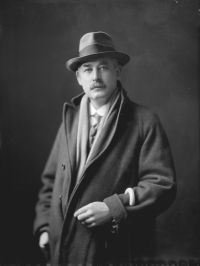 Thomas Lindsay Buick,
An Old New Zealander; or, Te Rauparaha…
“ Seeing the invaders approach, the defenders went out to meet them, and gave them battle on the open space in front of the pa; but the sound of the guns, and the sight of men falling as by the hand of some invisible enemy, so terrorised the defenders that their lines were soon broken, and they fled, a demoralised host, back to their stronghold, which was immediately stormed and taken with great slaughter. ”
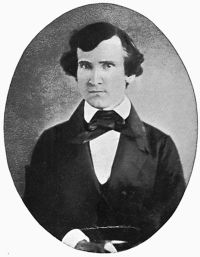 John Kirk Townsend,
Wyeth's Oregon, or a Short History of a Long Journey…
“ The troops parade and study military tactics every day, and seem determined to repel, with spirit, the threatened invasion. The probability is, that the report respecting the attack, is, as John Bull says, "all humbug," and this training and marching has already been a source of no little annoyance to us, as the miserable little skeleton of a saddler who is engaged to work for our party, has neglected his business, and must go a soldiering in stead. ”
Related terms
Authors who wrote about “military offensive”
 Carl von Clausewitzbaron de Antoine Henri JominiPortal:United States Army Special Operations CommandH. W. HalleckVariousJames W. GerardNaval War CollegeBaron Max Aitken BeaverbrookArthur Joseph Hungerford PollenJohn Alexander LoganGraf Ottokar Theobald Otto Maria Czernin von und zu ChudenitzIrving FisherKelly MillerJohn Kirk Townsend
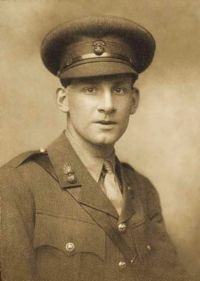 Siegfried Sassoon
 Anatole France
 Henry Villard
 George W. Bush
 Douglas MacArthurBarbara Lee
