Millworker

Definition and stakes

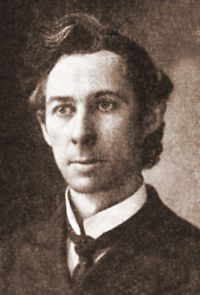
Portrait of Karl Marx Karl Marx,  Das Kapital (1906)

“ Here we find, amongst others, the following edifying passage: "Under the present law, no mill in which persons under 18 years of age are employed, ... can be worked more than 111/2 hours a day, that is 12 hours for 5 days in the week, and nine on Saturday.
"Now the following analysis (!) will show that in a mill so worked, the whole net profit is derived from the last hour. I will suppose a manufacturer to invest £100,000:—£80,000 in his mill and machinery, and £20,000 in raw material and wages.
”
Source: Wikisource

Frederic Kenyon Brown,  Through the mill: The life of a mill-boy (1911)

“ Then one day there came a flash which clearly lighted up everything. “Why are you going through this wild, unequal labor in this dull room day by day! Why? Do you absolutely have to do it? Are others keeping at it, as you? Why, why, why?” each one bigger than its fellow, made me meet every fact squarely. “To what end all this?”
My labor was helping to buy beer at home! I was giving up all my wage to my aunt, and getting back a little spending money. I had fifteen cents in the bank at the time.
”
Source: Gutenberg

Frederic Kenyon Brown,  Through the mill: The life of a mill-boy (1911)

“ I had watched the mill-boys, some of them not much older than myself—and I was only eleven—and I wanted to swagger up and down the alleys like them. They were lightly clad in undershirt and overalls, so that in their bared feet they could run without slipping on the hot floor. They were working for wages, too, and took home a pay envelope every Saturday. Just think of going home every Saturday, and throwing an envelope on the table with three dollars in it, and saying, nonchalantly, “Aunt, there’s my wages. Just fork over my thirty cents spending money. ”
Source: Gutenberg

Get perspective with Kwize: daily news enlightened by great literature