“ Growing no crop in the orchard. I think windbreaks are essential, and prefer Russian mulberry, three rows, planted six by eight feet apart. I like the mulberry best because they come into leaf early and hold their foliage late. I prune a little, to thin out and let the sun in. I believe it would pay to thin fruit on the trees. I use stable litter, and fertilizer from the hog-pen, and think it pays if not put too close to the tree. I tried pasturing with hogs, but don't think it advisable, as they destroy the trees to get apples. ”
Mulberry leaf
Definition and stakes
The theme of “mulberry leaf” has been addressed by authors such as Elizabeth Eiloart, Julia Ellen Rogers, Frank Warner, Richard Snow and Arthur Mellor, James Edward Smith and Habeeb Risk Allah. It is often associated with terms like silkworm, fruit, tree, China and bird.
Quotes about “mulberry leaf”
Oliver Wendell Holmes, Complete Project Gutenberg Oliver Wendell Holmes…
“ What the mulberry leaf is to the silk-worm, the author's book, treatise, essay, poem, is to the critical larva; that feed upon it. It furnishes them with food and clothing. ”
Annie Oakes Huntington, Studies of trees in winter (1901)
“ A small tree, 15 to 60 feet high. The bark is rough, with long furrows. The twigs are a light greenish brown and the leaf-scars are oval, hollow, and alternate in arrangement. The bundle-scars form a closed chain around the leaf-scar. A milky juice comes if the stems are cut on warm days in winter. Very smooth buds.The red mulberry is not particularly attractive in winter. In open situations its branches are wide spreading without being graceful, and it is broadly erect in shape without being stately. It grows to be a much larger tree in the South than it does in the North. ”
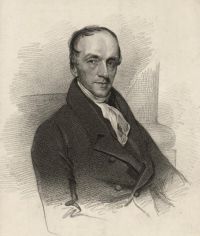 Richard Watson,
A Biblical and Theological Dictionary
“ Amos viii, 14; συκομορέα, Luke xix, 4; a large tree, according to the description of Theophrastus, Dioscorides, and Galen, resembling the mulberry-tree in the leaf, and the fig in its fruit; hence its name, compounded of συκέη fig, and μόρος, mulberry; and some have fancied that it was originally produced by ingrafting the one tree upon the other. Its fruit is palatable. When ripe it is soft, watery, somewhat sweet, with a little of an aromatic taste. The trees are very common in Palestine, Arabia, and Egypt; grow large, and to a great height ”
J. D. Paxton, Letters from Palestine
“ We have entered on the month of December, and yet the leaf of the mulberry is as green and fresh as it was in midsummer; true, most of the trees near us are nearly bare, not, however, by the fall of the leaf, but by their having been gathered for the animals. The horses, mules, and donkeys, are fed with barley and straw, which is cut fine by their mode of threshing out the grain. For a few weeks in the spring of the year they are kept on the green barley. I have generally seen the camel fed on weeds, which are gathered for that purpose. ”
Frank Warner, Richard Snow and Arthur Mellor, 1911 Encyclopædia Britannica (1911)
“ The soil in which the mulberry grows, and the age and condition of the trees, are important factors in the success of silkworm cultivation; and it has been too often proved that the mulberry will grow in situations where, from the nature of the leaf the trees put forth and from other circumstances, silkworms cannot be profitably reared. An elevated position with dry, friable, well-drained soil produces the best quality of leaves. ”
Jacob Joshua Levison, Studies of Trees
“ The tree, probably a native of China, is grown under cultivation in eastern Canada and United States. It grows rapidly in moist soil and is not fastidious in its light requirements. Its chief value is for screening and for underplanting in woodlands. The red mulberry (Morus rubra) is apt to be confused with the white mulberry, but differs in the following characters: The leaves of the red mulberry are rough on the upper side and downy on the under side, whereas the leaves of the white mulberry are smooth and shiny. The buds in the red are larger and more shiny than those of the white. ”
Henry Nicholson Ellacombe, The plant-lore & garden-craft of Shakespeare
“ As an ornamental tree for any garden, the Mulberry needs no recommendation, being equally handsome in shape, in foliage, and in fruit. It is a much prized ornament in all old gardens, so that it has been well said that an old Mulberry tree on the lawn is a patent of nobility to any garden; and it is most easy of cultivation ”
The New Student's Reference Work (1914)
“ The tree is quite frequently seen here about old farm-houses, is small, has smooth, shiny leaves. The black mulberry is a native of Asia, and is cultivated chiefly in the Old World for its fruit, which is large and fleshy, mostly dark-colored. The native red mulberry of the United States is M. rubra, which grows mostly in rich soils and bottom lands. ”
Henry H. Gibson, American Forest Trees
“ The full grown fruit is red, but turns black or very dark purple when ripe. The berry is composed of a compact and adhering cluster of drupes, each drupe about one thirty-second of an inch long. What seems to be a single berry is really an aggregation of very small fruits, each resembling a tiny cherry. The mulberry is naturally a forest tree, but it is permitted to grow about the margins of fields, and is often planted in door yards for its fruit and its shade. It is looked upon by many as a tame species. ”
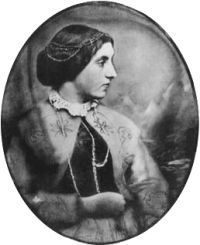 Mrs. Loudon,
Instructions in gardening for ladies
(1840)
“ The medlar will thrive in any soil or situation not too dry; but, like the quince, does best within the reach of water. The fruit, which is never eaten till it is in a state of decay, is not of much value, but the flowers are very large and rather handsome.The Mulberry.—There are three distinct species of mulberry, besides innumerable varieties. The distinct species are the white, only used for feeding silk-worms with its leaves; the black, which is generally grown in gardens for its fruit ”
Edward Bartrum, The Book of Pears and Plums; With Chapters on Cherries and Mulberries
“ It is stated that there are trees still living among us several centuries old. The black mulberry is the one commonly grown in England; the white does better in a warmer clime, and has been largely planted in France and other lands, where the leaves are required for silkworms. The white, however, can be grown in this country. The mulberry will thrive in any good soil, but the ground should not be very wet. It should be placed in a sheltered southern aspect, and is likely to do well in the south rather than the north of England. ”
Robert Tyas, Woodland Gleanings: Being an Account of British Forest-Trees
“ In this country the Black-fruited Mulberry always assumes something of a dwarf or stunted character, spreading into thick arms or branches near the ground, and forming a very large head. The bark is rough and thick, and the leaves cordate, unequally serrated, and very rough. The fruit is large, of a dark purple, very wholesome, and agreeable to the palate. This tree is remarkable for the slowness of its growth, and for [154] being one of the last trees to develope its leaves, though it is one of the first to ripen its fruit. ”
Robert Tyas, Woodland Gleanings: Being an Account of British Forest-Trees
“ The specific characters of the White-fruited Mulberry are—Leaves with a deep scallop at the base, and either cordate or ovate, undivided or lobed, serrated with unequal teeth, glossy or smoothish, the projecting portions on the two sides of the basal sinus unequal. The fruit is seldom good for human food, but is excellent for poultry. It is a tree of rapid growth, attaining the height of twenty feet in five or six years, and plants cut down producing shoots four or five feet long in one season. ”
Julia Ellen Rogers, Trees Worth Knowing
“ Planted in the garden or in the border of the lawn where no walk will be defaced by the dropping fruits, the mulberry is a particularly desirable tree because it attracts some of our most desirable song-birds to build on the premises. ”
Elizabeth Eiloart, Once a Week (1863)
“ In common with its near relative the fig, which it also resembles in the circumstance of its aggregate fruit being formed by the union of numerous flowers, the mulberry contains in every part of the tree a milky juice, which will coagulate into a coarse sort of india-rubber, and as this specially abounds in the white species, it has been surmised that the tenacity of the filament spun by the silk-worm may be due to this element of its food. It is rarely that the white mulberry, originally a native of Syria, is seen in England, its very inferior fruit being only fit to feed poultry ”
1911 Encyclopædia Britannica (1911)
“ The mulberry succeeds as a standard in the warmer parts of England, especially in sheltered situations, but in the north of England and the less favoured parts of Scotland it requires the assistance of a wall. The standard trees require no other pruning or training than an occasional thinning out of the branches, and are generally planted on lawns, to prevent the fruit being damaged when it falls. The tree succeeds best in a rich, deep, and somewhat moist loam, but grows well in any good garden ground. ”
Ella Rodman Church, Among the Trees at Elmridge
“ The tree is more beautiful than useful, for the silkworms do not thrive well on the leaves and the wood is neither strong nor durable.""Why, I thought," said Clara, "that silkworms always lived on mulberry-leaves?""The white mulberry is their favorite food; and another species, called the Morus multicaulis--for Morus is the scientific name of the family--has more delicate leaves than any other, and produces a finer quality of silk. These trees are natives of China, and the white mulberry grows very rapidly to the height of thirty or forty feet. ”
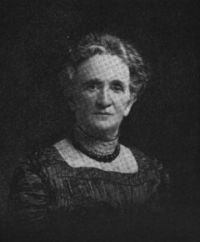 Mary Harrod Northend,
Garden Ornaments
“ It is rather important that you seek a spot, just near enough to the grounds to be companionable, there to place a mulberry tree. There is no fruit that is more to their mind than this and it will be a source of delight to watch the shyest birds reward you by flaunting their colors before you as they flit in and out, feeding off the berries so temptingly displayed for their exclusive use. ”
Elizabeth Eiloart, Once a Week (1863)
“ Recent experiments, however, have shown that by due management it is possible to make the mulberry tree bear fruit when only three years old. Its propagation is by no means difficult, for a branch torn off and thrust at once into the ground, readily takes root, and becomes ere long a tree; while so tenacious is it of life, that roots have been known to send up shoots to the surface after having lain dormant in the earth for twenty-four years. It rarely reaches a height of thirty feet, and though of a much-branched spreading character, does not usually attain a very large size. ”
Morgan George Watkins, Once a Week (1863)
“ The first appearance of autumn in the orchard is invariably among the walnut-trees. The mulberry, which puts on its summer foliage latest of our familiar trees, and is generally supposed to lose it at the first frost, is even stronger than the walnut, and waves a beautiful head of the deepest green leaves long after that tree has become ragged and unsightly. The ash, if it bears many keys, is perhaps the next in succession to lose its leaves. Many ashes bear no seeds, and then they abound in foliage, while their more fertile brethren look the picture of misery. ”
Henry Francis Brooke, Private Journal of Henry Francis Brooke
“ In my wanderings through the country I never fail to investigate the quality of the fruit, and have made a discovery, in two places, of a very superior kind of mulberry, of which there appears to be only half a dozen trees in the whole valley. They are so different from the common kinds that the natives call them Shah-toot, which means, the King mulberry, and the trees they grow on are considered quite curiosities. ”
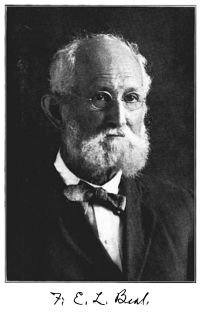 F. E. L. Beal,
Some Common Birds Useful to the Farmer…
“ Where wild fruit is not abundant, a few fruit-bearing shrubs and vines judiciously planted will serve for ornament and provide food for the birds. The Russian mulberry is a vigorous grower and a profuse bearer, ripening at the same time as the cherry. So far as observation has gone, most birds seem to prefer its fruit to any other. It is believed that a number of mulberry trees planted around the garden or orchard would fully protect the more valuable fruits. ”
 James Whitcomb Riley,
Riley Songs of Home
“ As I'll never climb thare by that rout' any more— What was all the green lauruls of Fame unto me, With my brows in the boughs of the mulberry tree! Then it's who can fergit the old mulberry tree That he knowed in the days when his thoughts was as free As the flutterin' wings of the birds that flew out Of the tall wavin' tops as the boys come about? O, a crowd of my memories, laughin' and gay, Is a-climbin' the fence of that pastur' to-day, And, a-pantin' with joy, as us boys ust to be, They go racin' acrost fer the mulberry tree. ”
Rollo Gillespie Burslem, A Peep into Toorkisthan
“ After a few miles' ride we crossed a low range of hills, and came upon the flourishing district of Be-tout,––literally, "without mulberries." The sagacious reader will justly infer that mulberry trees were in profusion every where else; indeed so plentiful are they in general that many of the natives live almost exclusively in winter upon the fruit, which is dried and reduced to a powder, and after being mixed with a little milk, or even water, forms a palatable and nutritious food. ”
 Henri Mouhot,
Travels in the Central Parts of Indo-China…
“ The mulberry does not thrive in these mountains; but in some localities this tree is cultivated for the sake of furnishing food to a particular insect which lives upon its leaves, and from which is obtained the lague or Chinese varnish. ”
 Harvey Washington Wiley,
Foods and Their Adulteration
“ The mulberry grows wild over extensive areas in the United States, especially in the Ohio valley. It is a tree valued highly for its wood, which is lasting and excellent for fence-posts. The berries ripen early in the summer or late in the spring and are used as food to a limited extent. ”
Habeeb Risk Allah, The Thistle and the Cedar of Lebanon
“ We saunter into one of the many white mulberry plantations that surround us on every side, and observe that the leafless boughs are only just putting forth their tender spring buds: yet there is an unusual commotion amongst the rearers of the silkworm—whole families, men, women, and children, are variously employed; the earth round the roots of the mulberry trees is being hoed up; some are planting young shoots, others busy in the kitchen gardens; whilst, to the European eye, a few appear as though engaged in a mysterious occupation. ”
Lillian Elizabeth Roy, Norma: A Flower Scout (1925)
“ Start with a young mulberry tree, if possible, for that fruit is the most attractive for birds of all kinds. And bees like to hover about mulberry blossoms, too, and get their nectar there. In my opinion, a mulberry tree is a necessity if one wants to keep birds and bees happy.“Besides the mulberry tree—or three or four of them, if you can find them of a size easy to remove from the woods—take the elderberry bushes, the choke-cherry, dogwood trees, wild black cherry and other kinds that not only blossom profusely but bear fruit that the birds like. ”
S. Baring-Gould, A Book of the Cevennes
“ In temperate climates they can be preserved through the winter without hatching until the time when the mulberry tree puts forth its leaves in the following spring. This tree forms the entire food of the caterpillar, and seems almost exclusively its own; for while other trees and vegetables nourish myriads of insects, the mulberry tree is seldom attacked by any but this insect, which in many parts of its native country, China, inhabits the leaves in the open air, and goes through all its changes without any attention from man. ”
 David Lester Richardson,
Flowers and Flower-Gardens
“ There is an allusion to garden knots in Holinshed's Chronicle. In 1512 the Earl of Northumberland "had but one gardener who attended hourly in the garden for setting of erbis and chipping of knottis and sweeping the said garden clean." [009] Ovid, in his story of Pyramus and Thisbe, tells us that the black Mulberry was originally white. The two lovers killed themselves under a white Mulberry tree and the blood penetrating to the roots of the tree mixed with the sap and gave its color to the fruit. ”
Clinton G. Gilroy, The History of Silk, Cotton, Linen…
“ Fresh plants are procured by cuttings or layers, and sometimes from seed. When the trees grow too old for the production of the finest leaves, and show a greater tendency to fruiting, they are either removed or so cut and managed as to produce young branches.The principal object, in the cultivation of the mulberry, is to produce the greatest quantity of young and healthy leaves without fruit. ”
Related terms
Authors who wrote about “mulberry leaf”
Elizabeth EiloartJulia Ellen RogersFrank Warner, Richard Snow and Arthur Mellor James Edward SmithHabeeb Risk AllahJohn LubbockClinton G. GilroyE. V. B.David Lester Richardson
 L. H. BaileyAnnie Oakes HuntingtonRobert TyasJ. D. Paxton
 Mayne ReidMrs. Loudon
 James Russell LowellF. E. L. BealLillian Elizabeth RoyHenry Nicholson EllacombeHenry H. Gibson
James Edward SmithHabeeb Risk AllahJohn LubbockClinton G. GilroyE. V. B.David Lester RichardsonL. H. BaileyAnnie Oakes HuntingtonRobert TyasJ. D. PaxtonMayne ReidMrs. LoudonJames Russell LowellF. E. L. BealLillian Elizabeth RoyHenry Nicholson EllacombeHenry H. Gibson