“ Each drupe contains an oblong oval kernel, pleasant to the taste, but so trivial in size as to be hardly worth the trouble of extraction unless there is little else to occupy attention save the pangs of hunger. ”
Drupe
Definition and stakes
A drupe is a fleshy fruit that encloses a single hardened pit (endocarp), which protects a seed, as seen in peaches, plums, and olives. Botanists such as Asa Gray emphasized its structural duality—soft outer layers contrasting with firm interiors—while E. J. Banfield pointed out its small, edible kernel.
Thomas Davidson categorized it as a "fleshy fruit containing a stone," and H. B. Guppy stressed its ecological role in seed dispersal through animals. These viewpoints together highlight the drupe's botanical importance, connecting form, classification, and ecological function.
Quotes about “drupe”
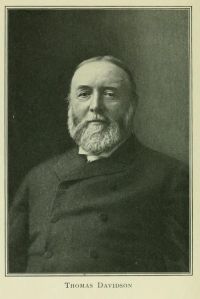 Thomas Davidson,
Chambers's Twentieth Century Dictionary 1908…
(1908)
Thomas Davidson,
Chambers's Twentieth Century Dictionary 1908…
(1908)
“ Drunk′ard, one who frequently drinks to excess: a habitual drinker.—p.adj. Drunk′en, given to excessive drinking: worthless, besotted: resulting from intoxication.—adv. Drunk′enly.—n. Drunk′enness, excessive drinking: habitual intemperance.Drupe, drōōp, n. a fleshy fruit containing a stone, as the plum, &c.—adj. Drupā′ceous, producing or pertaining to drupes or stone-fruits.—n. Drup′el, a little drupe. [L. drupa—Gr. dryppa, an over-ripe olive—drypepēs, ripened on the tree, from drys, a tree, and peptein, to cook; cf. drupetēs—drys, and piptein, to fall.] ”
Asa Gray, The Elements of Botany, For Beginners and For Schools
“ The fruit of the Hawthorn is a drupaceous pome, something between pome and drupe.355. Of fruits which are externally fleshy and internally hard the leading kind is356. The Drupe, or Stone-fruit; of which the cherry, plum, and peach (Fig. 375) are familiar examples. In this the outer part of the thickness of the pericarp becomes fleshy, or softens like a berry, while the inner hardens, like a nut. From the way in which the pistil is constructed, it is evident that the fleshy part here answers to the lower, and the stone to the upper face of the component leaf. ”
 H. B. Guppy,
Observations of a Naturalist in the Pacific Between 1896 and 1899…
H. B. Guppy,
Observations of a Naturalist in the Pacific Between 1896 and 1899…
“ As bearing on the mode of dispersal of this species, it may be observed that my Fijian experiments show that the fruits are not fit for transport by currents. With the mature drupe the outer coverings become pulverulent, and the fruit breaks down, freeing the pyrenes which do not float; nor have the seeds any buoyancy. Although the dry drupes would seem unattractive to birds, it is to birds we must look for the dispersal of the genus. ”
Asa Gray, The Manual of the Botany of the Northern United States
“ Stamens 8, long and slender, inserted on the calyx above the middle, protruded, the alternate ones longer. Style thread-form; stigma capitate. Drupe oval (reddish) .—A much-branched bush, with jointed branchlets, oval-obovate alternate leaves, at length smooth, deciduous, on very short petioles, the bases of which conceal the buds of the next season. Flowers light yellow, preceding the leaves, 3 or 4 in a cluster from a bud of as many dark-hairy scales, forming an involucre, from which soon after proceeds a leafy branch. ”
Henry H. Gibson, American Forest Trees
“ The first dashing rain sends a flood down the gulches, the laurel drupes are carried along and are buried in mud wherever they can find a resting place. Germination takes place soon after. The fruit remains under the mud, attached to the roots of the young plants, until the following summer. ”
Sir Arthur Newsholme, Hygiene: a manual of personal and public health…
“ Stone-fruits or drupes, such as the peach, nectarine, plum, cherry, are rather luxuries than foods, like many other fruits. Before ripening they are unfit for food; when ripening is complete, the acids and astringent matter largely disappear. The date contains chiefly sugar, and forms an important food in the East. ”
The Illustrated Dictionary of Gardening…
“ The flowers, which appear in the axils of the lower leaves, are greenish or yellow, and their drupes are much the same colour. Leaves pinnate, with seventy to eighty leaflets on each side of the pinnæ. They require a warm greenhouse and rich sandy loam. Increased by suckers. Two species only are in general cultivation. ”
Choyce Drollery: Songs and Sonnets
“ Perfuming the throat, when the stomack’s afloat,With the Fragrant sweet scent of a pot of good ale. Nor yet the delight that comes to the SightTo see how it flowers and mantles in graile,As green as a Leeke, with a smile in the cheek,The true Orient colour of a pot of good ale. But I mean the Mind, and the good it doth find,Not onely the Body so feeble and fraile;For, Body and Soul may blesse the black bowle,Since both are beholden to a Pot of good ale. ”
“ Whoever drinks is ruined, and follows him to the tavern.The brandy-distiller reaps a double harvest; first the red berries from the mountain-ash, from the hop, from the sweet-broom, from everything that here produces fruit. He believes in the Spirit of Nature, that lives in all created things, and conjures it out of the fruits of the forest and, like the magician in the fairy-tale, into the bottle and, putting the stopple in quickly, imprisons it there. His distillery is a magic circle under a high, gloomy pine, a circle like that which the spider draws and weaves. ”
A. Cooper, The Complete Distiller
“ I have kept these Waters undisturbed in separate well closed Vessels, and observed that in a Year’s Time, they began to appear thick, which Thickness gradually increased every Year, till at length the Liquor grew ropy and mucilaginous. Hence we see, that this Water contains the elementary Water, and presiding Spirit of the Plant; a Spirit small in Bulk, but rich in Virtues, and exhibiting the specific Smell and Taste of the Subject. ”
 Theodore Winthrop,
Cecil Dreeme — Chapter XIII. Dreeme…
(1864)
Theodore Winthrop,
Cecil Dreeme — Chapter XIII. Dreeme…
(1864)
“ Every grape had felt the round sun gazing straight and steadily at it, and enjoying his countenance within, as a lover loves to see his own image reflected in his lady’s eye. And every grape besides had taken in the broad glow of sunshine shining back from the glassy bay its vineyard overhung, or the shattered lights of innumerable ripples, stirred when the western winds came slinging themselves along the level sunbeams of evening. ”
Mary Eales, Mrs. Mary Eales's receipts. (1733…
“ To dry Plums like the French Plums, with Stones in them. When you have laid out all your Plums that are to be stopt, put white Pear-Plums, or any large black Plums, in an Earthen Pot, and make your Plum-Syrup almost scalding hot; put it to the 35 F2 Plums, and scald the Syrup every Day, ’till the Plums are tender and red; then lay them on Sieves, and dry them in an Oven, turning them every Day ’till they are dry; then lay them between Papers, and keep them in a dry Place. ”
Narratives of New Netherland, 1609-1664
“ Here is also a sort of grapes which grow very large, each grape as big as the end of one's finger, or an ordinary plum, and because they are somewhat fleshy and have a thick skin we call them Speck Druyven. If people would cultivate the vines they might have as good wine here as they have in Germany or France. ”
James Busby, A Treatise on the Culture of the Vine and… (1825)
“ The rains which fall at the moment of the flowering, are also to be dreaded, from their tendency to cause the running of the parts of fructification, and the imperfection of the fruit. But those genial showers, which fall when the fruit begins to enlarge, furnish to the plant the principal elements of its organization, and if heat follows to facilitate the elaboration of these elements, the grape can hardly fail to reach perfection. The most favourable weather for the grape, is that which gives an alternation of heat, and gentle showers. ”
Various, St. Nicholas Magazine for Boys and Girls…
“ Set the stump in a flower-pot saucer, filled with earth, and planted with mosses and tiny ferns; fit a footless wine or champagne glass, or a plain cup, into the hollow end, and, with a bunch of grasses and wild flowers, or autumn leaves, you have a really exquisite vase, prettier than any formal article bought in a shop, [page 49] and costing little more than time and patience, with a touch of that rare thing—taste! which, after all, is not so very rare as some people imagine. Any friend will prize such a vase of your own making. ”
Charles C. Abbott, Outings at Odd Times
“ Dew and Frost. At sunrise to-day, by reason of the dew, the whole earth was beautiful. Every harsh outline was softened to comely roundness. Not even an ungainly fence scarred the landscape. Instead of Nature tortured out of shape, the outlook was as a peep into a fairy-land. And all by reason of the glittering dew. What is dew? Says the physical geography at hand: “When at night the earth radiates the heat which it has received during the day, the surface becomes colder than the ground beneath or the air above. Vapor rises from the moist soil below, to be condensed at the cooler surface. ”
the Elder Pliny, The Natural History of Pliny, Volume 4…
“ The grapes employed for this purpose should never be gathered from a young vine, nor yet from a tree that is grown in a marshy spot, nor should any grapes be used but those that are perfectly ripe: the liquor, too, should never be skimmed with anything but a leaf,648 for if the vessel should happen to be touched with wood, the liquor, it is generally thought, will have a burnt and smoky flavour. ”
John Rudolph Glauber, The works of the highly experienced and famous chymist… (1689)
“ For if less of the Armoniack Liquor than is fit be added to a dry matter, all the Liquor so includes it self in the dry matter, as little of the Spirit can ascend in distilling. But if more of the Liquor be poured on than is fit, the ascending spirit will not be efficacious enough, because the vertue of that Subject diffuseth it self too largely into that aboundance of Spirit. Wherefore in all things measure and weight are to be observed. Dry Species, such are Herbs, Roots, Seeds and Flowers, drink up much Water; but Woods not so much, Stones and their like, much less than they. ”
T. T. Greg, Through a Glass Lightly — Glasses (1897)
“ It should be so thin that it clings to the lips as a membranous transparency—a bubble divided in twain, and floating on the wings of the wind. It should be wider in the middle than at any other point; should taper thereto from the bottom, or therefrom to the top—so that the soul of the wine comes concentrated into the mouth of its high priest. To be utterly avoided is the narrow hollow stem, which habours dirt or—what is as bad—inclines to the suspicion of dirt. ”

“ For, although with most of us who are labourers in the vineyard, toilers and swinkers, the morning pipe is smoked in hurry and fear and a sense of alarums and excursions and fleeting trains, yet with all this there are certain halcyon periods sure to arrive—Sundays, holidays, and the like—the whole joy and peace of which are summed up in that one beatific pipe after breakfast, smoked in a careless majesty like that of the gods “when they lie beside their nectar, and the clouds are lightly curled.” Then only can we be said really to smoke. ”
The Rāmāyana, Volume 2. Āranya…
“ The ponds, having the drakes scattering hither and thither for their girdles and engarlanded with full blown lotuses and water lilies, are appearing like so many damsels ornamented with diverse ornaments. The sound set up by the wind in the dawn like unto that of a pipe accompanied by the music of a trumpet, being mixed with the noise of the caves and bulls are as if multiplying each other. ”
 Henry Kingsley,
The Recollections of Geoffrey Hamlyn
Henry Kingsley,
The Recollections of Geoffrey Hamlyn
“ Having watered my horse, I turned him loose for a graze, and, making such a dinner as was possible under the circumstances, I lit a pipe and lay down on the long grass, under the flowering wattle-trees, smoking and watching the manoeuvres of a little tortoise, who was disporting himself in the waterhole before me. Getting tired of that I lay back on the grass, and watched the green leaves waving and shivering against the clear blue sky, given up entirely to the greatest of human enjoyments—the after dinner pipe, the pipe of peace. Which is the pleasantest pipe in the day? ”
 Eliza Ruhamah Scidmore,
Jinrikisha Days in Japan
(1891)
Eliza Ruhamah Scidmore,
Jinrikisha Days in Japan
(1891)
“ A ring of gaping admirers surrounds a master of the black art, who swallows a lighted pipe, drinks, whistles, produces the pipe for a puff or two, swallows it again, and complacently emits fanciful rings and wreaths of smoke. Hair-pins, rosaries, toys, and sweets are everywhere for sale. ”
Angus B. Reach, Claret and Olives, from the Garonne to the Rhone
“ A minute suffices to wrench out tub after tub, and to tilt their already half-mashed clusters splash into the reeking pressoir. Then to work again. Jumping with a sort of spiteful eagerness into the mountain of yielding quivering fruit, the treaders sink almost to the knees, stamping and jumping and rioting in the masses of grapes, as fountains of juice spurt about [Pg 43] their feet, and rush bubbling and gurgling away. ”
1911 Encyclopædia Britannica, Volume 12… (1911)
“ The word is adopted from the O. Fr. grape, mod. grappe, bunch or cluster of flowers or fruit, grappes de raisin, bunch of grapes. The French word meant properly a hook; cf. M.H.G. krapfe, Eng. “grapnel,” and “cramp.” The development of meaning seems to be vine-hook, cluster of grapes cut with a hook, and thence in English a single grape of a cluster. The projectile called “grape” or “grape-shot,” formerly used with smooth-bore ordnance, took its name from its general resemblance to a bunch of grapes. ”
A. Cooper, The Complete Distiller
“ We extract from Fruits, at least from some, Colour, Taste, &c.From aromatic Plants, the Distiller draws Spirits, Essences, simple and compound Waters. 60From Spices are procured Essences, or in the Language of the Chemists, Oils, and Perfumes, and also pure Spirits.From Seeds or Berries are drawn simple Waters, pure Spirits; and from some, as those of Anise, Fennel, and Juniper, Oil.The Colour of Flowers is extracted by Infusion, and likewise by Digestion in Brandy or Spirit of Wine: The Smell is extracted by Distillation; the simple Water with Brandy or Spirit of Wine. ”
James Bartlett, 1911 Encyclopædia Britannica (1911)
“ When dry it is over-grained to obtain a more complete representation of the natural wood, and then varnished. If the work be done in water-colour and not in oil, beer grounds to act as a drier are mixed with the colour ”
 Richard Watson,
A Biblical and Theological Dictionary
Richard Watson,
A Biblical and Theological Dictionary
“ When the wine a year old is put in, the dregs rise, and make it appear muddy, but afterward they subside and carry down all the other feculences. The dregs are so much valued that they are not sold with the wine in the vase, unless particularly mentioned. ”
Helen Mackay, Journal of Small Things
“ The smell of burning brushwood comes in, to the smell of the hospital. [53] Through all the vineyards these days they are burning the refuse of the vines. The smoke stays among the vines, lingering heavily. The purple smoke and the red and purple wine colours of the vines, and the purple mists of the distances, gathered away into the purple shadows of the mountains, make one think at twilight of the music of a violin, or of a flute. ”
 Gordon Stables,
Harry Milvaine; Or, The Wanderings of a Wayward Boy
Gordon Stables,
Harry Milvaine; Or, The Wanderings of a Wayward Boy
“ Rum came first, then beads, blue, crimson, white and black, and of various sizes, then jack-knives and daggers, white-iron whistles, a drum of large dimensions, a concertina, and a pair of brass lacquered tongs. These last two gifts were the best fun of all, for King ’Ngaloo, squatting in the middle of his tent floor with his wives all round him or near him, would sip rum and play the concertina time about. ”
Arthur Ainslie, Water Wizardry: A collection of tricks in which water is the chief agent
“ Naturally, when the conjurer takes off the lid he brings away inside it the secret lid and the little pieces of cotton wool which were on that lid, and he can pour out any liquid which was in the "lining" to the vase.Every trick has its weak point, and it seems to me that the weak point of that version of the trick is found by the audience when they realise that they are not permitted to see that the cover is empty before it is placed over the vase. ”
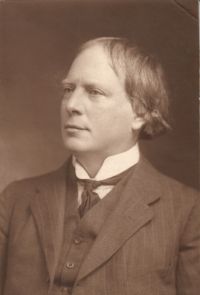 Arthur Machen,
The Chronicle of Clemendy — The Discourse of Ale
(1923)
Arthur Machen,
The Chronicle of Clemendy — The Discourse of Ale
(1923)
“ And, if you come to practice and leave theories, I suppose there is not a man amongst us that loveth not a cup of old and corny ale, who will not joyfully dip his beard into the foam, turn up the can, and pour the torrent down. Wherefore amongst us the Mystery of Ale Drapers is held in great honour and repute, from the highest unto the lowest, from the little taverns on lonely roads, atop of hills, and in forgotten valleys to the great masters of the Tankard that fill the can in our fenced cities and towns of frequentation. ”
Earl of Beaconsfield Benjamin Disraeli, Vivian Grey
“ We profess to find a perfect commentary on the Pindaric laud of the strongest element in the circumstance of the banks of a river being the locality where the juice of the grape is most delicious, and holding, therefore, that water is strongest because, in a manner, it giveth birth to wine, we also hold it as a sacred element, and consequently most religiously refrain from refreshing our bodies with that sanctified and most undrinkable fluid. ”
