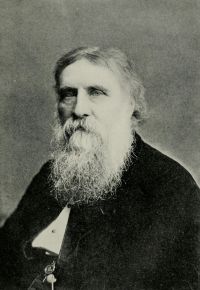
“ I only wanted to suppose necromancy for the moment a fact, and put it at its best: suppose the magician could do for you all he professed, what would it amount to?—Only this—to bring before your eyes a shadowy resemblance of the form of flesh and blood, itself but a passing shadow, in which the man moved on the earth, and was known to his fellow-men? ”
Necromancy
Definition and stakes
Necromancy, the art of contacting the deceased for prophetic insight, has origins in ancient ceremonies and writings. From Homer’s Odyssey to medieval magical manuals, writers have examined its appeal and ethical dilemmas. George MacDonald cast doubt on its usefulness, while William Godwin emphasized its hold on the imagination.
Paracelsus associated it with alchemical symbols, and critics such as Agnes Repplier decried its spiritual distractions. These differing viewpoints highlight necromancy’s lasting intrigue as both a mystical practice and a warning tale.
Quotes about “necromancy”
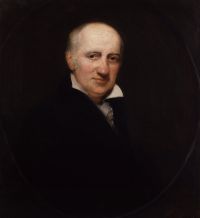 William Godwin,
Lives of the Necromancers
William Godwin,
Lives of the Necromancers
“ NECROMANCY. Last of all we may speak of necromancy, which has something in it that so strongly takes hold of the imagination, that, though it is one only of the various modes which have been enumerated for the exorcise of magical power, we have selected it to give a title to the present volume.There is something sacred to common apprehension in the repose of the dead. They seem placed beyond our power to disturb. "There is no work, nor device, nor knowledge, nor wisdom in the grave." ”
 Paracelsus,
A New Light of Alchymie
Paracelsus,
A New Light of Alchymie
“ Necromancy draws forth its signs by the stars of Death, which we call Evestra, which are prophetical spirits, signing the body of the sick, and dying man with red, blue, and purple spots, which are certaine signs of death, in the third day of their rising. ”
Anonymous, The secrets of black arts! (1900)
“ Necromancy has its name because it works on the bodies of the dead, and gives answers by apparitions of the dead, and subterraneous spirits, alluring them into the carcasses of the dead by charms and infernal invocations, and by deadly sacrifices and wicked oblations. ”
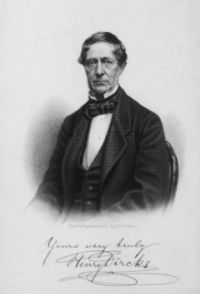 Henry Dircks,
Scientific Studies; or, Practical…
Henry Dircks,
Scientific Studies; or, Practical…
“ Of Necromancy they pretend to two kinds, one of which is raising the body of a deceased person, which it is said cannot be done without blood;—the other sciomancy, which is the production of a mere shade or shadow. ”
 Christopher Marlowe,
The Tragicall History of the Life and Death of Doctor Faustus
(1628)
Christopher Marlowe,
The Tragicall History of the Life and Death of Doctor Faustus
(1628)
“ His waxen wings did mount above his reach, And melting, heavens conspir'd his overthrow: For falling to a devilish exercise, And glutted now with learnings golden gifts, He surfets on the curst Necromancy. ”
Chambers's Twentieth Century Dictionary…
“ Nec′romancer, one who practises necromancy: a sorcerer; Nec′romancy, the art of revealing future events by calling up and questioning the spirits of the dead: enchantment.—adjs. Necroman′tic, -al, pertaining to necromancy: performed by necromancy.—adv. Necroman′tically.—adj. Necroph′agous, feeding on carrion.—ns. Necroph′ilism, a morbid love for the dead; Necrophō′bia, a morbid horror of corpses.—adj. Necroph′orous, carrying away and burying dead bodies, esp. of beetles of the genus Necrophorus.—n. ”
Lucius M. Sargent, Dealings with the Dead, Volume 2…
“ The old Roman tar ordered the sacred pullets, then in their cage, to be brought before him, and, kicking them overboard, exclaimed, “let them drink then.”The etymology of the word necromancy, νεκρος μάντις, shows its direct application to the scandalous orgies, which are matters of weekly exhibition, in many of our villages and cities, under the name of spiritual knockings. Though Sir Thomas Browne could mark, learn, and inwardly digest a witch, a necromancer was beyond his powers ”
 Agnes Repplier,
Saints or Spirits?
(1920)
Agnes Repplier,
Saints or Spirits?
(1920)
“ Not for nothing has the Christian Church throughout her history discouraged the practice of necromancy, the morbid concern with the dead which must interfere with the proper discharge of our duties in that plane of existence in which God has placed us. ”
Adam Clarke, Commentary and critical notes on the Bible… (1800s)
“ The pretenders to the art of necromancy, who were chiefly women, had an art of speaking with a feigned voice, so as to deceive those who applied to them, by making them believe that it was the voice of the ghost. ”
W. H. Davenport Adams, Curiosities of Superstition, and Sketches of Some Unrevealed Religions
“ This every one present may witness, and there are oftentimes more than ten thousand persons thus present. ’Tis a truth and no lie! and so will tell you the sages of our own country who understand necromancy, for they also can perform it. ”
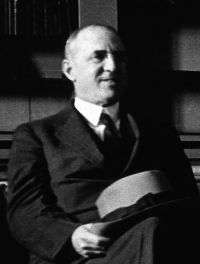 Lynn Thorndike,
The Place of Magic in the Intellectual History of Europe
(1905)
Lynn Thorndike,
The Place of Magic in the Intellectual History of Europe
(1905)
“ The art of signatures, oneiromancy, augury, divination, astrology, alchemy, the Cabala, sorcery, and necromancy are some designations which at once come to mind. But no one of them is at all adequate as a class name for all these beliefs and the practices which they involve, taken together. Are not these notions, nevertheless, closely allied; is there not an intimate relation between them all? And is not “magic” a term which will include them all and denote the general subject, the philosophy and the art, of which they all are branches? ”
Duane W. Rimel and H. P. Lovecraft, Weird Tales (1937)
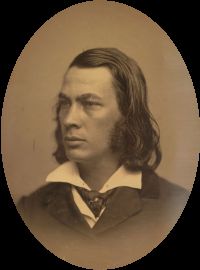
“ Now I can but wish for that which once was mine; that which every man blessed of God ought to have at death; that which I saw in that awful moment in the ancient burial ground when I raised the lid on the coffin—my own shrunken, decayed, and headless body. ”
 George Lippard,
New York: Its Upper Ten and Lower Million
George Lippard,
New York: Its Upper Ten and Lower Million
“ Do the dead return? Are the dead indeed dead? You have nailed down the coffin-lid; you have seen the coffin as it sunk into the grave; you have heard the rattling of the clod,—but is that all? Is the beloved one whom you have given to the grave, indeed dead, or only more truly living in a new body, formed of refined matter, invisible to our gross organs? Is that which we call soul, only the result of a particular organization of gross matter, or is it the real, eternal substance of which all other matter is but the servant and the expression? Do the dead return? ”
Thomas Inman, Ancient Faiths And Modern
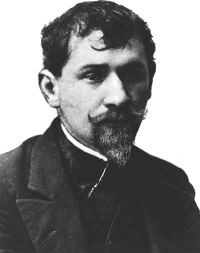
“ Let us now pause for a moment and consider how much is involved in the practice of making a sacrifice by fire, or otherwise, at the burial of any deceased chieftain or honoured man. With what idea could the living wife join her husband on the funeral pyre in India, or the ancient Tartars have slain the horse, slaves, wives, and chief officers of a defunct king, burying them all in a vast grave, unless they entertained the belief that there was a life beyond the grave? ”
 Stanisław Przybyszewski,
Anthology of Modern Slavonic Literature in Prose and Verse
(1919)
Stanisław Przybyszewski,
Anthology of Modern Slavonic Literature in Prose and Verse
(1919)
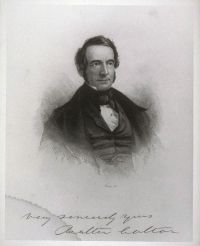
“ For the grave could not be filled in,—endlessly, endlessly, masses of earth, soaked by holy blood of martyrs, rolled upon the coffin, and yet the grave remained open,—the lid of the coffin trembles, quivers, opens, burst by the giant breast, which is still alive and teeming with strength,—and the bells boom and boom, flung to and fro by the tempest of vengeance, of requital, of a distant hope fervid with victory. ”
 Walter Colton,
Deck and port
(1850)
Walter Colton,
Deck and port
(1850)
“ When all is over, when the absolving benediction has been pronounced, and death has triumphed where life took its last stand, the pale pulseless form, wrapped in its most costly vest, is dressed for burial. Wild-flowers are strewn on the dead by the Indian maiden, while the cliffs around mournfully echo back the funeral dirge. How true is human instinct to the awful mystery of the grave! ”
 Washington Irving,
The Sketch-Book of Geoffrey Crayon
Washington Irving,
The Sketch-Book of Geoffrey Crayon
“ Every one knows the soul-subduing pathos of the funeral service, for who is so fortunate as never to have followed some one he has loved to the tomb? But when performed over the remains of innocence and beauty, thus laid low in the bloom of existence, what can be more affecting? At that simple but most solemn consignment of the body to the grave-“Earth to earth, ashes to ashes, dust to dust!”—the tears of the youthful companions of the deceased flowed unrestrained. ”
Hugo Erichsen, The cremation of the dead
“ BURIAL ALIVE.—CREMATION FROM AN ÆSTHETIC AND RELIGIOUS POINT OF VIEW. Our great American poet, Edgar Allan Poe, says: “To be buried alive is beyond question the most terrific of all extremes which have ever fallen to the lot of mere mortality.”Is any death more horrible than this? To be embraced, unprepared, down in the deep dark grave! To awake again with the greatest longing for life, suffering the most severe bodily tortures, in the coffin! To realize that there is no escape from inevitable death! ”
J. Church, The Morning of Spiritual Youth Improved…
“ The reason of this is, for man goeth to his long home, and the mourners go about the streets. The grave, said Job, is my house, and soon the funeral proclamation must be repeated over us, Dust thou art, and unto dust shall thou return. The grave is the home for the body, when once it comes there, as long as there is any dust to cover it, or heavens to surround it, Man lieth down, and riseth not till the Heavens be no more; they shall not awake, nor be raised out of their sleep till death is swallowed up in victory. ”
Lucius M. Sargent, Dealings with the Dead, Volume 1…
“ The desire is almost universal, that, when summoned to lie down in the grave, the dead may never be disturbed, by the hand of man—that our remains may return quietly to dust—unobserved by mortal eye. There is no part of this humiliating process, that is not painful and revolting to the beholder. Of this the ancients had the same impression. Cremation and embalming set corruption and the worm at defiance. ”
 Clement of Alexandria,
Ante-Nicene Fathers — Exhortation to the Heathen
(1885)
Clement of Alexandria,
Ante-Nicene Fathers — Exhortation to the Heathen
(1885)
“ Then, those who have put faith in necromancers, receive from them amulets and charms, to ward off evil forsooth; and will you not allow the heavenly Word, the Saviour, to be bound on to you as an amulet, and, by trusting in God’s own charm, be delivered from passions which are the diseases of the mind, and rescued from sin?—for sin is eternal death. ”
 Thomas Greenhill,
ΝΕΚΡΟΚΗΔΕΙΑ; Or, the Art of Embalming…
Thomas Greenhill,
ΝΕΚΡΟΚΗΔΕΙΑ; Or, the Art of Embalming…
“ What tho’ other Ceremonies be perform’d with the greatest Splendor and Exactness, they can give no other Satisfaction than the Decency of Burial, or performing perhaps the Will of the Dead; for the Body will nevertheless stink, corrupt, and it may be startle the nearest Friend to see it a while after? Then shall his Bones not be known, nor his Ashes be distinguish’d from another Mans, nay even from common Earth, so that the parcimonious Heir may well reflect, how vain and needless it would have been to have bestow’d more than a decent Expence on his Funeral. ”
Thomas Miller, History of the Anglo-Saxons, from the Earliest Period to the Norman Conquest
“ The grave that covers up and buries the past, inters not all pain and sorrow with the dead, but leaves a portion behind, that the living may feel what they once suffered—the agonizing shriek, and the heart-rending cry, ring for ages after upon our ears;—such sounds disturb not the silent chambers of the dead! ”
 Jean Paul,
The Invisible Lodge
Jean Paul,
The Invisible Lodge
“ I know not what dear departed form, whose grave is already sunk as deep as itself, I may not, like a dream, raise up on its burial place and show anew to your tearful eyes, and of how many dead a single grave may be the reminder. ”
 Marietta Holley,
Sweet Cicely — or Josiah Allen as a Politician
Marietta Holley,
Sweet Cicely — or Josiah Allen as a Politician
“ I thought of the graves more hopeless fur than them that entomb the dead,—the graves where lay the livin' dead. Dead souls bound to still breathin' bodies, dead hopes, ambitions, dead dreams of usefulness and respectability, happiness, dead purity, faith, honor, dead, all dead, all bound to the still breathin' body, by the festerin', putrid death-robes of helplessness and despair. ”
Samuel Finley Breese Morse, Samuel F. B. Morse, His Letters and Journals
“ Death is sufficiently terrible in itself, and the grave in its best form has enough of horror to make the stoutest heart quail at the thought, but nothing I have seen or read of can equal the Campo Santo for the most loathsome and disgusting mode of burial. ”
Bible Readings for the Home Circle
“ What will the righteous do upon rising from the grave? “Thy dead men shall live, together with my dead body shall they arise. Awake and sing, ye that dwell in dust: for thy dew is as the dew of herbs, and the earth shall cast out the dead.” Isa. 26:19. 20. In what words will their triumph over death and the grave be expressed? “O death, where is thy sting? O grave, where is thy victory?” 1 Cor. 15:55. 21. How long will they live? “Neither can they die any more: for they are equal unto the angels; and are the children of God, being the children of the resurrection.” ”
Matthew Henry, Commentary on the Whole Bible… (1700s)
“ The grave is not clogged with the multitude of dead bodies that are daily thrown into it, but is still an open sepulchre, and cries, Give, give. Hell also has enlarged itself, and still has room for the damned spirits that are committed to that prison. ”
E. C. Phillips, Peeps Into China; Or, The Missionary's Children
“ A lucky place and day have then to be fixed, by fortune-tellers, for the burial, and should these not be forthcoming, the coffin would be placed on a hill till they can be found. Burial is considered of so much importance, that should a man be drowned his spirit would be called back into a figure of wood or paper, and buried with pomp. Before the grave-diggers begin their work, members of the family worship the genii of the mountain, and write letters to these gods, asking them to be so kind as to allow the funeral to take place. ”
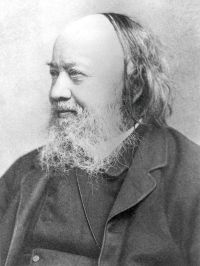
“ The burial train glides slowly before us, as we have seen it represented in the woodcuts of that day, the coffin, and the bearers, and the lamentable friends, trailing their long black garments, while grim Death, a most misshapen skeleton, with all kinds of doleful emblems, stalks hideously in front. ”
“ All henceforth and forever yielded up to God, no more to be ours, as really and as perfectly as though we were breathing our last upon our death-bed, and then in due time we were laid into our coffin, the lid fastened down, and lowered into the grave, the grave filled up and nothing left but a mound to mark where our earthly remains lie. ”

“ It is wonderful to hear the sick, long before they die, give directions, or express desires, respecting their burial. So far from thinking of the grave as a melancholy place, no doubt the departed spirit will often think of it in the separate state with pleasure, as the place where it is hereafter to receive a form like Christ's; and the thought of resurrection adds greatly to the joys of heaven. ”
 Edwin Chadwick,
A supplementary report on the results of a special inquiry into the practice of interment in towns
Edwin Chadwick,
A supplementary report on the results of a special inquiry into the practice of interment in towns
“ On the burial of any notorious character,—of a suicide, of a man who has perished by manslaughter, of a woman who has died in child-birth, or even of a child who has been killed by being run over in the street, this vulgar excitement rises to an insufferable height. If, in such a case, the corpse is brought into my church, this sacred and beautiful structure is desecrated and disfigured by the hurried intrusion of a squalid and irreverent mob, and clergyman, corpse, and mourners are jostled and mixed up with the confused mass, by the uncontrollable pressure from without. ”
John Ellingwood Donnell Trask, Charles Grafly, Sculptor: An Appreciative Note (1910)
“ Our burial places abound in mortuary horrors which, with clumsy fingers, point in the assumed direction of immortality, inspiring hope in a future life by the thought that it, at worst, cannot contain ugliness to equal their own. ”
 Nathaniel Hawthorne,
Twice-Told Tales
(1851)
Nathaniel Hawthorne,
Twice-Told Tales
(1851)
“ You think how the dead are lying in their cold shrouds and narrow coffins, through the drear winter of the grave, and cannot persuade your fancy that they neither shrink nor shiver, when the snow is drifting over their little hillocks, and the bitter blast howls against the door of the tomb. ”
John S. Springer, Forest Life and Forest Trees: comprising winter camp-life among the loggers…
“ Seldom, if ever, does the voice of prayer rise over their bier under these circumstances; in silence the corpse is committed to its rude burial, while now and then a half-suppressed sigh is heard, and the unbidden tears steal down the sunburned cheeks of his manly associates. ”
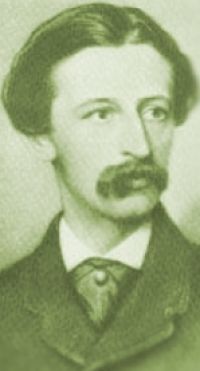 Augustus J. C. Hare,
The Story of My Life, volumes 4-6
Augustus J. C. Hare,
The Story of My Life, volumes 4-6
“ When a death occurs, a body is hurried to the grave as soon as possible, for the soul is always in torment, it is believed, between the death and burial. Little parcels of food are laid in holes by the side of the grave, and large headstones are always erected, stones on which the angels Nebir and Munkir sit to judge the souls of the dead. We saw many touching little funerals—young girls being carried to the grave without any coffin or shroud. ”
active 11th century Somadeva Bhatta, The Kathá Sarit Ságara; or, Ocean of the Streams of Story
“ Even these no one could save from being consumed by flesh-devouring flames, lying alone on the funeral pyre in the cemetery whither the dead are followed by weeping friends, and when their extremities had been shrivelled, from being at last devoured by the jackals: much less can any others escape this fate. So tell us, wise man, what mean you by embracing that corpse? ”
 Adam Lindsay Gordon,
Poems by Adam Lindsay Gordon
Adam Lindsay Gordon,
Poems by Adam Lindsay Gordon
“ Like corpses embalm'd and unburied They lie, and in spite of our will, Our souls on the wings of thought carried, Revisit their sepulchres still; Down the channels of mystery gliding, They conjure strange tales, rarely read, Of the priests of dead Pharaohs presiding At mystical feasts of the dead. Weird pictures arise, quaint devices, Rude emblems, baked funeral meats, Strong incense, rare wines, and rich spices, The ashes, the shrouds, and the sheets ”
