Okapi

Definition and stakes

Ernest Glanville,  In Search of the Okapi

“ Glancing shorewards they saw that more canoes were putting off—dark smudges on the water, but growing clearer as the crews dashed the paddles. But there were enemies even nearer. As they pulled the Okapi closer into the shadows a boat swept into view, and, evidently obeying directions given from the island where the fire was, took up a position overlooking the first hiding-place of the Okapi. All the time the launch drew nearer, racing evidently to take advantage of the brief spell of light before the dark, and the canoes raced from the shore to take part in the great man-hunt. ”
Source: Gutenberg

The Circle of Knowledge: A Classified…

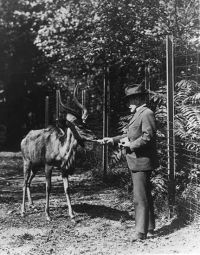
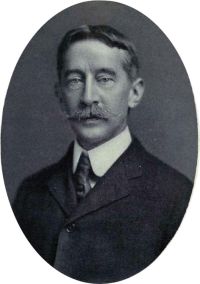
“ Okapi (Ocapia) , a giraffe-like animal discovered by Sir H. H. Johnston in the Semliki forest in central Africa. Its neck and legs are shorter than in the giraffe, ears larger and broader. The general color of the upper parts is a slightly purplish chocolate-brown; buttocks and upper parts of fore and hind legs have wavy black stripes on a buff ground. ”
Source: Gutenberg

Richard Lydekker,  1911 Encyclopædia Britannica (1911)

“ On the other hand, the thick layer of fallen leaves on the ground, and the bulk of the stems of the forest trees are bluish-brown and russet, thus closely resembling the decaying leaves in an European forest after heavy rain; while the whole effect is precisely similar to that produced by the russet head and body and the striped thighs and limbs of the okapi. The long and mobile muzzle of the okapi appears to be adapted for feeding on the low forest underwood and the swamp-vegetation. The small size of the horns of the males is probably also an adaptation to life in thick underwood. ”
Source: Wikisource

Get perspective with Kwize: daily news enlightened by great literature