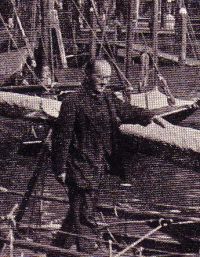
Ordinary seaman

Definition and stakes

Portrait of Richard Henry Dana Richard Henry Dana,  The Seaman's Friend

“ Men, therefore, prefer rather to underrate than to run any risk of overrating themselves.
An ordinary seaman is expected to hand, reef, and steer, under common circumstances, (which includes 'boxing the compass;') to be well acquainted with all the running and standing rigging of a ship; to be able to reeve all the studdingsail gear, and set a topgallant or royal studdingsail out of the top; to loose and furl a royal, and a small topgallant sail or flying jib; and perhaps, also, to send down or cross a royal yard.
”

Source: Gutenberg

Portrait of Richard Henry Dana Richard Henry Dana,  The Seaman's Friend

“ In reefing or furling the courses and topsails, an ordinary seaman would not take the bunt or an earing, if there were able seamen on the yard; and perhaps, in the largest sized vessels, it would not be expected of him to pass an earing, or make up the bunt of a fore or main topsail or course in bad weather, yet he should know how to do both, and should be able to take a bunt or earing on the mizzen topsail yard, and on any topsail or lower yard of a small vessel.
It is commonly understood that an ordinary seaman need not be a workman upon rigging.
”
Source: Gutenberg

Portrait of Richard Henry Dana Richard Henry Dana,  The Seaman's Friend

“ It is also frequently necessary to set up the rigging in one part of the vessel or another; in which case it must be seized or turned in afresh. It is upon labor of this kind that the crew is employed in the 'day's work' and jobs which are constantly carried forward on board. A man's skill in this work is the chief test of his seamanship; a competent knowledge of steering, reefing, furling, and the like, being taken for granted, and being no more than is expected of an ordinary seaman. ”
Source: Gutenberg

Get perspective with Kwize: daily news enlightened by great literature