Polar region

Definition and stakes

Parallax,  Zetetic astronomy: Earth not a globe… (1865)

“ If we now consider the fact that when we travel by land or sea, and from any part of the known world, in a direction towards the North polar star, we shall arrive at one and the same point, we are forced to the conclusion that what has hitherto been called the North Polar region, is really the Centre of the Earth. That [21] from this northern centre the land diverges and stretches out, of necessity, towards a circumference, which must now be called the Southern Region: which is a vast circle, and not a pole or centre. That there is One Centre—the North, and One Circumference—the South. ”
Source: Gutenberg

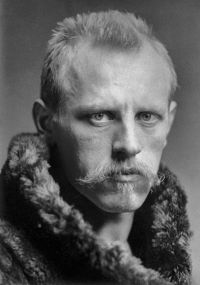
Portrait of Fridtjof Nansen Fridtjof Nansen,  Farthest North, Vol. I

“ We should remember that the Pole is probably covered with sea, radiation from which is considerably less than from large land surfaces, such as the plains of North Asia. The polar region [36] has, therefore, in all probability a marine climate with comparatively mild winters, but, by way of a set-off, with cold summers.
“The cold in these regions cannot, then, be any direct obstacle. One difficulty, however, which many former expeditions have had to contend against, and which must not be overlooked here, is scurvy.
”
Source: Gutenberg

D. V. Athalye,  The Life of Lokamanya Tilak (1921)

“ It has been a fashion to speak of the Polar regions as characterised by light and darkness of six months each; but this statement is only roughly true. The Pole is merely a point and all the inhabitants of the original ancient Home, if there was one near the North Pole, could not have lived precisely at this single point. We must, therefore, distinguish between the characterestics of the Polar region and those of the circum-polar region.
THE POLAR CHARACTERESTICS.
(1) The Sun rises in the South. (2) The stars do not rise and set
”
Source: Wikisource

Get perspective with Kwize: daily news enlightened by great literature