Purple dye

Definition and stakes

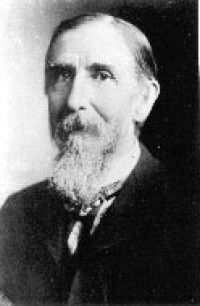
Portrait of O. Henry O. Henry,  The Trimmed Lamp (1907)

“ THE PURPLE DRESS
WE are to consider the shade known as purple. It is a color justly in repute among the sons and daughters of man. Emperors claim it for their especial dye. Good fellows everywhere seek to bring their noses to the genial hue that follows the commingling of the red and blue. We say of princes that they are born to the purple; and no doubt they are, for the colic tinges their faces with the royal tint equally with the snub-nosed countenance of a woodchopper’s brat. All women love it—when it is the fashion.
”
Source: Wikisource

Ten Thousand Wonderful Things

“ The ancients were very devoid of chemical knowledge; their list of adjective dye-stuffs was therefore restricted, and all the most celebrated dyes of antiquity belonged to the substantive division, of which Tyrian purple was undoubtedly the chief. The purple dye of Tyre, which admits with great propriety of being included amongst the dyes of Greece and Rome, was discovered about fifteen centuries before the Christian era, and the art of using it did not become lost until the eleventh century after Christ. ”
Source: Gutenberg

Ida Strawn Baker,  Batik and Other Pattern Dyeing

“ Over a light yellow purple may be dyed, the result will be a grayed purple. Over a strong yellow much purple will be required and the result will be a very much grayed purple approaching if not becoming a purple black.
In batik decoration by successive dyeings the [Pg 53] craftsman is constantly mixing the new dye with that already in the fiber. Having once introduced an intensity of any primary color, yellow, red or blue, he must thereafter, unless he removes this color, complete his pattern by producing secondary and tertiary colors.
”
Source: Gutenberg

Get perspective with Kwize: daily news enlightened by great literature