Rhino

Definition and stakes

Georgia McNally,  The Babyhood of Wild Beasts (1917)

“ With a snort, old Rhino makes off with the speed of a race horse, with loud puffs and deep, laboured grunts he covers ground like a locomotive; and woe betide the intruder if the old warrior catches him.
The strength of the Rhino is phenomenal. He breaks down thickets and small trees in his travels like straws. Rocks don't bother him in the least, and he travels splendidly over rough ground.
”

Source: Wikisource

Portrait of Agnes Herbert Agnes Herbert,  Two Dianas in Somaliland: The Record of a Shooting Trip

“ A space and then—rhino spoor! New, never-to-be-forgotten, I stooped down and examined it carefully. It was very distinct considering the dry nature of the ground. I ascribed this to his immense weight. I measured the imprint, and found it came out at nine and three-quarters long by eight and three-quarter inches broad. A rhino causes no havoc to the thorn bushes as he travels bar the injury of his passage. Unlike the elephant, he does not stop and eat all along the way. He waits until settled in some cherished feeding ground. ”
Source: Gutenberg

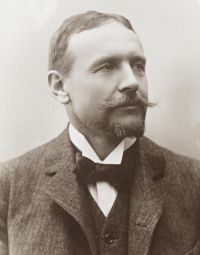
Portrait of John T. McCutcheon John T. McCutcheon,  In Africa: Hunting Adventures in the Big Game Country

“ The prevailing estimate of the rhino is that he is an inoffensive creature who likes to bask under the shade of a tree and watch the years go parading by. His thick skin and fierce armament of horns seem to make of him a relic of some long-forgotten age—the last survivor of the time when mammoths and dinosauruses roamed the manless waste and time was counted in geological terms instead of days and minutes. His eyes are dimmed and he sees nothing beyond a few yards away, but his hearing and sense of smell are keen, and he sniffs danger from afar in case danger happens to be to windward of him. ”
Source: Gutenberg

Get perspective with Kwize: daily news enlightened by great literature