“ The quick eyes of the Bishop had perceived a drift of rooks when on their evening flight to the rookery were passing along the very line which divided the hawk from the heron. A rook is a hard temptation for a hawk to resist. In an instant the inconstant bird had forgotten all about the great heron above her and was circling over the rooks, flying westward with them as she singled out the plumpest for her stoop. ”
Rookery
Definition and stakes
A rookery refers to a colony of breeding animals, primarily gregarious birds such as rooks, but also seabirds, seals, and turtles, marked by dense nesting clusters. The term was later used metaphorically to describe crowded urban housing in 19th-century contexts. Authors like Washington Irving portrayed rookeries as centers of communal life and danger, while Edmund Selous captured their somber winter gatherings in bleak landscapes.
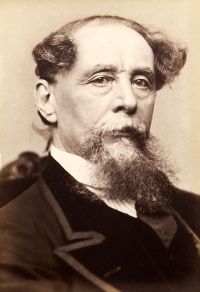
Frances Hodgson Burnett depicted rookeries as nurturing habitats for bird families, contrasting with Charles Dickens’ ironic use of the term to critique social pretension. These differing portrayals highlight the rookery’s dual nature—as both a biological occurrence and a symbol of collective existence, linking natural behavior with human societal metaphors.
Quotes about “rookery”
Washington Irving,
Bracebridge Hall
(1822)
“ In such case the wounded adventurer will sometimes have just strength enough to bring himself home, and giving up the ghost at the rookery, will hang dangling "all abroad" on a bough like a thief on a gibbet; an awful warning to his friends, and an object of great commiseration to the squire. But, maugre all these untoward incidents, the rooks have, upon the whole, a happy holiday life of it. When their young are reared, and fairly launched upon their native element, the air, the cares of the old folks seem over, and they resume all their aristocratical dignity and idleness. ”
“ When I speak of the rookery I do not mean the trees where the birds build—unfortunately there are none very near me—but those where they come to roost during the autumn and winter—true rookeries indeed if numbers count for anything. Here, their chosen resting-place is a silent, lonely plantation of tall funereal firs, standing shaggily tangled together, mournful and sombre, making, when the snow has fallen but lightly—before they are covered—a blotch of very ink upon the surrounding white. ”
Amelia E. Barr,
The Paper Cap: A Story of Love and Labor
“ The male birds are in a flutter when thou walks through the rookery, they moderate their satisfaction when I pay them a call and it is the female birds who do the honors then.” “That reminds me, mother, that Britton told me rooks intermarried generation after generation, and that if a rook brought home a strange bride, he was forced to build in a tree the community selected, at some distance from the rookery. ”
Frances Hodgson Burnett,
How Winnie Hatched the Little Rooks
(1906)
“ She could not go to sleep herself and it made all the other rooks in the Rookery so angry, and besides she was afraid he might waken the eggs. It was beautiful sitting on that nest, rocking softly on the tree tops and looking up at the sky. All sorts of birds used to stop to talk and sing; squirrels came scuffling up to call and bring ready cracked nuts; and bees came and hummed and hummed about flowers and hives, and the lady rooks who were sitting on their nests in the other branches, told Winnie story after story about the lovely places they flew to when they were not busy with families. ”
Charles Dickens,
Personal History of David Copperfield…
(1850)
“ "David Copperfield from head to foot! Calls a house a rookery when there 's not a rook near it, and takes the birds on trust, because he sees the nests!" ”
E. B. Michell, The Art and Practice of Hawking
“ At the moment when the noisy crowd come back to the rookery and settle on their accustomed perches, a simultaneous pull at several lines connected with properly-laid nooses will generally secure a victim or more. Another plan by which a rook is made to look even more foolish is to go round with a plough in a field where rooks come to pick up the worms which it turns up. The rook-catcher must be provided with a number of paper hoods made like large extinguishers, and these he will place upside down in the furrow with a tempting bait—grain, worm, or meat—in their inside. ”
Various, Punch, or the London Charivari…
“ Rooks are much more wonderful creatures than anybody knows about. In my own garden, for instance, there is a rook who acts as chaplain to a whole rookery. He might almost be called a "bird of pray." Every Saturday he assembles all the rooks on one large tree, and caws solemnly to them for ten minutes. I have noticed (through an opera-glass) that the congregation wears a very devout appearance. Churchwarden rooks go round while the service is proceeding, and peck any birds that seem inattentive. ”
Richard Jefferies,
Wild Life in a Southern County
“ When the shooting is in progress, if you will go a little distance from the rookery, out of the excitement of the sport, you may sometimes see two old rooks, one on each side of a young one, cawing to it with all their might. The young bird is, perhaps, on the ground, or on a low hedge, and the old birds are evidently endeavouring to get it to move. Yet they have not learned the only way in which that can be done—i.e. by starting themselves and flying a short distance, and waiting, when the young bird will almost invariably follow. ”
Owen Jones,
A Gamekeeper's Note-book
(1910)
“ The rooks are shot and buried, or are left where they fall beneath the rookery trees, for foxes to find and carry to their cubs.The farmer and the gamekeeper have a common cause against the rooks, which, when they are not attacking the interests of the one are pilfering the produce of the other. An April blizzard consoles the keeper for the pheasants' eggs it ruins by blotting out a generation of rooks. For when such a disaster overtakes a rookery late in April, as young birds are nearly ready to leave the nests, the parent birds are hardly likely to make another attempt to rear a brood. ”
Various, The Illustrated London Reading Book
“ There was in a rookery a lazy pair of rooks, who never went out to get sticks for themselves, but made a practice of watching when their neighbours were abroad, and helping themselves from their nests. ”
Washington Irving,
Bracebridge Hall, or The Humorists
“ In a grove of tall oaks and beeches, that crowns a terrace-walk just on the skirts of the garden, is an ancient rookery, which is one of the most important provinces in the Squire’s rural domains. The old gentleman sets great store by his rooks, and will not suffer one of them to be killed: in consequence of which, they have increased amazingly ”
Edmund Selous, Bird Watching (1901)
“ Female rooks, too, are often very importunate with the males in the rookery when building is going on. It is always a great satisfaction when the male and female of a species differ noticeably in their plumage, as then one is never in uncertainty as to which of them it is that performs any act. ”
Various, Punch or the London Charivari, Vol…
“ I have seen a whole flock of rooks cawing querulously—"quirring" would be a better descriptive participle—on and about the lower part of the precipitous, rocky Torrs; but never have I seen them perching on the highest point of the Torrs, which is as inaccessible to these birds at twopence as would be the aforesaid lower portion to the unwinged pedestrian even at a halfpenny; unless pedestrian should arrive at rookery by accidentally tumbling over from above, in which case it is much to be feared he would probably be "left till called for." ”
Various, The Mirror of Literature, Amusement…
“ Rooks appear to be peculiarly partial to building their nests in the vicinity of the residence of man. Of the numerous rookeries of which I have any recollection, most of them were a short distance from dwelling houses. In March, 1827, there was a rookery on some trees, neither very lofty nor very elegant, in the garden of the Royal Naval Asylum, at Greenwich; and although many very fine and lofty elms are in the park near, which one might naturally suppose the rooks would prefer, yet, such is the fact, there is not even one rook's nest in Greenwich Park. ”
Richard Jefferies,
Wild Life in a Southern County
“ On this farm the rookery is at some distance in the meadows, and the rooks rarely come nearer than the field just outside the post and rails that enclose the rickyard, though they pass over constantly, flying low down without fear, unless some one chances just then to come out carrying a gun. Then they seem seized with an uncontrollable panic, and stop short in their career by a violent effort of the wings, to wheel off immediately at a tangent. Perhaps no other bird shows such evident signs of recognising a gun. ”
T. F. Thiselton-Dyer, Folk-lore of Shakespeare
“ A Northumbrian saying informs us that the rooks left the rookery of Chipchase before the family of Reed left that place. There is also a notion that when rooks haunt a town or village “mortality is supposed to await its inhabitants, and if they feed in the street it shows that a storm is at hand.” ”
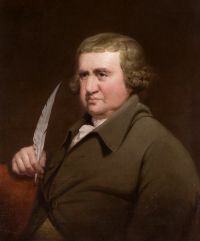
Erasmus Darwin,
Zoonomia; Or, the Laws of Organic Life…
“ This knowledge is more nicely understood by rooks, who are formed into societies, and build, as it were, cities over our heads; they evidently distinguish, that the danger is greater when a man is armed with a gun. Every one has seen this, who in the spring of the year has walked under a rookery with a gun in his hand: the inhabitants of the trees rise on their wings, and scream to the unfledged young to shrink into their nests from the sight of the enemy. The vulgar observing this circumstance so uniformly to occur, assert that rooks can smell gun-powder. ”
Charles Dixon,
Among the Birds in Northern Shires
“ In seed-time Rooks are certainly troublesome, and usually one or two of the marauders have to be shot and hung up from stakes on the scene of their misdeeds as a warning to the rest before the pilfering ceases. And yet happy is the farmer that has a rookery within easy distance of his land. ”
James John Hissey, Over Fen and Wold
“ Rooks are knowing birds too, and they appear to possess a considerable amount of what we term instinct. We all know the old saying that rats desert an unseaworthy ship. Whether this be true or not I cannot tell, but I believe that rooks desert an unsafe tree. I lived{257}THE WAYS OF ROOKS near a rookery once, and studied their ways and character. There were several nests in one big elm tree, a sturdy-looking tree, and apparently a favourite with the rooks. One year, for a purpose I could not divine, all the nests in this tree were deserted, and fresh ones built in another elm near by. ”
John Porter, History of the Fylde of Lancashire
“ There is a rookery in the modern wood, and it is surmised that there was one also amongst the branches of the ancient trees, and that a large quantity of bullets discovered in a field on its outskirts record the periodical onslaughts on the unfortunate rooks in days when marksmen were not so unerring as long practice and improved firearms have rendered them now. ”
Sir Douglas Mawson, The Home of the Blizzard
“ It may be remarked that towards the end of the season changes in the proprietorship of a rookery are rather rapid, as continuous raids are made by individuals from the outside. The need of continuous vigilance and the results of many encounters eventually lead to the defeat and discomfiture of the once proud proprietor. ”
Frances Hodgson Burnett,
How Winnie Hatched the Little Rooks
(1906)
“ So from that time, when Winnie went walking with Binny, she always turned her face quite away from the hedges for fear a mother bird would think she was looking at her eggs and would go away and leave them to starve to death. She was always watching birds, but I think she watched the rooks most. That was because she could look out of her window in the tower and see the Rookery where they lived. Rooks are big black birds who always fly in flocks and build their nests near each other in the tops of tall trees. ”
Alfred Tennyson,
Poems
(1843)
“ As the many-winter'd crow that leads the clanging rookery home. ”
W. H. Maxwell, The Field Book: or, Sports and pastimes of the United Kingdom
“ Do not be too much afraid of losing a rook for an inferior piece; though a rook is better than any other, except the queen, yet it seldom comes into play, so as to operate, until the end of the game; and it is generally better to have a worse piece in play than a superior out.28. When you have moved a piece, which your adversary drives away with a pawn, that is a bad move, your enemy gaining a double advantage. At this nice game no move can be indifferent. ”
Richard Jefferies,
Wild Life in a Southern County
“ The rook, like other broad-winged birds, often makes much leeway in flying, though there be only a moderate wind. The beak points in one direction, in which the bird is apparently proceeding, but if observed closely it will be found that the real course is somewhat sideways. He is making leeway. So it is that a rook which looks as if coming straight towards you—as if he must inevitably go overhead—passes some distance to one side. He appears slow on the wing, as if to go fast required more energy than he possessed, yet he travels over great distances without the least apparent exertion. ”
E. B. Michell, The Art and Practice of Hawking
“ But much more often the rook, when getting the worst of it in the air, abandons the hope of beating his foe in fair mounting and fair manœuvring. Taking advantage of some moment—perhaps after an ineffectual stoop—when his foe is a trifle wide, and on the side farthest from a covert which he has marked as a possible place of refuge, he turns tail, and makes off—down-wind if possible, or if not, across the wind—to that seductive shelter. A wood or spinny is what he would prefer, but a tree of any kind will do—the taller the better. ”
Owen Jones,
A Gamekeeper's Note-book
(1910)
“ But one imagines the rooks would still have a sporting chance. Probably crows have a black enough reputation among other birds to inspire a general fear. And rooks are cowards. It is a common sight to see them put to shameful flight by peewits or missel-thrushes when they have ventured near the others' nesting-places. Yet a rook could kill a missel-thrush or peewit if it had the pluck to fight. The gamekeeper knows that the hissing and spitting of a sitting partridge will cause a rook to approach her very cautiously. A jackdaw, one would say, has ten times the spirit of a rook. ”
Richard Jefferies,
The Gamekeeper at Home: Sketches of natural history and rural life…
“ It is the rook that hovers by the assistance of the wind as he rises with his broad, flat wings over a hedge and meets its full force, which counterpoises his onward impetus and sustains him stationary, sometimes compelling him to return with the current. ”
Jerome K. Jerome,
The Second Thoughts of an Idle Fellow
“ In Rook-land the rowdy-dowdy, randy-dandy, rollicky-ranky boys get up very early in the morning and go to bed in the afternoon. Towards dawn, the older, more orderly members drop in for reasonable talk, and the Club becomes more respectable. The tree closes about six. For the first two hours, however, the goings-on are disgraceful. The proceedings, as often as not, open with a fight. If no two gentlemen can be found to oblige with a fight, the next noisiest thing to fall back upon is held to be a song. It is no satisfaction to me to be told that rooks cannot sing. ”
E. B. Michell, The Art and Practice of Hawking
“ If the rook has put in to a very low tree or a tall hedge, he may often be dislodged by throwing sticks and stones at him, or sending a boy up. Sometimes snapping a cap on a pistol, or cracking a whip, or making any other sudden and loud noise, will put him on the wing again. But before going far, he is only too likely to put back to the same place, or to a neighbouring tree, if one is near, or to another part of the hedge. Even when the shelter is only a low line of hurdles, it is quite difficult to hustle out a rook so that the peregrine, waiting on above, may have a fair shot at him. ”
Count Anthony Hamilton, The Memoirs of Count Grammont…
“ Here the rooks meet every evening to drink, smoke, and to try their skill upon each other, or, in other words, to endeavour to trick one another out of the winnings of the day. These rooks are, properly speaking, what we call capons or piqueurs, in France; men who always carry money about them, to enable them to lend to losing gamesters, for which they receive a gratification, which is nothing for such as play deep, as it is only two per cent., and the money to be repaid the next day. ”
Frederick G. Aflalo, Birds in the Calendar
“ The most important problem however in connection with the rook is the precise extent to which the bird is the farmer's enemy or his friend. On the solution hangs the rook's fate [52] in an increasingly practical age, which may at any moment put sentiment on one side and decree for it the fate that is already overtaking its big cousin the raven. Scotch farmers have long turned their thumbs down and regarded rooks as food for the gun, but in South Britain the bird's apologists have hitherto been able to hold their own and avert catastrophe from their favourite. ”
Edmund Selous, Bird Watching (1901)
“ Afterwards, when the same bird has the morsel on the ground in good pick-axeing position, a second rook advances upon him with a quick, sideway hop, looking cunning, sardonic, diabolic, and much for which words seem totally wanting. But this attack, though swift and vigorous, is not more successful than the former one. The lucky rook gets off with his booty, and has soon swallowed it. Amongst rooks, the finding of anything by any one of them is a recognised cause of attack by any other. ”