Silver ore

Definition and stakes

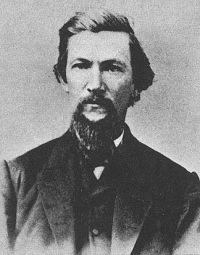
Portrait of Dan De Quille Dan De Quille,  History of the big bonanza

“ On all sides of the pyramidal scaffold of timbers to its very apex, where the candles twinkle like stars in the heavens, we see the miners cutting their way into the precious ore—battering it with sledge-hammers and cutting it to pieces with their picks as though it were but common sandstone. Silver-ore is not—as many may suppose—a bright and glittering mass. In color the ore runs from a blueish-grey to a deep black. ”
Source: Gutenberg

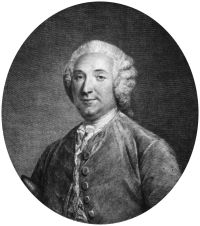
Portrait of Pierre Joseph Macquer Pierre Joseph Macquer,  Elements of the Theory and Practice of Chymistry…

“ When a silver ore is to be decomposed, in order to have the silver pure, or when silver is to be extracted out of any ore that contains it, the first thing to be done is to roast the ore, in order to clear it of the volatile minerals: and as silver cannot be had pure without the operation of the cupel, which requires more or less lead to be joined with it, it is usual to mix with the torrified silver ore a quantity of lead, proportioned to that of the heterogeneous matters combined with the silver, and to melt the whole together. ”
Source: Gutenberg

George E. Gee,  The Silversmith's Handbook

“ The Assay of Silver Ores.
A large proportion of the silver of commerce is extracted from ores (which are too poor to allow of their being smelted or fused) by a process called amalgamation. Founded on the ready solubility of silver, &c., in metallic mercury, the ore is first crushed to powder, then mixed with common salt, and afterwards roasted. By the adoption of this plan the silver is reduced to a state of chloride. The roasting is done in a reverberatory furnace, in which the heat is very gradually raised, the ore being constantly stirred
”
Source: Gutenberg

Get perspective with Kwize: daily news enlightened by great literature