Slave patrol

Definition and stakes

United States. Work Projects Administration,  Slave Narratives: A Folk History of Slavery in the United States from Interviews with Former Slaves…

“ The justice of the peace in each captain's district of the state was empowered to decide who was eligible to patrol duty and to appoint the patrol. Every member of the patrol was required to carry a pistol while on duty. They were required to arrest all slaves found outside their master's domain without a pass, or who was not in company with some white person. He was empowered to whip such slave with twenty lashes. He also had power to search for offensive weapons and fugitive slaves. Every time a person evaded patrol duty he was required to pay the sum of five dollars fine. ”
Source: Gutenberg

Henry Clay Bruce,  The New Man: Twenty-nine years a slave…

“ During the years of 1860 and 1861, the slaves had to keep very mum and always on their masters’ land, because patrols were put out in every township with authority to punish slaves with the lash, if found off their masters’ premises after dark without a written pass from them. Patrol duty was always performed by the poor whites, who took great pride in the whipping of a slave, just as they do now in lynching a Negro. ”
Source: Gutenberg

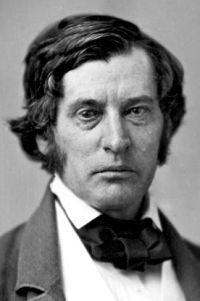
Portrait of Carl Schurz Carl Schurz,  Speeches, correspondence and political papers of Carl Schurz (1913)

“ The aforesaid penalties shall be summarily enforced, and it shall be the duty of the captains and chief of patrol to see that the aforesaid ordinances are promptly executed.
Evidently the condition of the person laboring under such ordinances would be, if not slavery in terms, some thing closely akin to it. Under such a regime the negro, if only temporarily the slave of an individual owner, would always have been the slave of the white people at large.
”
Source: Wikisource

Get perspective with Kwize: daily news enlightened by great literature