“ Four Injured While Sledding. The first four accidents of the Winter season attributed to children coasting on their sleds occurred yesterday. Enjoying, his first sleigh-ride of the year, John Lavaggi, 13, of 454 Palisade Av., suffered a laceration of the right hip yesterday afternoon when he fell from his sled, while coasting on Ravine Avenue, near Palisade. ”
Quotes about “sledding”
Anonymous, Our Little Tot's Own Book
“ And O, the happy hours that we have had with our clumsy old sled! Away we would go, the wind stinging our faces until crimson roses blossomed in our cheeks, and the shining crust snapping and creaking under our sled, and the hill flying away behind us!If a damp clinging snow came, it made lovely snowballs; and it was such fun to catch hold of the long clothes-lines and shake them and see little clumps of snow hop like rabbits from the line into the air. ”
George T. Marsh, With the Winter Mail (1914)
“ On the following day the rising sun overtook two dog-teams hurrying westward on the Fort Hope trail. Miles behind them still smouldered the camp-fire in the spruce. Ahead of the teams swung a tall Cree, breaking trail, while at the gee-pole of each sled a caribou-skin-clad driver with long dog-whip urged on the huskies. But lashed to the second sled lay the blanketed form of one whose voyaging days over white winter trails and wind-whipped lakes of summer were forever ended. ”
“ To the unversed, a march by sled would seem simplicity. In reality there is no more discouraging test than to hit the trail, dogless and by strength of back. The human biped cannot drag across the snow for any distance more than its own weight; hence equipment is of the simplest. At that, the sledge rope galls one's neck with a continual, endless, yielding drag, resulting in back pains peculiar to itself. It is this eternal maddening pull, with the pitiful crawling gait that tells; horse's labour and a snail's pace. ”
 Edward Everett Hale,
The Man Without a Country, and Other Tales
Edward Everett Hale,
The Man Without a Country, and Other Tales
“ The sled is fitted with two drag-ropes, at which the men haul. The officer goes ahead to find the best way among hummocks of ice or masses of snow. Sometimes on a smooth floe, before the wind, [pg 149] the floor-cloth is set for a sail, and she runs off merrily, perhaps with several of the crew on board, and the rest running to keep up. But sometimes over broken ice it is a constant task to get her on at all. You hear, "One, two, three, haul" all day long, as she is worked out of one ice "cradle-hole" over a hummock into another. ”
William H. Gilder, Schwatka's Search: Sledging in the Arctic in Quest of the Franklin Records
“ It is a matter of great difficulty to get near enough to such wary game as the reindeer, in winter, when the sound of the hunter's footsteps, though the soles of his shoes are covered with fur, is carried on the wind and can be distinctly heard more than a mile away. I have frequently heard the crunching of the sled runners on the brittle snow—a ringing sound like striking bars of steel—a distance of over two miles. ”
“ Smoke assented. “Here's what I've been thinking. We've got to hustle light sleds on the jump. Say a hundred pounds of grub on each sled. The driver's outfit and dog-grub will fetch it up fifty more. But they can make time. Say we start five of these sleds pronto—best running teams, best mushers and trail-eaters. On the soft trail the sleds can take the lead turn about. They've got to start at once. At the best, by the time they can get there, all those Indians won't have had a scrap to eat for three days. ”
 Joseph Grinnell,
Gold Hunting in Alaska
Joseph Grinnell,
Gold Hunting in Alaska
“ The two pipes I mentioned as part of the load, stuck out behind some eight feet beyond the sled, and many a time when the dogs slowed up suddenly my shins would come in contact with the sharp iron in a painfully emphatic manner. The crunching of the dry snow under the sled runners is a combination of sounds in which one can but imagine he hears familiar voices, and one falls to day-dreaming as he plods along, until he is surprised by running against the slacking sled or stepping into a hole. ”
“ The next dawn showed the mountain peaks limned like clean-cut ivory against the steel-blue sky, and as they crept up through the defiles the air was so motionless that the smoke of their pipes hung about their heads, while the creak of their soles upon the dry surface of the snow roused echoes from the walls on either side. At first their progress was rapid, but in time the drifts grew deeper, and they came to bluffs where they were forced to notch footholds, unpack their load and relay it to the top, then free the dogs, and haul the sled up with a rope, hand over hand. ”
John S. Springer, Forest Life and Forest Trees: comprising winter camp-life among the loggers…
“ The moment they reached it, the noble creatures, as if confident of clearing the chilling element at a bound, simultaneously reared, and, striking their fore feet upon the ice, their hinder parts sank in the deep channel, and, falling backward, they were swept beneath the ice, together with the sled attached, and were drowned, while the teamster alone escaped by springing from the sled before it went under. When a team breaks in where the water is stagnant, a deliberate and calculating teamster may succeed in extricating his horses, while a shiftless man will let them drown. ”
William H. Gilder, Schwatka's Search: Sledging in the Arctic in Quest of the Franklin Records
“ The great bugbear of sledge travelling is stony ground, or a hidden rock beneath a thin layer of snow that cuts through and sweeps the ice from the runners before the sled can be stopped. When the ice is gone from the runners all comfort has gone with it. The sled that the dogs would drag without apparent difficulty suddenly seems to weigh tons. All hands in harness and pulling like slaves cannot accomplish more than two miles an hour. The ice is put upon the runners the first thing in the morning when coming out of the igloo. ”
 E. E. Brown,
Wonder Stories of Travel
E. E. Brown,
Wonder Stories of Travel
“ In a still winter day, you may hear a grown-up ox-teamster roaring at his patient beasts two miles away; and a calf-breaker not half his size may be heard more than half as far. Then, on some frosty Saturday, when the little nubby-horned fellows have learned their lessons, they are hitched to a sled, and made to haul light loads, a little wood, or some of the boys,—the driver still holding to the rope, and flourishing his whip as grand as a drum-major. ”
William H. Gilder, Schwatka's Search: Sledging in the Arctic in Quest of the Franklin Records
“ With a light sled, and from nine to fifteen good strong dogs, the Esquimaux of North Hudson's Bay will sometimes make a journey of from eighty to one hundred miles during the long days of spring. A light sled has reference to one with nothing on it except the skins for the beds, a lamp and small quantity of oil, with not more than one or two days' rations of food. The same number of dogs will drag a sled, with about fifteen hundred pounds of load, at the rate of three or four miles an hour over the smooth salt-water ice and snow. ”
William Livingston Klein, Why We Punctuate; or, Reason Versus Rule in the Use of Marks
“ Before the sounds of the creaking sled and the answering creak of the snow are heard, one sees the regular puffs of the team’s breath jetting out and climbing the cold air. The head and shoulders of the muffled driver then appear, as he sticks by narrow foothold to the hinder part of his sled, or trots behind it beating his breast with his numb hands. ”
Willard W. Glazier, Peculiarities of American Cities
“ Vehicles of every description, from the most elegant appointed sleigh down to the rough box sled, are seen upon the road, and the jingle of bells is everywhere heard, as the sledges follow, pass and repass one another on the snowy track. Ladies closely wrapped in furs and veils, and their cavaliers in fur caps with flaps brought closely around ears and chin, alike bid defiance to the temperature, which is not infrequently in the neighborhood of zero; and the blood seems to course more quickly for the keenness of the atmosphere. ”
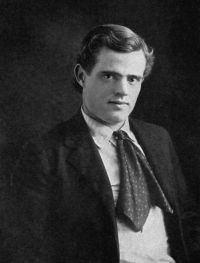 Jack London,
The Call of the Wild
(1903)
Jack London,
The Call of the Wild
(1903)
“ When the sled started, he floundered in the soft snow alongside the beaten trail, attacking Sol-leks with his teeth, rushing against him and trying to thrust him off into the soft snow on the other side, striving to leap inside his traces and get between him and the sled, and all the while whining and yelping and crying with grief and pain. ”
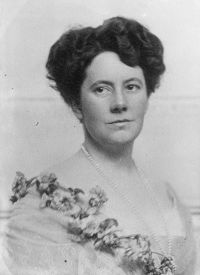 Isabel Anderson,
The Spell of the Hawaiian Islands and the Philippines
Isabel Anderson,
The Spell of the Hawaiian Islands and the Philippines
“ The sled, of two long, narrow strips of wood joined together by wicker work, was on runners from twelve to fourteen feet long, and was more like our sleds than modern toboggans. The native held the sled by the middle with both hands, and ran to get a start. Then, throwing himself face downward, he flew down the hill out upon the plain beyond, sometimes to a distance of half a mile or more. ”
Ethel Calvert Phillips, Pretty Polly Perkins (1925)
“ The dog thought it was fun, too, to run after the sled. He ran and barked, ran and barked, and every now and then he would jump up in the air and whirl around in the snow, he felt so happy and gay. [55] He didn’t dream for a moment that Anne Marie was afraid of him, but she was. She ran so fast up the street and even round the corner to get away from the dog that the sled swung from side to side. ”
Daniel W. Jones, Forty Years Among the Indians
“ Much of the time we had to tramp and make road before we could move along. Sometimes the whole bottom was covered with willows, the tops sticking out and holding the snow up so light that we had to cut and tramp them into the snow before we could move our sled along. While passing the narrows, we had to make a dug way for quite a distance, still we pressed forward. Neither could we abandon our sled or goods, for the sled was our salvation to sleep in. Almost any night we would have perished with cold without our bed-room. ”
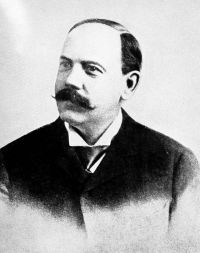 Julian Ralph,
On Canada's Frontier
Julian Ralph,
On Canada's Frontier
“ The main function of the sled is to carry the dead weight, the burdens of tent-covers, blankets, food, and the like. The men run along with or behind the dogs, on snow-shoes, and when the dogs make better time than horses are able to, and will carry between 200 and 300 pounds over daily distances of from 20 to 35 miles, according to the condition of the ice or snow, and that many a journey of 1000 miles has been performed in this way, and some of 2000 miles, the test of human endurance is as great as that of canine grit. ”
Edward Roper, A Claim on Klondyke: A Romance of the Arctic El Dorado
“ Most days Patch and I took tramps up and down the creek, and I very soon became dexterous in their use: besides, I knew it was necessary for me to take plenty of exercise to knit myself together, to train for my contemplated expedition. Now I turned my attention to the construction of a sled—a sledge. The one I had begun I had not seen for weeks,—it was buried under many a foot of snow. I searched, and at last dug it out; it was, I could see, unsuitable. I realised that I must make a sort of toboggan—something to lie flat upon the snow, that would not cut into it as sled-runners would. ”
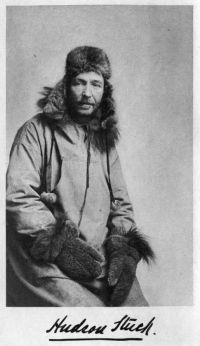 Hudson Stuck,
Ten Thousand Miles with a Dog Sled
Hudson Stuck,
Ten Thousand Miles with a Dog Sled
“ Now, as we drew nearer and nearer, the wind rose constantly. The thermometer was at 38° below zero, and wind at that temperature cuts like a knife. But to get my scarf meant stopping the whole procession and unlashing and unloading the sled, and the man who unlashed in that wind would almost certainly freeze his fingers. So I gave up the thought of it, turned my back to the wind while I tied my pocket handkerchief round mouth and nose, drew the strings of my parkee hood close, and then faced it again to worry through as best I could. The ice is always swept clear of snow in the Gap. ”
 Eugene Field,
Love-Songs of Childhood
Eugene Field,
Love-Songs of Childhood
“ And further say I have a sled Cushioned in blue and painted red! The groceryman has promised I Can "hitch" whenever he goes by— Go, tell her that, and, furthermore, Apprise my sweetheart that a score Of other little girls implore The boon of riding on that sled Painted and hitched, as aforesaid;— And tell her, Cupid, only she Shall ride upon that sled with me! Tell her this all, and further tell I love her well. LITTLE ALL-ALONEY Little All-Aloney's feet Pitter-patter in the hall, And his mother runs to meet And to kiss her toddling sweet, Ere perchance he fall. He is, oh, so weak and small! ”
Joseph Grinnell,
Gold Hunting in Alaska
“ These native [ 25 ] sleds are very light, having birch runners, and slender spruce frame-work, the whole strongly lashed together with raw-hide thongs. Every morning before loading we poured water on the runners, thus forming an ice shoe. As yet there is no snow, so that our route necessarily lay along the frozen river, which was covered with a foot of ice. Our load weighed about three hundred pounds, and where the ice was smooth little exertion was needed to draw the sled as fast as we could walk. In some places sand had blown into the ice and such spots would give us hard work. ”
Hudson Stuck,
Ten Thousand Miles with a Dog Sled
“ The dogs could get no footing and were continually down on their bellies, moving their legs instinctively but helplessly, like the flippers of a turtle, while the wind carried dogs and sled where it pleased. The grade was considerable and in bends the creek spread out wide. Nothing but the creepers enabled a man to stand at all, and creepers and brake together could not hold the sled from careering sideways across the ice, dragging the dogs with it, until the runners struck some pebble or twig frozen in the ice and the sled would be violently overturned. ”
Douglas Frazar, Perseverance Island; Or, The Robinson Crusoe of the Nineteenth Century
“ I used to carry my sled across Rapid River, below the falls, and then drive over my team upon a sort of rocky causeway that I had built so that they did not have to tread very deep in the water, and then, harnessing them up, I used to start for the mine, and by means of the anchor-fluke, I dug out easily enough coal in a short time to load my sled, and dragged it home to the river, whence I transported it across in a basket of willow twigs that I had made in my leisure moments. ”
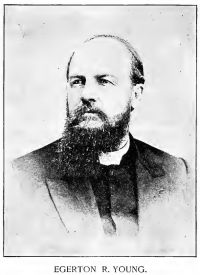 Egerton Ryerson Young,
Winter Adventures of Three Boys in the Great Lone Land
Egerton Ryerson Young,
Winter Adventures of Three Boys in the Great Lone Land
“ The hillsides were very steep and slippery under the heavy snowfall. As the dog-sleds have no brakes upon them, the only way of arresting their speedy motion when going down a steep hill is for the driver to hold back the sled by the strong rope which is always attached to the rear end and is called the tail rope.If the hill is steep or slippery, and the load heavy, this is a difficult operation and requires much care. Owing to the way in which the dogs are attached to the sleds, the drivers are utterly powerless to render any assistance in arresting the progress of the sled. ”
 Samuel Hall Young,
Alaska Days with John Muir
(1915)
Samuel Hall Young,
Alaska Days with John Muir
(1915)
“ I had caught just such a cold as this from the same cause—a stuffy stateroom. So I made me a little sled out of spruce boughs, put a blanket and some sea biscuit on it and set out up the glacier. I got into a labyrinth of crevasses and a driving snowstorm, and had to spend the night on the ice ten miles from land. I sat on the sled all night or thrashed about it, and had a dickens of a time; I shivered so hard I shook the sled to pieces. ”
W. D. Westervelt, Hawaiian Legends of Volcanoes…
“ The person using the sled grasped the right-hand side stick with his right hand, then, running swiftly to the brow of the hill, caught the stick of the left side and, throwing himself on the sled, hurled it over the edge and down the hill, sometimes sliding one hundred to two hundred yards or more. The sled was so narrow and the difficulty of staying on it so great, that it became one of the most interesting contests in which chiefs and people delighted. ”
Roy J. Snell, The Cruise of the O Moo
“ Skating rapidly to the end of the lagoon nearest the dry dock she circulated about until she discovered the spot at which the sled had left the ice. [134] Again guiding herself by the course taken by the sled, she skated backward and in a short time found herself once more beside the spot in the ice where the hole had been cut.“That proves something,” she told herself, “but just how much I can’t tell. But I’ll leave that to study out to-night. Must hurry on or I’ll be late to my lecture.”“That sled track went toward the dry dock,” she told herself a few moments later. ”
