Solar corona

Definition and stakes

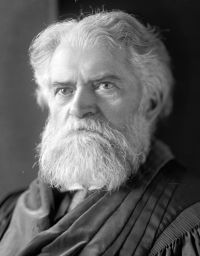
Portrait of Richard Anthony Proctor Richard Anthony Proctor,  Popular Science Monthly (1872)

“ Several astronomers at once pointed out that the air which lies toward the place on the heavens where the corona is seen, is not illuminated at all by the sun's rays during total eclipse. I also pointed out that whatever light that particular part of the air receives during totality—not direct sunlight, but light from the prominences, and so much of the corona as might be admitted to be solar—would extend over the very place of the moon, and gradually increase thence on all sides instead of gradually diminishing, as happens with the corona. ”
Source: Wikisource

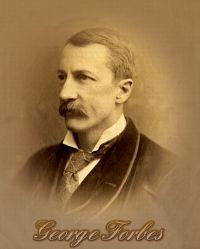
Portrait of David P. Todd David P. Todd,  Astronomy: The Science of the Heavenly Bodies

“ The true corona is at least a triple phenomenon and a very complex one. The photographs reveal it much as the eye sees it, with all its complexity of interlacing streamers projected into a flat, or plane, surrounding the disk of the dark moon which hides the true sun completely. But we must keep in mind the fact that the sun is a globe, not a disk, and that the streamers of the corona radiate more or less from all parts of the surface of the solar sphere, much as quills from a porcupine. ”
Source: Gutenberg

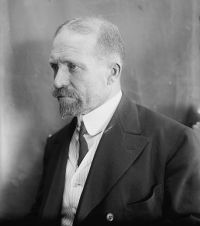
Arthur Berry,  A Short History of Astronomy

“ The corona has been carefully studied at every solar eclipse during the last 30 years, both with the spectroscope and with the telescope, supplemented by photography, and a number of ingenious theories of its constitution have been propounded; but our present knowledge of its nature hardly goes beyond Professor Young’s description of it as “an inconceivably attenuated cloud of gas, fog, and dust, surrounding the sun, formed and shaped by solar forces.” ”
Source: Gutenberg

Get perspective with Kwize: daily news enlightened by great literature