Swift (bird)

Definition and stakes

Alfred Newton,  1911 Encyclopædia Britannica, Volume 26… (1911)

“ The swift commonly chooses its nesting-place in holes under the eaves of buildings, but a crevice in the face of a quarry, or even a hollow tree, will serve it with the accommodation it requires. This, indeed, is not much, since every natural function except sleep, oviposition and incubation, is performed on the wing, and the easy evolutions of this bird in the air, where it remains for hours together, are the admiration of all who witness them. ”
Source: Wikisource

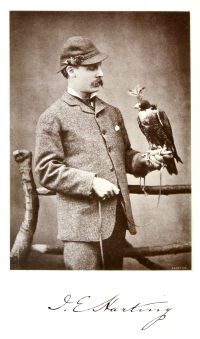
Portrait of James Edmund Harting James Edmund Harting,  Our Summer Migrants

“ To ordinary observers a Swift appears so much like a Swallow, that the only difference discernible by them is a difference of colour. To the inquiring naturalist, however, a much more important distinction presents itself in the peculiar and remarkable anatomy of the former bird. Not only has it a greater extent of wing, moved by larger and more powerful muscles, but the structure of the foot is curiously adapted for climbing within the narrow crevices which are usually selected as nesting-places. ”
Source: Gutenberg

J. G. Wood,  Bible Animals;

“ Like the Swallow, the Swift haunts the neighbourhood of man, and loves to build its simple nest in the roofs of houses. Almost any hole will do for a Swift to build in, provided that it be tolerably deep; for the bird loves darkness for its nest, though it is essentially in its habits a bird of light. ”
Source: Gutenberg

Get perspective with Kwize: daily news enlightened by great literature