Tea trade

Definition and stakes

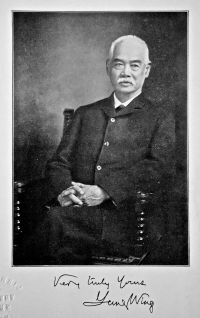
Portrait of Yung Wing Yung Wing,  My life in China and America (1909)

“ Undoubtedly, since the fifties, manual labor, the old standby in preparing teas for foreign consumption, has been much improved with a view of retaining a large percentage of the tea trade in China. The reason why a large percentage of the tea business has passed away from China to India is not because machinery is used in the one case and manual labor is retained in the other, but chiefly on account of the quality of the tea that is raised in the different soil of the two countries. The Indian or Assam tea is much stronger (in proportion to the same quantity) than the Chinese tea. ”
Source: Wikisource

Various,  The Harmsworth Magazine, Vol. 1…

“ Of the millions of people who drink tea, very few seem to know how it is grown or manufactured.
They would hardly believe that there are just on 800,000 acres of land planted under tea in India and Ceylon, employing over one million people—all British subjects. Just imagine employing a fifth of the population of London for the production of one article! Then, again, look at the thousands of people who are employed in the tea trade at home—merchants, dealers, brokers—all dependent on this one article of consumption for their bread-and-butter!
”
Source: Gutenberg

Samuel Phillips Day,  Tea, Its Mystery and History

“ Who could have thought that the Tea trade was destined to become one of the most important branches of our commerce, and not only so, but to occasion several wars, lead to the extension of our Eastern possessions, and precipitate the great Chinese exodus, which threatens such important results to the Pacific States of America, to Australia, the Polynesian Islands, and possibly to the world at large? ”
Source: Gutenberg

Get perspective with Kwize: daily news enlightened by great literature