Summary

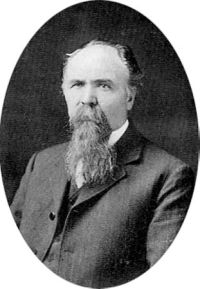
Portrait of F. H. King F. H. King Farmers of Forty Centuries; Or…

Being fogbound during the night gave us the whole of Japan's beautiful Inland Sea, enchanting beyond measure, in all its near and distant beauty but which no pen, no brush, no camera may attempt. Only the eye can convey. Before reaching harbor the tide had been rising and the strait separating Honshu from Kyushu island was running like a mighty swirling river between Moji and Shimonoseki, dangerous to attempt in the dark, so we waited until morning.
Source: Gutenberg

Portrait of F. H. King F. H. King Farmers of Forty Centuries; Or…

One feels that the cities are greatly over-crowded with houses and shops, and these with people and wares; that the country is over-crowded with fields and the fields with crops; and that in Japan the over-crowding is greatest of all in the cemeteries, gravestones almost touching and markers for families literally in bundles at a grave, while round about there may be no free country whatever, dwellings, gardens or rice paddies contesting the tiny allotted areas too closely to leave even foot-paths between.
Source: Gutenberg

Portrait of F. H. King F. H. King Farmers of Forty Centuries; Or…

IX THE UTILIZATION OF WASTE One of the most remarkable agricultural practices adopted by any civilized people is the centuries-long and well nigh universal conservation and utilization of all human waste in China, Korea and Japan, turning it to marvelous account in the maintenance of soil fertility and in the production of food. To understand this evolution it must be recognized that mineral fertilizers so extensively employed in modern western agriculture, like the extensive use of mineral coal, had been a physical impossibility to all people alike until within very recent years.
Source: Gutenberg

Get perspective with Kwize: daily news enlightened by great literature