Telephone wire

Definition and stakes

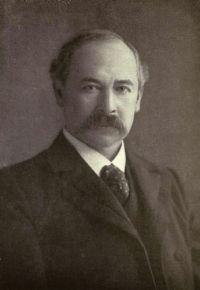
Herbert Newton Casson,  The History of the Telephone

“ The wire chiefs must detect trouble under a thousand disguises. Perhaps a small boy has thrown a snake across the wires or driven a nail into a cable. Perhaps some self-reliant citizen has moved his own telephone from one room to another. Perhaps a sudden rainstorm has splashed its fatal moisture upon an unwiped joint. Or perhaps a submarine cable has been sat upon by the Lusitania and flattened to death. But no matter what the trouble, a telephone system cannot be stopped for repairs. ”
Source: Gutenberg

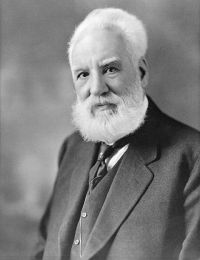
Thomas Lomar Gray,  Encyclopædia Britannica, Ninth Edition (1888)

“ A twisted cable of telephone wire may, when each circuit is formed by diametrically opposite wires, be placed in the same tube with similar cables employed for telegraph purposes. The central wire of the cable may be used either as a telegraph line or as a telephone line having an earth return. Another method is to use powerful telephone transmitters and insensitive receivers ; that is to say, make the telephone currents so powerful that the telegraphic induced currents will be small in comparison, and use receivers so insensitive as to suit such currents. ”
Source: Wikisource

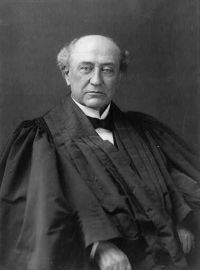
George M. Shaw,  Popular Science Monthly (1877)

“ Actual contact of one wire with another would spoil the business altogether. A wire bearing an electric current seems to be for the time surrounded, to an undefined distance, by an electric atmosphere, and all wires coming within this atmosphere have a current in an opposite direction set up in them. This is as near an explanation of the phenomena of induction as the state of telegraph science at present affords. Now, the telephone works with a very delicate magnetic current, and is easily overpowered by the action of a stronger current in any wire near which the telephone-wire may come. ”
Source: Wikisource

Get perspective with Kwize: daily news enlightened by great literature