“ Every trapper, like all other classes, have many things to contend with. One of the worst, perhaps, is the trap stealer, who having once found one of your traps will follow up your line and take them all. If he can not find them by your tracks, he is apt to hide close by and wait until you go the round, then follow up and take your entire outfit of traps. To be sure that they are your property you should mark each and every trap before the trapping season or just as soon as they are bought, at any rate before they are set. ”
Trap line
Definition and stakes
The theme of “trap line” has been addressed by authors such as A. R. Harding, W. Hamilton Gibson, Elmer Harry Kreps, Stanley Paul Young and E. N. Woodcock. It is often associated with terms like trapping, trapper, animal, bait and steel.
Quotes about “trap line”
The Atlantic Monthly — The Grindwell Governing Machine
“ Man-traps are laid under the pavements,--sometimes they are secretly introduced under your very table or bed,--and if anything is said against that piece of machinery called the main-spring, or against the head engineer, the trap will nab you and fly away with you, like the spider that carried off Margery Mopp. ”
“ Of late years they have become cheaper, owing to the increased facilities of those great trap manufacturers, the Oneida Community, who are always looking to trappers' interest by adding new and improved methods of manufacture as well as new traps to the extensive line already manufactured so that now their use has become general ”
Agnes C. Laut, The Story of the Trapper
“ Perhaps he has a circle of thirty traps. Of that number he hardly expects game in more than a dozen. If six have a prize, he has done well. Each time he stops to examine a trap he must pause to cover all trace of the man-smell, daubing his own tracks with castoreum, or pomatum, or bears' grease; sweeping the snow over every spot touched by his hand; dragging the flesh side of a fresh pelt across his own trail.Mid-day comes, the time of the short shadow; and the Indian trapper has found not a thing in his traps. He only knows that some daring enemy has dogged the circle of his snares. ”
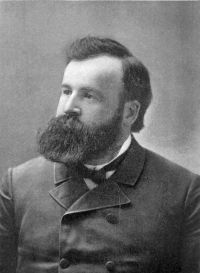 W. Hamilton Gibson,
Camp Life in the Woods and the Tricks of Trapping and Trap Making
“ But in the regular business of systematic trapping, their extensive use is not common. The experience of modern trappers generally, warrants the assertion that for practical utility, from every point of view, the steel trap stands unrivalled. ”
“ Occasionally I see in H-T-T, trappers advocating a large spreading trap, writes an experienced Canadian trapper, and some even go so far as to invite the trap manufacturers to make still wider ones than are now on the market. My experience in trapping, which was varied and extended over a number of years, is that it's a mistake to have a trap that catches the animals too high up. ”
 Ernest Thompson Seton,
Two Little Savages
“ Them traps save the trapper going round so often, but they're expensive, and heavy to carry, and you have got to be awful hard-hearted before ye kin use 'em. I tell ye, when I thought of all the sufferin' that Mink went through it settled me for steel traps. Since then, says I, if ye must trap, use a deadfall or a ketchalive, one or other; no manglin' an' tormentin' for days. I tell ye that thar new Otter trap that grabs them in iron claws ought to be forbid by law; it ain't human. ”
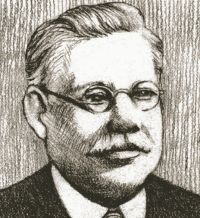 Charles Hose,
The Pagan Tribes of Borneo
“ If a trap fails to work owing to its faulty construction, the trapper treats it purely as a mechanical contrivance and proceeds to discover and rectify the faulty part. It is true that in this and numberless similar situations a man's movements may be guided by his observation of omens; but if, after obtaining good omens, he has success in trapping, he does not attribute the successful operation of the trap to any, activity other than its purely mechanical movements ”
“ Among the first requisites and of the utmost importance to successful trapping is the possession of an outfit of well made Steel Traps.That the young trappers may understand what are the requisites of a good trap we will describe in detail one that has held its own in the estimation of the professional trappers for sixty years, and then we will endeavor to point out wherein the many so-called "improvements," that have been put on the market, have uniformly failed of success. ”
W. Hamilton Gibson,
Camp Life in the Woods and the Tricks of Trapping and Trap Making
“ THE CLOG. A trap which is set for heavy game should never be secured to a stake. Many of the larger and more powerful animals when caught in a trap thus secured, are apt either to pull or twist their legs off, or break both trap and chain to pieces. To guard against this, the chain should be weighted with a pole or small log, of a size proportionate to the dimensions of the game, its weight being merely sufficient to offer a serious incumbrance to the animal, without positively checking its movements. ”
Various, The American Architect and Building News…
“ EVAPORATION OF WATER IN TRAPS.To the Editors of the American Architect:—Dear Sirs,—In a late issue of your journal an advocate of Trap-venting, says of ordinary S-traps “If the traps are filled even once in two months they will keep their seals intact.”Most persons now agree that S-traps which are back-vented in the ordinary manner require refilling by hand as often as once a fortnight. It is, therefore, clear that the system of back-venting is a very dangerous one. Its original object was to afford security. ”
Elmer Harry Kreps, Science of Trapping
“ The Hawley & Norton is made in the same style as the Newhouse, but is lighter. The Victor is also made in this style and it is safe to say that it is the most popular trap on the market. More of them are used than of any other brand and being so cheap they are especially liked by the beginner and by those who do not make trapping their leading occupation. In thickly settled districts where traps are often taken by thieves, many trappers prefer to use these cheaper grades of traps. ”
 Washington Irving,
The Adventures of Captain Bonneville…
(1837)
“ The trap, being fastened to the pole, resists all his efforts to drag it to the shore; the chain by which it is fastened defies his teeth; he struggles for a time, and at length sinks to the bottom and is drowned. ”
“ When traps are sprung and pulled back into the den as far as the chain will allow them to go, the chances are that the animals is still in the den. On the other hand, if the trap is dragged to the outside the game is liable to have gone away. ”
Henry J. Coke, Tracks of a Rolling Stone
“ French birds being too stupid to know what the traps were for, I never caught a feather. Now this osier bed was a favourite game covert for the sportsmen of the château; and what was my delight and astonishment when one morning I found a dead hare with its head under the fallen brick of my trap. How triumphantly I dragged it home, and showed it to Rose and Auguste,—who more than the rest had ‘mocked themselves’ of my traps, and then carried it in my arms, all bloody as it was (I could not make out how both its hind legs were broken) into the salon to show it to the old Marquise. ”
W. Hamilton Gibson,
Camp Life in the Woods and the Tricks of Trapping and Trap Making
“ A most excellent opportunity is thus afforded the hunter to secure several at one shot, and the same advantage may be gained by the trapper by specially arranging for it. For this purpose there is no invention more desirable or effective than the snare we next illustrate; and on account of the companionable habits of the quail, it is just as sure to catch six birds as one. The principle on which the trap works, is the same as in the three foregoing. ”
E. N. Woodcock, Fifty Years a Hunter and Trapper
“ All trappers have their favorite traps--the writer has his. Every boy knows that the Newhouse trap is at the top of the ladder, as to quality, but as to convenience, well, I prefer the No. 1 1/2 Oneida Jump trap, which is superior to all others on the market for small game. ”
A. R. Harding, Deadfalls and Snares
“ In some localities there are not many dens and trappers make use of about all when trapping that section, but in other parts of the country dens are so numerous that to place a trap at each is impossible. ”
“ The ring thus being assured of a clear run down to the tuft, the trap is set and the end of the pole made secure to the bank either by a piece of wire or by a cord. If the latter, care must be used to tie close down to the prong and the cord carefully covered with mud or something else to hide it from rabbits or other animals that would surely gnaw, thereby endangering the loss of your trap and animal.Trapping, like everything else, to make it a success, must have proper attention. A man who sets a trap haphazard and visits it only occasionally cannot expect to be very successful. ”
“ The manufacturers claim these points in their favor. They are somewhat lighter than the regular form of double spring traps and the trapper going far into the woods can carry a greater number; they set much flatter; can be set in smaller space; springs are out of the way as no spring extends beyond the jaws; pans are large so that no animal can step between the jaws without springing the trap. The traps are set much the same as other steel traps. ”
 Frances Fuller Victor,
Eleven Years in the Rocky Mountains & A History of the Sioux War
(1881)
“ In setting a trap, several things are to be observed with care:—first, that the trap is firmly fixed, and the proper distance from the bank—for if the beaver can get on shore with the trap, he will cut off his foot to escape: secondly, that the float is of dry wood, for should it not be, the little animal will cut it off at a stroke, and swimming with the trap to the middle of the dam, be drowned by its weight. ”
“ While in sections, the larger game is gone yet there is in parts of the North, West and South, much good trapping territory that will pay the hardy trapper for years to come. Even in the more thickly settled districts, trapping can be made a good paying business if the correct sizes are used and trappers pay attention to the proper season to trap. ”
“ In regard to traps being sprung, it is possible they are set too easy, and go off of their own accord, after the trapper has left them. Again they may work too hard, not going off easy enough. All these things the trapper should guard against. If the trap has been properly set there will be no trouble from the source just named, and traps once set the trapper should keep away from, as far as possible when making his rounds, unless they are sprung, the bait gone or contain game. ”
“ If there are other entrances to the den they should all be closed, with the exception of the one where the trap is set. The only time that it is advisable to close all entrances is when you are sure that an animal is within. You are only sure of this when your dog has holed an animal, or you have tracked one in the snow into the den. There may be times, however, when you have your traps baited and the bait has been taken from the inside. ”
De Witt C. Peters, The Life and Adventures of Kit Carson…
“ The signs having been discovered, the trappers next select a suitable location for a camp, which they soon occupy. After the pack animals are unloaded, a part of the men start out to set the traps, while the remainder busy themselves in looking after their wants and in cooking and guarding their property, etc. The trap is very much like the same instrument used in different sections of the United States for catching foxes, wolves etc, excepting, that it is smaller and perhaps made with more skill. ”
“ A rainy night and a cold frosty one have, of course, different effects, and must be considered with all their bearings by the would-be successful trapper. The best time to make a set or final adjustment of one's trap is as late in the afternoon as possible. ”
“ Now bend down and catch the small end under a notched peg or root in such a way that the least struggle of an animal in the trap will release the pole and lift him high in the air. Of course the trapper will proportion the strength of his pole to the size of his intended victim.All trappers have experienced a feeling of regret when visiting traps where game has been caught and escaped. The ones who properly fasten traps seldom have their game escape, altho occasionally, when not securely caught and the trapper does not make his rounds often, an animal will get away. ”
Gouverneur Morris, It, and Other Stories
“ If the big cats had known how frightfully dangerous that trap was they'd have jumped overboard and left the island by swimming. I made two other traps something like it—the best contractor in New York wouldn't have undertaken to build one just like it at any price—and then it came around to be the seventh day, so to speak; and, like the six-day bicycle rider, I rested."Days," is only a fashion of speaking. ”
“ This trap was designed by a man who thought it desirable to fasten the bait to the pan. Only a novice at trapping would think of doing such a thing as that, as drawing the animal's attention to the trap is sure to excite his suspicion and to catch him by the head is not desirable, even if possible. A common trap is quite certain to only nip him and slip off. ”
Elmer Harry Kreps, Science of Trapping
“ The nearly perfect state of the Newhouse trap as it is made at present, has only been reached after years of study and experiment and many of the improvements have been brought about by the trappers themselves, with whom this firm has a large correspondence. They are always pleased to receive any suggestions for the improvement of their traps. ”
A. R. Harding, Fox Trapping: A Book of Instruction Telling How to Trap…
“ Every trapper knows how difficult it is to set a large trap alone in the woods, especially in cold weather, when the fingers are stiff, and the difficulty is greatly increased when one has to work in a boat. One of these clamps applied to each spring will, by a few turns of the thumb-screws, bend the springs to their places, so that the pan may be adjusted without difficulty. ”
W. Hamilton Gibson,
Camp Life in the Woods and the Tricks of Trapping and Trap Making
“ Steel traps are almost exclusively used by the professional trapper, and the supply for a single campaign will often exceed one hundred and fifty. Many of the traps described in the early part of this work are also used, and for the amateur who has not the ready cash to layout in steel traps, are decidedly to be recommended and will be found very efficient. From thirty to fifty traps would be a fair number for an ordinary amateur trapping season, and the probable cost of such a lot would be from $15 to $25. ”
W. Hamilton Gibson,
Camp Life in the Woods and the Tricks of Trapping and Trap Making
“ The hope of success, the fears of disappointment, the continual suspense and wonder which fill the mind of the young trapper, all combine to invest this sport with a charm known to no other. Trapping does not consist merely in the manufacture and setting of the various traps. ”
 Mary Rogers Miller,
The Library of Work and Play: Outdoor Work
“ For dry land the steel jaw-trap is not suitable, because it will rarely kill the animal, but cause him much suffering as [503] it usually breaks his leg. Often in such case the trapper will only find a foot in his trap, the animal having gnawed or twisted his body free. Nevertheless any trap is humane which kills the animal instantly. There are many new traps on the market which will do this, but on account of their being patented and high-priced they are not extensively used. The traps which are most commonly used for this purpose are the deadfalls and snares. ”
W. Hamilton Gibson,
Camp Life in the Woods and the Tricks of Trapping and Trap Making
“ This is easily explained by the fact that the open grating admits the light from all sides, and the enclosed victims are thus attracted to no one spot in particular, and naturally rush to the extreme edges of the trap, in the hope of finding an exit. ”
W. Hamilton Gibson,
Camp Life in the Woods and the Tricks of Trapping and Trap Making
“ Dig a hole in the earth in the centre of the bed, large enough to receive the trap, with its log, and chain. Set the traps, supporting the pan by pushing some of the chaff beneath it. Now lay a piece of paper over the pan and sprinkle the chaff over it evenly and smoothly, until every trace of the trap and its appendages is obliterated. Endeavor to make the bed look as it has previously done, and bait it with the same materials. Avoid treading much about the bed and step in the same tracks as far as possible. Touch nothing with the naked hands. ”
Related terms
Authors who wrote about “trap line”
A. R. HardingW. Hamilton GibsonElmer Harry KrepsStanley Paul YoungE. N. WoodcockG. Archie StockwellErnest Thompson SetonMary Rogers MillerAdolph IsaacsenVarious Richard JefferiesAgnes C. LautHenry J. CokeFrances Fuller VictorWashington IrvingCharles HoseDe Witt C. PetersGouverneur Morris
 Sylvanus StallT. C. Bridges
W. Hamilton GibsonElmer Harry KrepsStanley Paul YoungE. N. WoodcockG. Archie StockwellErnest Thompson SetonMary Rogers MillerAdolph IsaacsenVariousRichard JefferiesAgnes C. LautHenry J. CokeFrances Fuller VictorWashington IrvingCharles HoseDe Witt C. PetersGouverneur MorrisSylvanus StallT. C. Bridges