Tutelary deity

Definition and stakes

Matthew Henry Commentary on the Whole Bible… (1700s)

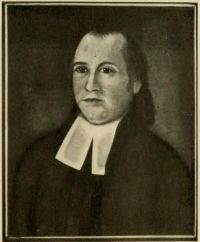
There is a consent and co-operation of all the persons of the Trinity in the affair of man's salvation, and their acts are commensurate one to another: whoever the Father elects the Spirit sanctifies unto obedience, and the Son redeems and sprinkles with his blood. [5.] The doctrine of the Trinity lies at the foundation of all revealed religion. If you deny the proper deity of the Son and Holy Spirit, you invalidate the redemption of the one and the gracious operations of the other, and by this means destroy the foundation of your own safety and comfort.
Source: Wikisource

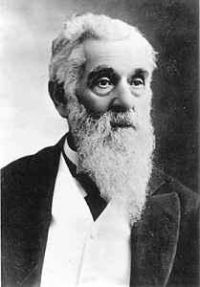
Portrait of Ralph Barton Perry Ralph Barton Perry The Moral Economy

IV The correction of superstition brings us to our second type, which I have chosen to call tutelary religion. It is distinguished by the fact that life is organized into a definite purpose, which, although still narrow and partisan with reference to humanity at large, nevertheless embraces and subordinates the manifold desires of a community. The deity represents this purpose in the cosmos at large, and rallies the forces of nature to its support.
Source: Gutenberg

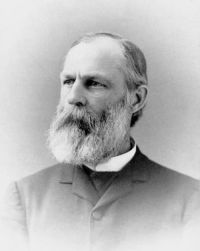
Portrait of Hugh Miller Hugh Miller First Impressions of England and its People (1873)

It shows us that the will and power of God, in dealing with the sins of his accountable creature, man, cannot, if we may so speak, be arbitrary, unregulated power and will, but must spring, of necessity, out of his underived moral nature. If it be according to this moral nature, which constitutes the governing law of Deity,—the law which controls Deity,—that without the 'shedding of blood there can be no remission, then blood must be shed, or remission cannot be obtained; atonement for sin there must be.
Source: Wikisource

Get perspective with Kwize: daily news enlightened by great literature