Summary

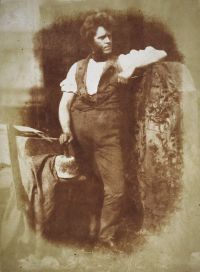
Portrait of Hugh Miller Hugh Miller First Impressions of England and its People (1873)

It must be something very bad, let us personify it as proudly as we may, that could have set on these useful, peaceable people,—cast in so nearly the same mould, speaking the same tongue, possessed of the same common nature, lovable, doubtless, in some points, from the development of the same genial affections,—to knock one another on the head simply because the one half of them had first seen the light on the one side of the hill, and the other half on the other side.
Source: Wikisource

Portrait of Hugh Miller Hugh Miller First Impressions of England and its People (1873)

I shall lodge in humble cottages, wear a humble dress, and see what is to be seen by humble men only,—society without its mask. I shall explore, too, for myself, the formations wanting in the geologic scale of Scotland,—the Silurian, the Chalk, and the Tertiary; and so, should there be future years in store for me, I shall be enabled to resume my survey of our Scottish deposits with a more practised eye than at present, and with more extended knowledge.
Source: Wikisource

Portrait of Hugh Miller Hugh Miller First Impressions of England and its People (1873)

I attempted showing, step by step, that God did not give to himself his own nature, nor any part of it; that it exists as it is, as independently of his will as our human nature exists as it is independently of ours; that his moral nature, like his nature in general, is underived, unalterable, eternal; and that it is this underived moral nature of the Godhead which forms the absolute law of his conduct in all his dealings with his moral agents. "You are, I daresay, right," said the countryman; "but how does all this bear on the doctrine of the atonement?"
Source: Wikisource

Get perspective with Kwize: daily news enlightened by great literature