Warp (textile)

Definition and stakes

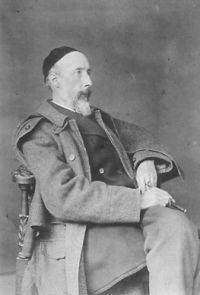
Portrait of William Henry Holmes William Henry Holmes,  Prehistoric Textile Fabrics Of The United States…

“ The combination is extremely difficult to produce by mechanical means, and must have been beyond the reach of any primitive loom. I have prepared a diagram, Fig. 75, which, shows very clearly the arrangement of threads, and illustrates a possible method of supporting the warp while the woof is carried across. As each thread of the woof is laid in place, the threads of the warp can be thrown to the opposite support, a turn or half twist being made at each exchange. The work could be done equally well by beginning at the top and working downward. ”
Source: Gutenberg

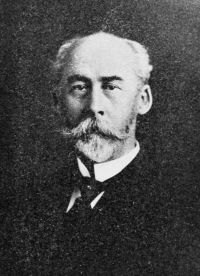
Daniel Rock,  Textile Fabrics

“ It is neither real weaving, nor true embroidery, but unites in its working those two processes into one. Though wrought in a loom and upon a warp stretched out along its frame, it has no woof thrown across those threads with a shuttle or any like appliance, but its weft is done with many short threads, all variously coloured, and put in by a kind of needle. It is not embroidery, though so very like it, for tapestry is not worked upon what is really a web—having both warp and woof—but upon a series of closely set fine strings. ”
Source: Gutenberg

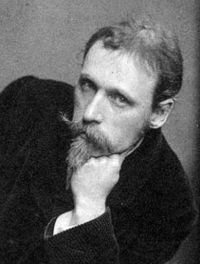
Portrait of Walter Crane Walter Crane,  The Bases of Design

“ Into the many technicalities and complexities of the modern power-loom it is not now necessary to enter; but the main essential conditions it is always necessary for the textile designer to have in mind are that his design has to be produced by the crossing of threads in the loom, by warp and weft, as the sets of threads are called—the warp being the vertical threads, forming the web and foundation of the fabric ”
Source: Gutenberg

Get perspective with Kwize: daily news enlightened by great literature